

The spire of Shwedagon, Yangon's great golden stupa, is tipped with a 76-carat diamond, and for a few minutes after sunset it catches the last of the light while pilgrims walk barefoot and clockwise around the marble platform below. That scene, the dawn haze over the temple plain at Bagan and the leg-rowing fishermen of Inle Lake are the reasons Myanmar sat near the top of so many Southeast Asia wish lists. All three are still there.
What has changed is almost everything around them. This guide covers fifteen things genuinely worth doing in Myanmar, with entry fees in kyat, the best hour to turn up and how to link them together from Singapore. It also says plainly which ones sit in areas that governments currently advise against visiting, so you can plan with clear eyes rather than from an old brochure.
Myanmar in 2026: read this before you plan anything
Start with the official position. Singapore's Ministry of Foreign Affairs, in its advisory updated in June 2026, strongly advises Singaporeans to defer all travel to Myanmar. It points to the uncertain security situation, notes that a state of emergency and martial law remain in force in many townships, and warns that it may not be able to give consular help outside Yangon. Singaporeans already in the country are asked to e-Register with MFA so the embassy in Yangon can reach them.
The UK Foreign Office, updated in August 2026, draws a more detailed map. It advises against all travel to Chin, Kachin, Kayah, Kayin, Mon and Rakhine states, to Sagaing and Magway regions, to northern Shan State and to the townships north of Mandalay City. It advises against all but essential travel to southern and eastern Shan State, which includes Inle Lake, and to the rest of Mandalay Region, which includes both Mandalay city and Bagan. Yangon appears on neither list. Both governments stress that the situation can change at short notice.
Two practical consequences follow. First, many travel insurance policies stop covering you when you travel against your own government's advice, so read the exclusions before you pay for flights. Second, the operators still running trips have narrowed their routes to what travellers call the tourist kite: Yangon in the south, Bagan in the west, Mandalay in the centre and Inle Lake in the east. They link those four by domestic flights rather than by road, because long overland journeys pass military checkpoints whose rules can change from week to week.
The 2025 earthquake still shapes the map
On 28 March 2025 a magnitude 7.7 earthquake struck near Sagaing, roughly 16 kilometres west of Mandalay. More than 5,300 people died in Myanmar. Heritage damage was heaviest around Mandalay: sections of the Mandalay Palace walls, gates and watchtowers came down, the revered Mahamuni temple suffered serious structural damage, much of the old Ava Bridge collapsed and around three quarters of the historic buildings at Inwa were damaged. Bagan, about 290 kilometres to the south-west, came off far more lightly, and major stupas there such as Shwezigon and Htilominlo were reported to have no structural damage.
What we left off this list, and why
Several places from older Myanmar bucket lists are missing on purpose. Golden Rock at Kyaiktiyo is in Mon State. Hpa-An's limestone caves are in Kayin State. Ngapali Beach and the temple city of Mrauk U are in Rakhine State. Hsipaw and the Gokteik Viaduct, itself damaged in the 2025 quake, are in northern Shan State. The hilltop stupas of Sagaing and the giant cracked monument at Mingun sit just across the Irrawaddy from Mandalay, in Sagaing Region. All of them fall inside "against all travel" areas on the UK map. They deserve a place on the list again when it is responsible to send people there.
Yangon: Shwedagon, the Circle Line and the tea-shop morning
Yangon is where almost every trip begins, and it rewards two full days rather than one rushed afternoon. The airport is about 15 kilometres north of downtown, and a pre-paid taxi into the centre usually takes around half an hour when the roads are clear. The Grab app works in the city, which takes the haggling out of getting about.
Watch Shwedagon turn gold as the light changes
Shwedagon Paya (paya is the Burmese word for a stupa or temple) rises 99 metres from the top of Singuttara Hill, so the whole structure stands about 170 metres above sea level. Buddhist tradition holds that it enshrines eight strands of the Buddha's hair. Written records place it in the 14th century, though the legend claims far more. The crown is studded with 5,448 diamonds and 2,317 rubies, finishing in that single large stone.
Four covered stairways climb the hill, and the main ticket office is at the southern entrance. Foreigners have long paid 10,000 kyat, though some recent visitors report being charged 20,000, so carry enough for either. Shwedagon is generally open from 4am to 10pm. Shoes and socks come off at the bottom of the stairs, and the tiles get painfully hot at midday, which is the best argument for good timing.
Arrive around 4.30pm to see the stupa in warm afternoon light, then watch it switch to floodlit gold as the sky darkens. While you wait, find the planetary post for the day of the week you were born. There are eight, because Wednesday is split into morning and afternoon, and locals pour water over the small Buddha image at their own post for luck. Cover shoulders and knees. If your shorts are too short, a cheap longyi from any market solves the problem and will be useful at every temple on your trip.
Ride the Yangon Circle Line out to the market stations
The Yangon Circular Railway is a 45.9-kilometre loop with 39 stations, and a full circuit takes roughly three hours. It is how vendors, students and office workers get around the city's edge, which is exactly why it is worth a morning. Trains leave from Yangon Central Railway Station. Foreigners have usually bought tickets at the small office on platform 7, passport in hand, and since 2014 visitors have paid the same few-hundred-kyat fare as locals.
You do not need to ride the whole loop. Travel as far as Danyingon in the northern suburbs, where farmers load sacks of vegetables on and off the carriages, then ride on or take a taxi back. New Spanish-built diesel trains began arriving for testing in 2024, so you may get a modern carriage or one of the older, open-windowed sets, which are hotter but give the better view. Go in the morning, when the market stations are busiest.
Walk colonial downtown and browse Bogyoke Market
Downtown Yangon's colonial grid is easy to explore on foot. Start at Sule Paya, a 46-metre octagonal stupa that doubles as the centre of a busy roundabout. Walk down Pansodan Street towards the river, past the old High Court and banking halls built when this was one of the richest ports in the British Empire. The vast red-brick Secretariat, where independence leader Aung San was assassinated in 1947, is a few blocks away.
Near the waterfront is The Strand, opened in 1901 by the Sarkies brothers, the same Armenian hoteliers who founded Raffles in Singapore. Then head north to Bogyoke Aung San Market, a sprawling covered bazaar dating from the 1920s and the easiest place to buy longyi, lacquerware, jade and thanaka, the pale bark paste many Burmese wear on their cheeks as sunscreen. The market has traditionally closed on Mondays, so check hours before you go.
Start the day in a tea shop with a bowl of mohinga
Burmese food is underrated, and the best introduction is breakfast. Mohinga is the national dish: a thick fish broth seasoned with lemongrass and banana stem, poured over rice noodles and topped with crunchy fritters and a squeeze of lime. Street stalls and tea shops serve it from dawn for a fraction of a Singapore hawker meal. Pair it with sweet, strong milky tea on a low plastic stool.
Later, try lahpet thoke, the fermented tea-leaf salad tossed with fried beans, peanuts, sesame, tomato and garlic, and a bowl of Shan noodles. In the evening the barbecue stalls of 19th Street in Chinatown grill skewers of everything from okra to quail eggs. Major cities have generally kept a curfew from around midnight to 4am, so eat early and check the current rules with your hotel.
Bagan: the temple plain, Ananda and the balloons
Bagan was the capital of the Pagan kingdom from 1044 to 1287, and its rulers built more than 10,000 religious monuments across a bend of the Irrawaddy River. Over 2,200 survive, spread across roughly 104 square kilometres of dry plain, and UNESCO added Bagan to the World Heritage list in 2019. The area divides into Nyaung U in the north, where the airport and most budget stays are, the old walled core of Old Bagan, and New Bagan to the south.
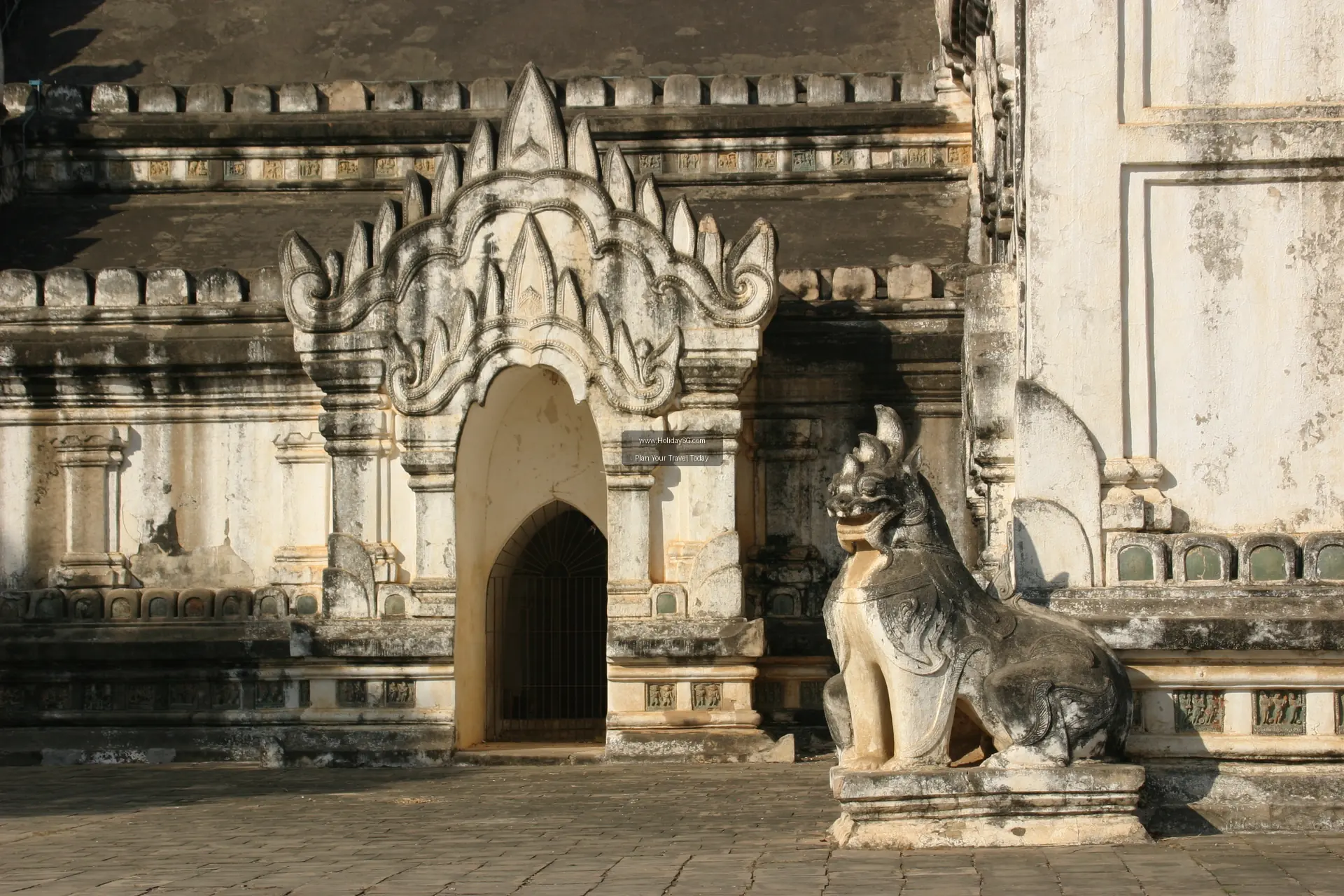
Fly into Nyaung U, about four kilometres from town. Foreigners pay a Bagan archaeological zone fee of 30,000 kyat, raised from 25,000 on 1 October 2023 and now valid for three days rather than five, so a three-night stay fits neatly. It is collected at the airport and checked at major temples, including Ananda, so keep the ticket with you.
Cross the temple plain by e-bike at sunrise and sunset
The best way to experience Bagan is slowly, on an electric scooter along the sandy tracks between temples. Shops in all three towns hire e-bikes for several thousand kyat a day, and newer models last a full day on one battery. The bikes slide on loose sand, so ride slowly. A horse cart is the gentler alternative.
Since an August 2016 earthquake damaged nearly 400 temples, climbing onto most of them has been restricted, and artificial viewing mounds were built for sunrise and sunset instead. Between those golden hours, work through the big names. Shwezigon, finished in 1102, is the gilded bell-shaped stupa that became a model for later Burmese ones. Thatbyinnyu is the tallest at 66 metres. Dhammayangyi is the largest, famous for brickwork so tight you cannot slip a pin between the joints. Sulamani, built in 1183, keeps some of the best-preserved murals.
Bagan sits in Myanmar's dry zone, and from March the midday heat is harsher than anything Singapore produces, with little shade. Plan temples from 6am to 10am, rest through lunch, then go out again from about 3.30pm. In between, the lacquerware workshops in Myinkaba village are worth an hour; families there still apply layer after layer by hand and are happy to show you the process.
Spend an unhurried hour inside Ananda Temple
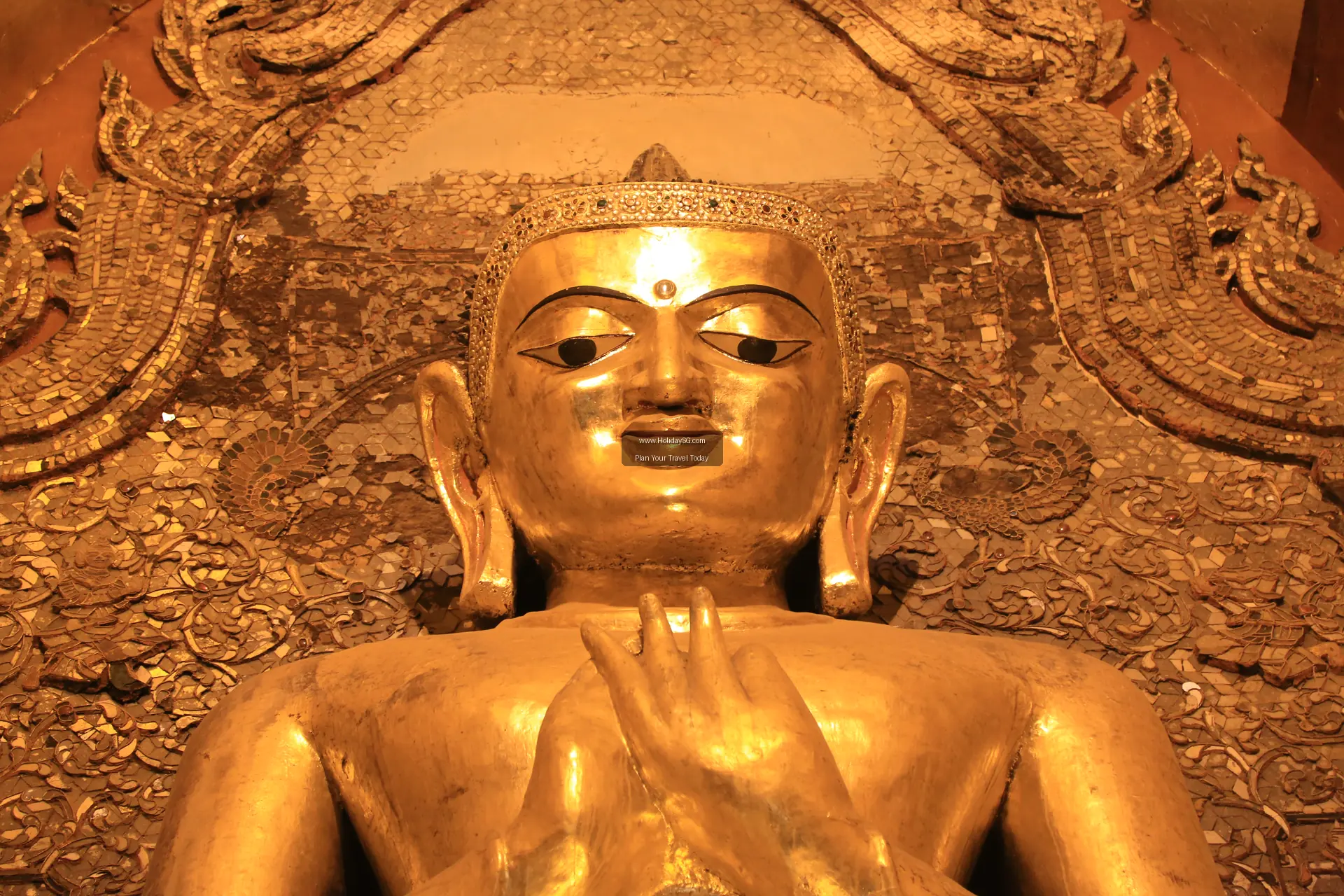
If you only go inside one temple in Bagan, make it Ananda. King Kyansittha completed it in 1105, blending Mon and Indian architecture into a cross-shaped plan with terraces stepping up to a gilded spire 51 metres high. The spires were gilded for the temple's 900th anniversary in 1990.
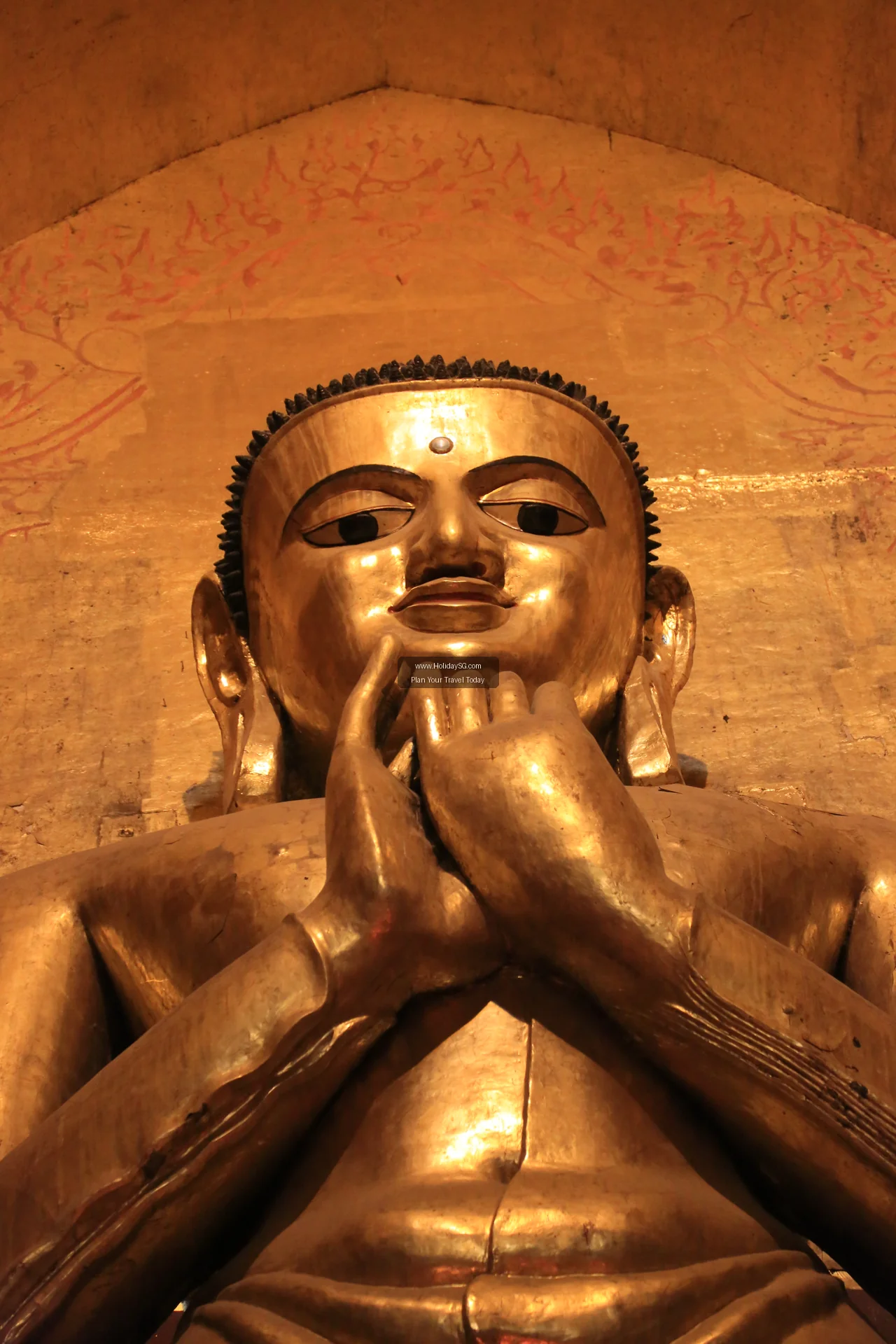
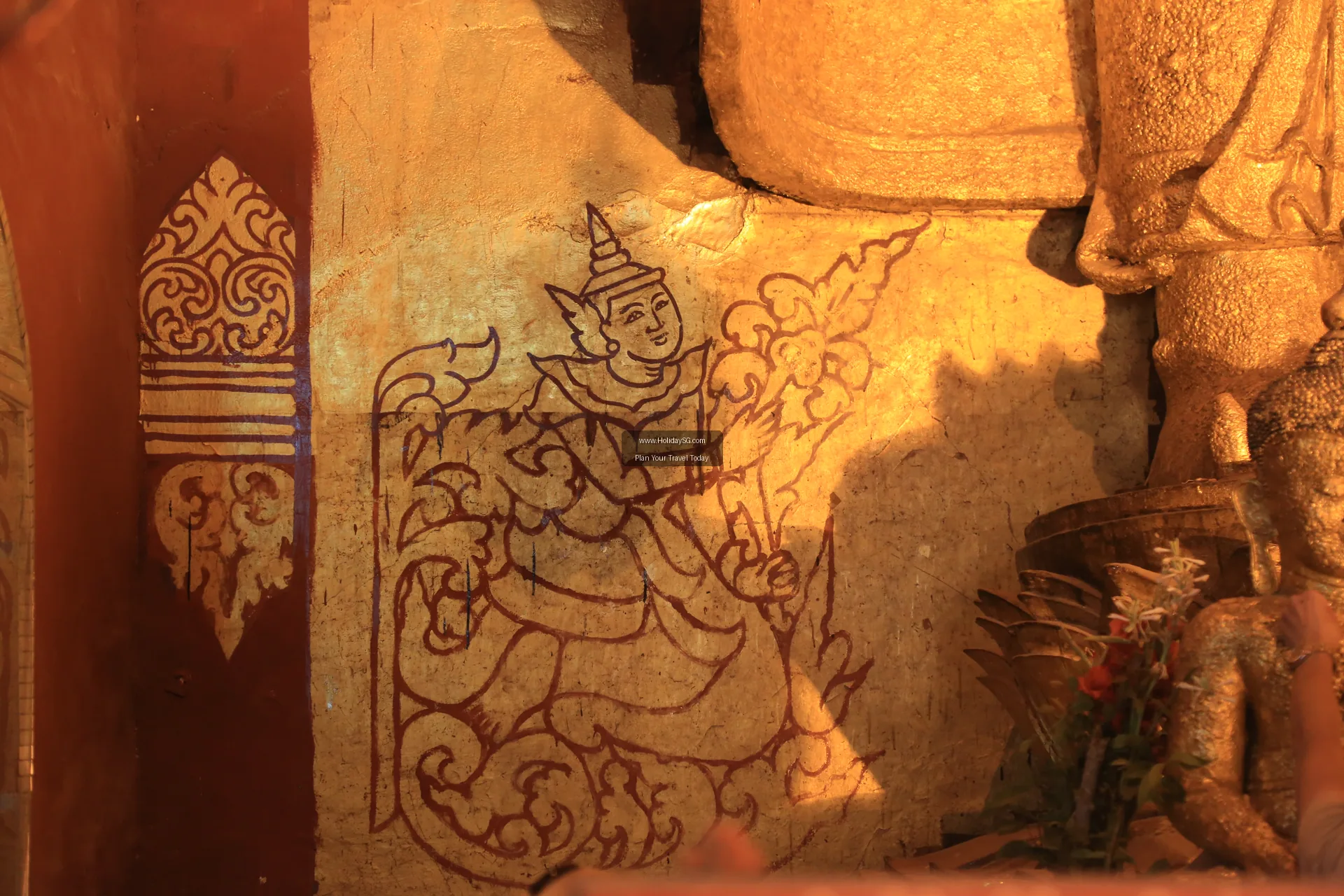
The real reason to go is inside. Four standing Buddhas, each about 9.5 metres tall, face the four cardinal directions. The north and south images are the originals, carved from teak in the Bagan style. The east and west figures are later Mandalay-style replacements, made after fire destroyed the earlier statues. Walk slowly round all four; the light from high windows changes each face as you move.
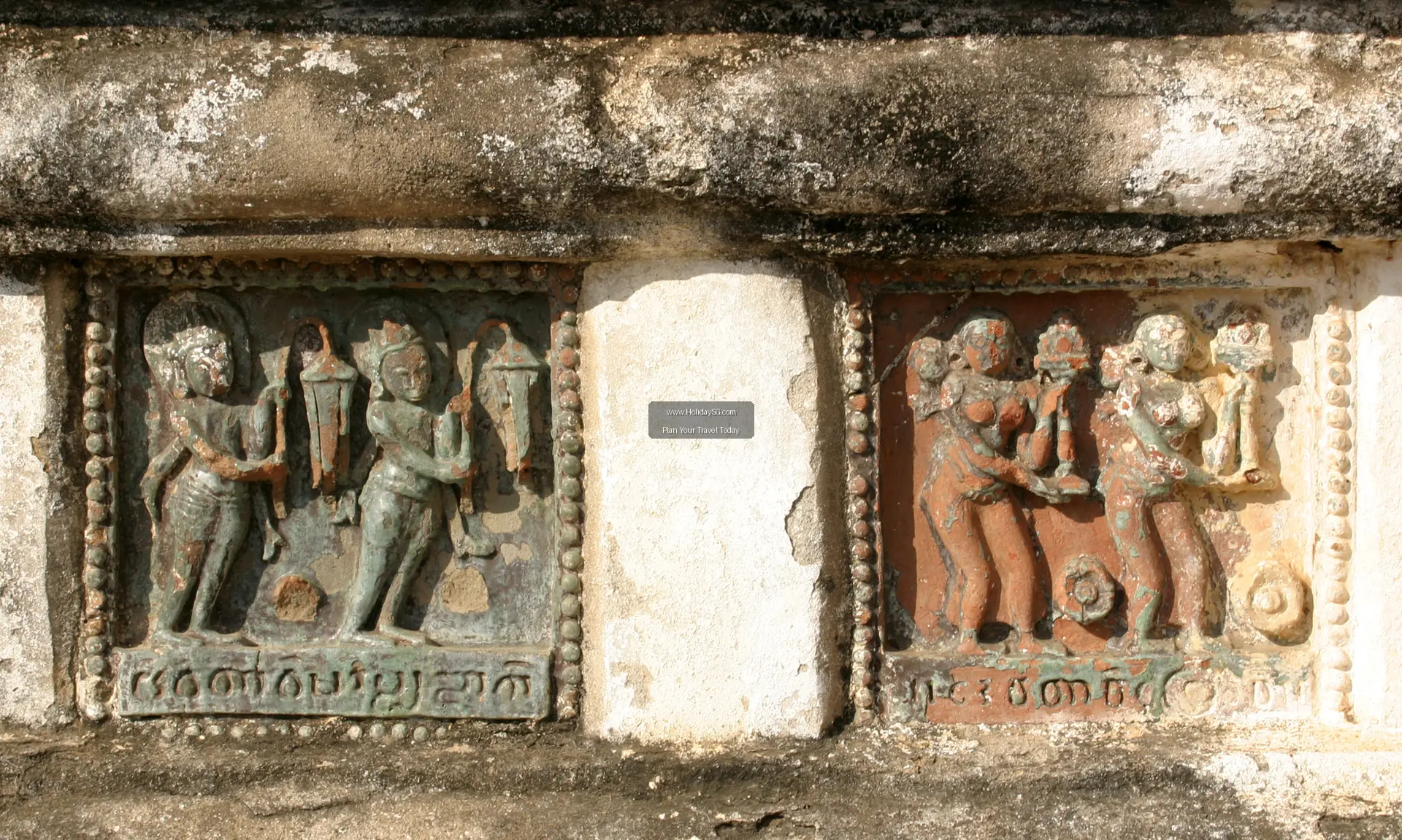
Look down, too: the temple has 554 glazed terracotta plaques telling Jataka stories, the tales of the Buddha's earlier lives. Arrive by 8am or after 4pm to avoid the bigger tour groups, and keep your zone ticket ready, because this is one of the places it gets checked.
Float over Bagan in a hot-air balloon
A sunrise balloon flight over Bagan is expensive, and for many travellers it is still the single best morning of the trip. The season runs from early October to around mid-April, when the weather is dry and the winds calm. Prices for the 2025-2026 season have generally run from about US$300 to US$420 per person, depending on the operator and basket size, usually with hotel transfers and a light breakfast.
December and January sell out weeks ahead, so book once your dates are firm. Flights depend on the wind, so build in a spare morning and ask the operator what happens if your flight is grounded. If the price is too steep, watch from the ground instead: be on a viewing mound before 6am in season and see the balloons rise over the temples.
Climb the 777 steps of Taung Kalat at Mount Popa
About 50 kilometres south-east of Bagan, Mount Popa is an extinct volcano rising to 1,518 metres. The sight everyone comes for is Taung Kalat, a steep volcanic plug beside it with a monastery and gilded stupas on top, reached by 777 steps. It is Myanmar's most important centre of nat worship, the veneration of spirits that predates Buddhism here, and the shrine at the bottom holds painted figures of the nats themselves.
The climb is barefoot, and the resident macaques treat the stairway as their own, so keep food and anything shiny out of sight and bring wet wipes for your feet. Go early and you will be back in Bagan for the afternoon temples. Pilgrims crowd the mountain at the full moons of Nayon (around May or June) and Nadaw (around November or December). Mount Popa is in Mandalay Region, under the same UK advice level as Bagan.
Inle Lake and the Shan hills
Inle Lake sits around 880 metres up in southern Shan State, and after the heat of Bagan the cool air feels like a different country. From December to February nights often fall below 10°C, so pack a fleece, a real novelty after Singapore's steady 31°C. The lake is home to the Intha people, who build their villages on stilts over the water and farm on it too.
Fly into Heho, then allow about 45 minutes by road to Nyaungshwe, the small town at the northern tip of the lake where most travellers stay. A lake zone fee of 15,000 kyat has been collected from foreigners on arrival. The Red Mountain Estate winery, about four kilometres away by bicycle, makes a relaxed sunset stop.
Spend a full day on the lake by long-tail boat
A full-day boat trip is the reason most people come. Boats leave the Nyaungshwe jetties between about 8am and 11am, and a full circuit takes around seven hours. You hire the whole boat, which seats four or five in a row of wooden chairs, and recent travellers report paying roughly 25,000 to 40,000 kyat depending on route and season.
The leg-rowing fishermen come first. They stand on one leg at the stern of a narrow canoe, wrap the other around the oar and steer while keeping both hands free for their conical nets. A few near the mouth of the lake pose for tips, which is fine, but the working fishermen further out are more interesting. Then come the floating gardens, long beds of tomatoes grown on mats of weed anchored with bamboo poles, and stilt villages where canals serve as streets.
Most routes include Phaung Daw Oo Paya, where five small Buddha images have been covered with so much gold leaf by pilgrims that they have become smooth golden lumps, plus workshops for lotus-silk weaving, silversmithing and cheroot rolling. Tell your boatman at the start which ones to skip. Mornings on the water are cold and windy, so bring a jacket as well as a hat and sunscreen.
Walk through the stupa forest at Indein and catch the five-day market
Indein is on the western shore, reached by a narrow, winding creek that is a highlight in itself. On the hill above the village stand hundreds of stupas, some restored and gilded, others crumbling and sprouting trees from their spires. Adding Indein to a boat day usually costs a little extra, and it is worth it.
Try to time it with the five-day market, which rotates between villages around the lake. Ask your guesthouse where it will be the next day. Pa-O people from the hills come down to trade, many in dark clothes and brightly coloured towel turbans, and stalls sell everything from vegetables and dried fish to tools and tobacco. Arrive by 8am, before the tourist boats.
Hike the hills above the lake
The lake looks best from above. The classic route was a multi-day trek from the hill town of Kalaw through Pa-O and Danu farming villages, but parts of southern Shan State have seen fighting in recent years, and whether the full trek runs depends on conditions at the time. A day hike from the lake is the realistic option for now. HolidaySG offers a full-day guided trek around Inle Lake from S$42.68, following farm tracks through hillside villages with views back over the water.
Walk in the dry season if you can. From November to February the tracks are firm and the air clear, while monsoon rains from June to October turn the red earth to mud. Wear proper walking shoes, carry at least a litre of water each and take a light layer.
Mandalay after the 2025 earthquake
King Mindon founded Mandalay in 1857 as a new royal capital, and it remains Myanmar's cultural heart, home to thousands of monks and many traditional crafts. It was also the big city closest to the 2025 epicentre, and some famous sights were damaged. The airport is about 35 kilometres south of the city, so allow around an hour for the taxi ride. Foreigners have paid a Mandalay zone fee of around 10,000 kyat covering most central sights for about a week; check what is charged, and which sites have reopened, when you arrive.
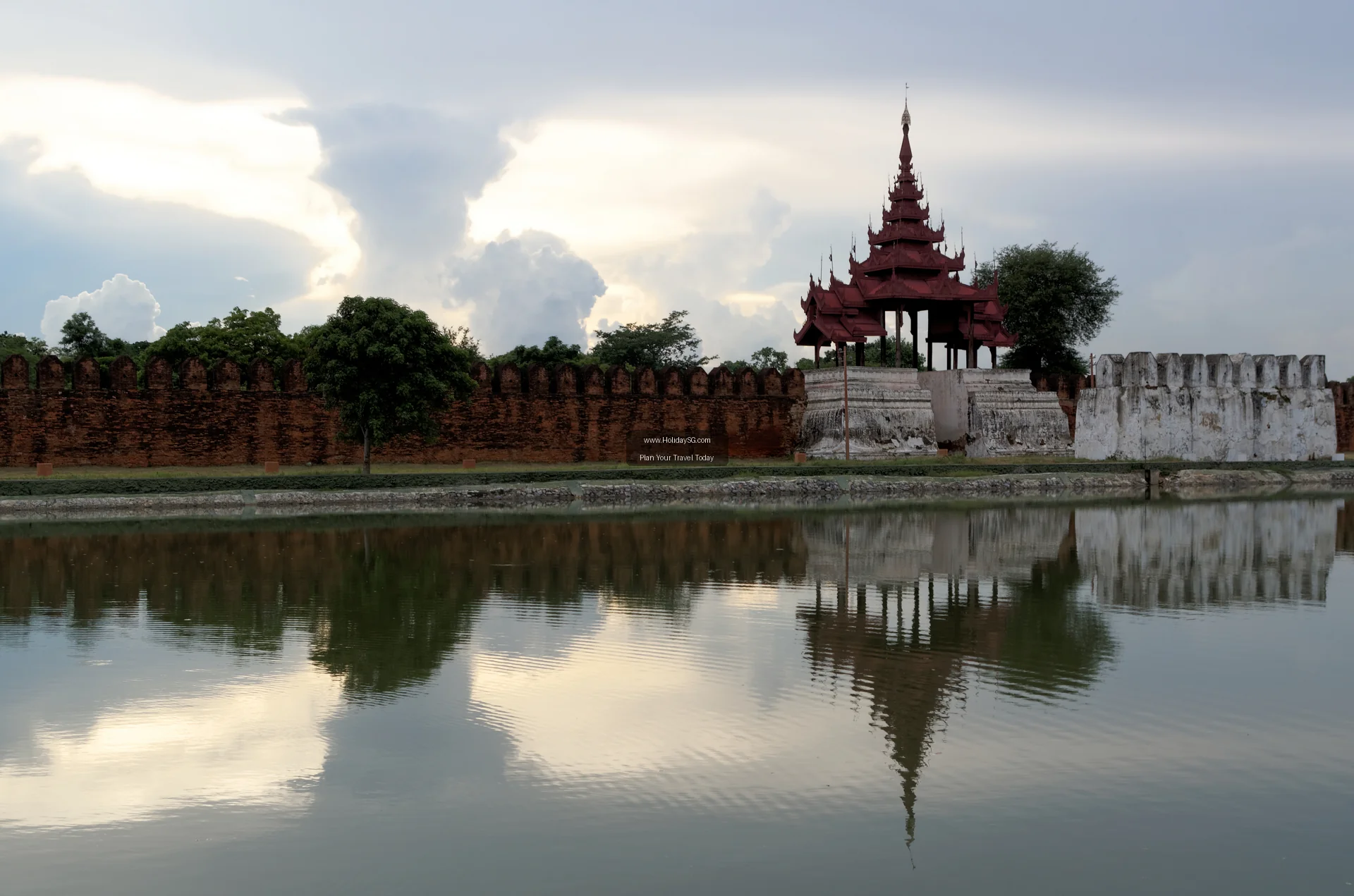
Walk the walls of Mandalay Palace and climb Mandalay Hill
Mandalay Palace was built between 1857 and 1859, partly from timber carried over from the old palace at Amarapura. The British captured it in 1885 and renamed it Fort Dufferin, and Allied bombing in the Second World War destroyed almost everything inside except the royal mint and the watchtower. Today's palace buildings are a reconstruction from around 1990. The real spectacle is the citadel: four walls about two kilometres long forming a perfect square, 48 bastions with gold-tipped spires, twelve gates and a moat 64 metres wide.
The 2025 earthquake damaged sections of those walls, toppled gates and watchtowers and brought down a stupa on the ramparts, so confirm whether the grounds are open before you go. In the past, foreigners entered only by the East Gate and left their passport there.
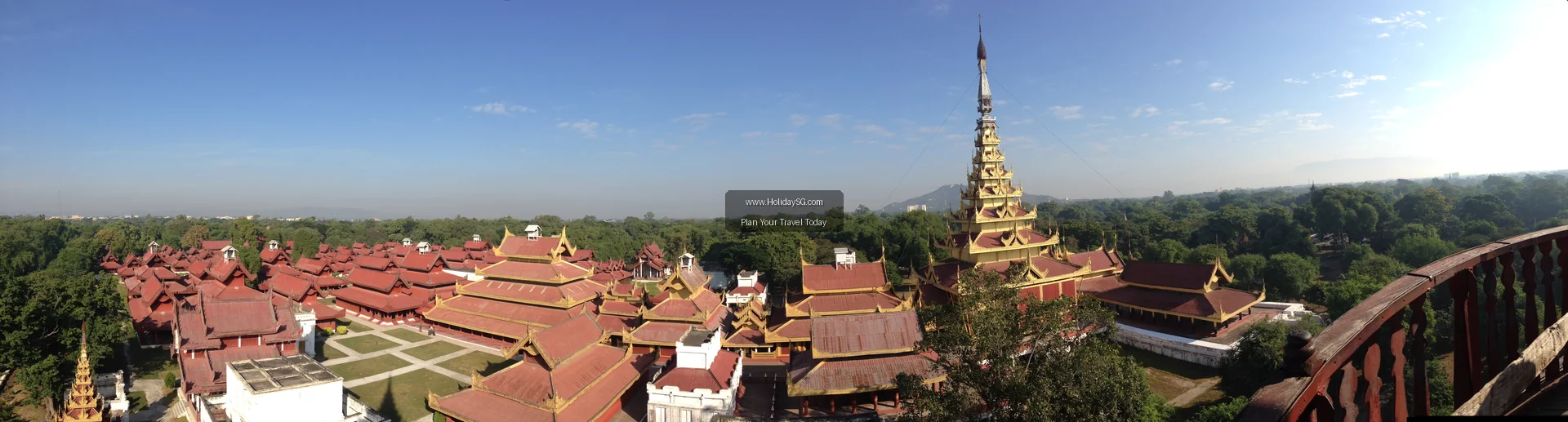
Finish with sunset on Mandalay Hill, a short drive north. Covered stairways climb it barefoot in about 30 to 45 minutes, mostly in shade, or a car can take you most of the way. The top terrace looks west over the city and the Irrawaddy, and a small extra fee has been charged for the highest level.
Watch sunset from U Bein Bridge
In Amarapura, the old royal capital just south of Mandalay, U Bein Bridge crosses Taungthaman Lake for 1.2 kilometres. Built between 1849 and 1851 with teak salvaged from the old palace at Inwa, it is often called the oldest and longest teak footbridge in the world. At sunset, monks, students and fishermen cross it in silhouette against an orange sky.
The bridge has no railings and many pillars are decaying, so walk carefully. For the classic photograph, hire a rowing boat for the last half-hour of light and look back at the bridge from the water. Early mornings are far quieter, with locals crossing on their way to market.
Read the world's largest book at Kuthodaw and see gold leaf beaten by hand
At the foot of Mandalay Hill, Kuthodaw Paya holds what is often called the world's largest book. King Mindon had the entire Buddhist Tripitaka carved onto 729 marble slabs, each in its own small white shrine, arranged in rows around a gilded stupa. Work began in 1860, the inscriptions opened to the public in 1868, and UNESCO added them to its Memory of the World Register in 2013.
Nearby, Shwenandaw Monastery is the only original royal palace building still standing, because it was moved outside the walls before the war; it is made entirely of carved teak. Then visit a gold-leaf workshop, where men beat small packets of gold with heavy hammers for hours until the metal is thinner than paper. Much of that leaf ends up on the Buddha at Mahamuni Paya, where a face-washing ceremony has traditionally been held at around 4.30am. Mahamuni was badly damaged in 2025, so check its status before setting an early alarm.
Plan your trip around a festival
The fifteenth thing on the list is a date rather than a place. Myanmar's festivals follow the lunar calendar, and travelling during one changes the whole experience. Large public gatherings carry their own risks in the current situation, and some celebrations have been scaled back or restricted in recent years, so check what is going ahead before you build a trip around one.
Thingyan, the April water festival
Thingyan marks the Burmese New Year and usually falls around 13 to 16 April, the hottest time of year. For four or five days, water is thrown at everyone in the street, from scented sprinkles to hoses at temporary stages called pandals. On the final day younger people wash the hair of their elders as a mark of respect. UNESCO recognised the festival as Intangible Cultural Heritage in December 2024. Offices, banks and many shops close for the whole period, so plan cash and transport accordingly.
Tazaungdaing and the Taunggyi fire balloons
Tazaungdaing falls on the full moon of Tazaungmon, usually in November, and marks the end of the rainy season. Its most famous celebration is in Taunggyi, the Shan State capital about an hour from Inle Lake, where a balloon contest dating back to 1894 sends paper balloons carrying fireworks into the night sky.
Temple festivals at Ananda, Shwedagon and Phaung Daw Oo
Almost every major temple has its own festival. The Ananda Temple festival in Bagan takes place in the month of Pyatho, around December or January, with the main day on the full moon, and villagers arrive by ox cart to camp around the temple. Shwedagon's festival falls in Tabaung, around February or March. On Inle Lake, the Phaung Daw Oo festival lasts about 18 days, usually in September or October, as four of the five gilded images tour the lake villages on a golden barge, with leg-rowing boat races alongside.
The 15 at a glance: cost, timing and 2026 status
The advisory column shows the UK Foreign Office level as of August 2026. Singapore's MFA advises deferring all travel to the whole country, so treat this as a guide to relative risk, not permission. Kyat prices are the latest reported figures and change often.
| Must-do | Where | Typical cost | Best time | UK advice (Aug 2026) |
|---|---|---|---|---|
| 1. Shwedagon at dusk | Yangon | 10,000 kyat (some report 20,000) | 4.30pm to 7pm | Not listed |
| 2. Circle Line train | Yangon | A few hundred kyat | Morning | Not listed |
| 3. Downtown and Bogyoke Market | Yangon | Free to walk | Morning, not Monday | Not listed |
| 4. Tea shop and mohinga | Yangon and everywhere | Pocket change | 6am to 9am | Not listed |
| 5. Temple plain by e-bike | Bagan | 30,000 kyat zone fee plus rental | Sunrise and late afternoon | All but essential |
| 6. Ananda Temple | Bagan | Covered by zone fee | Before 8am or after 4pm | All but essential |
| 7. Balloon flight | Bagan | About US$300 to US$420 | Sunrise, October to mid-April | All but essential |
| 8. Taung Kalat climb | Mount Popa | Car hire for the day | Early morning | All but essential |
| 9. Full-day boat trip | Inle Lake | 15,000 kyat zone fee plus boat | Leave by 8am | All but essential |
| 10. Indein and five-day market | Inle Lake | Small boat supplement | Morning | All but essential |
| 11. Hill trek | Inle Lake | From S$42.68 guided | November to February | All but essential |
| 12. Palace walls and Mandalay Hill | Mandalay | Zone fee around 10,000 kyat | Late afternoon | All but essential |
| 13. U Bein Bridge | Amarapura | Free to walk, boat extra | Sunset or early morning | All but essential |
| 14. Kuthodaw and gold leaf | Mandalay | Zone fee; workshops free | Morning | All but essential |
| 15. A festival | Nationwide | Free to watch | April, November, December to January | Depends on location |
To fit all four hubs into one trip, the order that works best by air is Yangon for two nights, Bagan for three (to match the three-day zone ticket), Inle Lake for two or three, Mandalay for two, then back to Yangon for the flight home. That is roughly ten days without rushing. For a shorter version, our five-day Myanmar itinerary lays out the pacing day by day, and the month-by-month guide to Myanmar's weather will help you pick dates.
Getting there from Singapore and moving between the four hubs
Holders of ordinary Singapore passports can visit Myanmar without a visa for social visits of up to 30 days, under an exemption in place since December 2016. Your passport needs at least six months of validity on arrival. Most other nationalities need a tourist eVisa, which has cost US$50, is single entry and is valid for arrival at the international airports in Yangon, Mandalay and Nay Pyi Taw. Our Myanmar visa guide covers the details.
Singapore Airlines, Myanmar Airways International and Myanmar National Airlines all fly between Changi and Yangon, and the flight takes around three hours. Myanmar's clocks run one and a half hours behind Singapore. International flights use Terminal 1 at Yangon; domestic flights leave from Terminal 3.
Yangon's terminals are functional rather than comfortable and delays are common, so a lounge is worth considering, especially on the way home. HolidaySG sells access to the Mingalar Sky international business class lounge at Yangon airport from S$44.06, with seating, food and drinks away from the gates. Domestic flights to Bagan and Heho often leave very early, and the Mingalar Sky domestic lounge in Yangon's Terminal 3 from S$15.25 gives you somewhere to eat breakfast and charge your phone before boarding.
Inside the country, fly. Domestic airlines link Yangon, Mandalay, Nyaung U for Bagan and Heho for Inle Lake, mostly on small turboprops with tight baggage limits. Overnight buses still run, but operators currently advise against overland travel between hubs because of checkpoints. For daily costs on the ground, our budget travel guide to Myanmar breaks things down.
Money, connectivity and temple etiquette
Cash is still king
Myanmar remains largely a cash society. Cards are rare outside top hotels, and ATMs are unreliable and may reject foreign cards; Visa tends to have better luck than Mastercard. Bring US dollars in crisp, unmarked notes, ideally US$100 bills. Money changers reject notes with folds, pen marks or tears, and the UK Foreign Office warns that serial numbers starting AB or CB are often refused.
The official exchange rate and the rate money changers actually pay have been far apart for years, and both move quickly, so ask your hotel before changing a large sum. Change money in stages, because kyat is very hard to convert back. Foreign currency over US$10,000 must be declared on arrival.
Staying connected
Facebook, Instagram and X have been blocked inside Myanmar, and recent travellers report needing a VPN to use them, so install and test one before you leave Singapore. A local SIM from the airport gives you data in the main towns. Power cuts happen regularly, even in Yangon, so carry a charged power bank and download offline maps.
How to behave at temples, and around soldiers
Take off shoes and socks before entering any temple, stupa or monastery compound, which often starts at the outer gate rather than the shrine door. Cover shoulders and knees. Never point your feet at a Buddha image, a monk or another person, so sit with your legs tucked to one side. Do not touch anyone's head. Women should not touch monks or hand things to them directly. Walk clockwise around stupas.
Never photograph soldiers, police, checkpoints or military vehicles, and avoid political conversations in public. Ask before photographing people, especially monks and nuns.
Frequently asked questions
Is it safe to travel to Myanmar in 2026?
Singapore's MFA strongly advises Singaporeans to defer all travel to Myanmar, and the UK advises against all travel to large parts of the country. Travellers who still go generally stick to Yangon, Bagan, Mandalay and Inle Lake, fly between them and use established operators. Check whether your travel insurance remains valid, register with MFA, and recheck the advisory shortly before departure, because the situation can change quickly.
Do Singaporeans need a visa to visit Myanmar?
No visa is needed for Singapore ordinary passport holders on social visits of up to 30 days. This exemption has been in place since December 2016. Your passport should have at least six months of validity left when you arrive. Most other nationalities need a tourist eVisa, which has cost US$50, allows a single entry and must be used at an approved international airport such as Yangon or Mandalay.
How many days do I need to do all 15 things?
Around ten days covers all four hubs comfortably: two nights in Yangon, three in Bagan, two or three at Inle Lake and two in Mandalay, with domestic flights in between. With a week, drop Mandalay, which also has the most earthquake damage. With five days, choose Yangon and Bagan, or Yangon and Inle Lake, rather than trying to fly to all four.
When is the best time of year to visit Myanmar?
November to February is the cool, dry season, with Yangon temperatures of roughly 19°C to 32°C, clear skies for balloon flights and cold nights at Inle Lake. March to May is very hot, with Mandalay and Bagan regularly near 37°C or more. June to October is the monsoon, when rain is heavy, prices drop and the countryside turns green, but treks get muddy.
How much is the Bagan archaeological zone fee?
Foreigners pay 30,000 kyat, a rate in force since 1 October 2023, when it rose from 25,000 kyat. The ticket is now valid for three days instead of five, and you pay again if you stay longer. It is collected at Nyaung U airport and checked at major temples such as Ananda, so keep it in your bag the whole time you are exploring.
Can you still take a hot-air balloon over Bagan?
Yes, balloons have been flying in season, which runs from early October to around mid-April, at sunrise only. Prices for recent seasons have generally run from about US$300 to US$420 per person. December and January sell out first, so book early, and keep a spare morning in your plans because flights are called off when winds are too strong.
What should I wear when visiting temples in Myanmar?
Wear clothing that covers your shoulders and knees, and footwear you can slip off quickly, because shoes and socks must come off across the whole temple compound. A longyi, the wraparound cloth worn by both men and women, is cheap, cool and accepted everywhere. Bring wet wipes for your feet and avoid tight or see-through clothing at religious sites.