

2026 macau travel guide : top attractions, food & tips is exactly what this guide covers.
Stepping into Macau is like walking through a living museum where Portuguese pastels meet Chinese lanterns, and historic cobblestones lead to neon-lit mega-resorts. This Special Administrative Region of China offers a fascinating cultural fusion that’s impossible to find anywhere else. Planning your adventure for 2026? This guide dives into the must-see historic sites, the unforgettable local cuisine, and all the practical advice you need for a seamless trip to the “Vegas of the East” – and beyond.
TL;DR: Macau is a compact destination perfect for a short getaway, best visited from October to December for ideal weather. Focus on the UNESCO-listed Historic Centre for culture, the Cotai Strip for entertainment, and don’t leave without trying the iconic egg tarts. Your trip can be budget-friendly thanks to free casino shuttles and affordable local eats.
Planning Your Visit: The Best Time to Experience Macau
The sweet spot for a Macau visit is the autumn-to-early-winter window from October to December. During these months, you’ll enjoy mild, dry weather with comfortable temperatures averaging 20-25°C (68-77°F), perfect for walking the historic streets. Avoid the summer months from July to September, when oppressive heat and humidity are compounded by the peak typhoon season. If you’re hoping to coincide your trip with a major event, check the schedule for the Macau Grand Prix in November or the vibrant Macau Food Festival in late autumn.
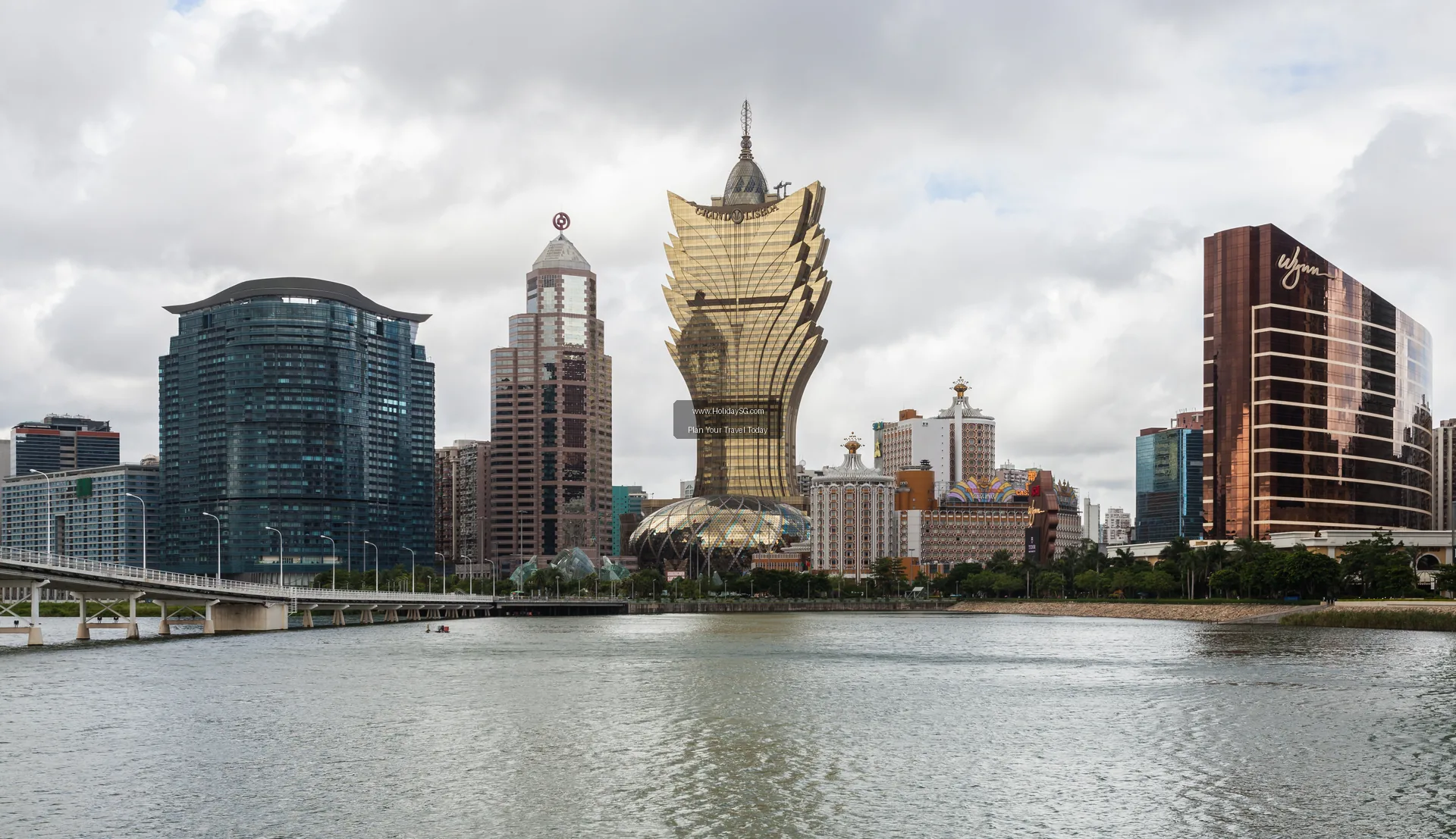
Unmissable Experiences: Sights and Activities in Macau
Ready to go? Book Macau Airport Mfm Transfer 1 Way with HolidaySG.
Macau’s charm lies in its distinct neighbourhoods. You can easily explore the UNESCO World Heritage-listed Historic Centre on foot, while the Cotai Strip, which bridges Taipa and Coloane islands, is the modern heart of entertainment.
Walk Through History in the Historic Centre
The core of Macau’s story is told here. Start at the iconic Ruins of St. Paul’s, a dramatic stone facade standing as a monument to the region’s Catholic heritage. From there, descend the steps into the lively Senado Square, with its wave-patterned mosaic pavement and neoclassical buildings painted in vibrant yellows and greens. Don’t miss the Monte Fort for panoramic views over the old city’s tiled roofs. This area is most magical in the early morning or late afternoon when the light is soft and the crowds are thinner.
Indulge in Glamour on the Cotai Strip
This is Macau’s dazzling entertainment corridor. The Venetian Macao, with its sprawling Grand Canal Shoppes and indoor canals, is a destination in itself. For a complete change of pace, consider the JW Marriott Macau Urban Chef Buffet, which offers a fantastic spread of international cuisines in a sophisticated setting. The entire strip is connected, making it easy to hop between resorts to catch a show, browse luxury boutiques, or try your luck at the gaming tables.
Thrills and Panorama at Macau Tower
For the best view in town, head to the Macau Tower. Its observation deck offers a 360-degree vista of the city, the Pearl River Delta, and the neighbouring Zhuhai. For the truly adventurous, it’s home to one of the world’s highest commercial bungee jumps. For a less heart-stopping experience, the Skywalk X is a hands-free walk around the tower’s outer rim. Consider a combo ticket (around MOP 135) which can include access here and other cultural attractions like the A-Ma Cultural Village for better value.
Seek Serenity at Ancient Temples
Beyond the glitz, find tranquility at sites like A-Ma Temple, one of the oldest in Macau, dedicated to the sea goddess Mazu. Its series of pavilions, archways, and prayer halls climb the hillside, offering a peaceful retreat. For a deeper dive into the city’s spiritual side, similar to what we cover in our guide to cultural temples in Southeast Asia, explore the Kun Iam Temple or the vibrant Lin Fung Temple further north on the peninsula.
Macanese Cuisine: A Delicious Blend of Cultures
Macau’s food scene is a culinary highlight, reflecting its Portuguese and Chinese heritage. Be sure to sample these essentials:
- Portuguese Egg Tarts: Flaky pastry with a creamy, caramelised custard. Lord Stow’s Bakery in Coloane is the legendary spot to try the original.
- Pork Chop Buns: A simple but heavenly snack of a juicy, crispy-edged pork chop served in a crispy-soft bun. Look for queues at small eateries like Chan Kong Kei.
- African Chicken: A signature Macanese dish with a Portuguese-African twist – spicy, rich, and full of flavour, often served with potatoes or rice.
- Dim Sum & Sweets: Enjoy traditional Cantonese dim sum for breakfast, and don’t leave without picking up some buttery almond cookies as a souvenir.
Moving Around: A Practical Transport Guide
Ready to go? Book Macau Airport Mfm Transfer 1 Way with HolidaySG.
Getting around Macau is straightforward and economical. The Historic Centre is best explored on foot. For longer distances, the public bus system is reliable and cheap, with fares starting at MOP 6. One of the best travel hacks is using the free shuttle buses operated by major casinos and hotels, which run frequently between the ferry terminals, airport, and the Cotai Strip. For a smooth arrival, consider pre-booking a Macau Airport transfer to your hotel. The Macau Light Rapid Transit (LLRT) is a modern, driverless train line connecting the airport, Taipa, and the Cotai Strip efficiently.
Everything You Need to Know Before You Go
Managing Your Money
MOP (Macanese Pataca) / HKD is the Macanese Pataca (MOP), pegged to the Hong Kong Dollar. Conveniently, Hong Kong Dollars (HKD) are accepted everywhere at a 1:1 rate. Major credit cards are widely taken in hotels, casinos, and larger shops. Always notify your bank of your travel plans. For a typical daily budget, a traveller can expect to spend around MOP 500-800 (approx. SGD 85-135) on food and transport, while a mid-range trip including a standard hotel room falls in the MOP 1,200-2,000 (SGD 205-340) range.
Entry, Language, and Connectivity
Singaporean passport holders enjoy visa-free entry for up to 30 days. Ensure your passport has at least six months’ validity from your date of entry. While the official languages are Chinese (Cantonese) and Portuguese, English is widely understood in tourist zones, hotels, and casinos. You’ll need a universal power adapter for the Type A, C, and I plugs used in Macau, which are common in China and the US.
Where to Stay
Accommodation ranges from budget-friendly guesthouses in the historic area to spectacular integrated resorts on the Cotai Strip that feature pools, spas, and endless dining options. Booking well in advance for the peak season is recommended.
Recommended HolidaySG Tours
Ready to go? Book Macau Airport Mfm Transfer 1 Way with HolidaySG.
- Full Day Macau Sightseeing Tour Day Tours
- Macau Airport Mfm Transfer 1 Way To Downtown
- Guangdong Hong Kong Macau Private Charter
- Jw Marriott Macau Urban Chef Buffet
Macau packs an incredible amount of culture, history, and entertainment into its small footprint. By timing your visit for the pleasant autumn months, embracing both the ancient temples and dazzling resorts, and indulging fully in its unique culinary heritage, you’ll discover why this former Portuguese colony remains one of Asia’s most captivating destinations. Start planning your 2026 Macau escape today to experience its singular charm firsthand.
Ready to begin your adventure? Book your seamless arrival with our Macau Airport Mfm Transfer 1 Way and start your trip stress-free.
Book these with HolidaySG:
Book with HolidaySG online for Macau Airport Mfm Transfer 1 Way, Jw Marriott Macau Urban Chef Buffet, Jw Marriott Hotel Macau Urban Kitchen Lunchdinner Buffet.
Frequently Asked Questions
Where can I book a Macau sightseeing tour or airport transfer?
You can book popular Macau experiences directly through HolidaySG. For a comprehensive tour, consider the Full Day Macau Sightseeing Tour. For convenient arrival, book a Macau Airport MFM Transfer 1 Way to your hotel. For dining, you can reserve a buffet experience like the JW Marriott Macau Urban Chef Buffet or the JW Marriott Hotel Macau Urban Kitchen Lunch/Dinner Buffet.
Do foreigners (non-citizens) need a different ticket, price, or visa for Macau?
Entry requirements for Macau vary by your nationality. Many countries, including Singapore, enjoy visa-free entry for tourism for a limited period. However, it is crucial to check the latest official immigration rules before your trip. Always verify the current requirements on the official Macau Immigration Services website or with your country’s foreign affairs department to ensure you have the correct visa or entry permit.
What is the best time of year or day to visit Macau’s attractions?
The best season to visit Macau is during the cooler, drier months from October to December, offering comfortable weather for walking. Spring (March-May) is also pleasant but can be more humid. Summers (June-August) are hot, humid, and rainy, with a risk of typhoons. For sightseeing, early mornings or late afternoons are ideal to avoid peak crowds and midday heat, especially for popular spots like the Ruins of St. Paul’s. Evenings are perfect for experiencing the dazzling lights of the casino resorts.
How many days do I need to see the main attractions in Macau?
Most travelers find that 2 to 3 full days are sufficient to explore Macau’s top historic sites in the peninsula, the Cotai Strip’s modern resorts, and sample the iconic food. A well-planned 1.5-day trip can cover the absolute highlights if you’re short on time. If you plan to visit Taipa Village, enjoy shows, or take a day trip to Coloane, consider adding an extra day.
Is Macau expensive to visit compared to Hong Kong or Singapore?
Macau can be visited on a range of budgets. While the major casino resorts and their restaurants can be pricey, the historic center, local street food, and public buses are very affordable. Accommodation is generally slightly cheaper than in Hong Kong’s central areas. Expect to spend around SGD 100-200 per day for a mid-range experience, covering meals, local transport, and attractions.
How do I get to Macau from Hong Kong or mainland China?
The most popular route from Hong Kong is via ferry, with frequent services from Hong Kong International Airport or ferry terminals like the China Ferry Terminal. The new Hong Kong-Zhuhai-Macau Bridge offers another option via shuttle bus. From mainland China, you can enter via the Gongbei Port (Zhuhai) by foot, or fly directly into Macau International Airport. Private charters across the border are also available, such as the Guangdong-Hong Kong-Macau Private Charter via HZMB.
Is Macau family-friendly? Are there things for kids to do?
Yes, Macau is quite family-friendly. Beyond the casinos, attractions like the giant panda pavilion in Coloane, the Macau Fisherman’s Wharf theme park, and the interactive science museum are great for kids. Many resorts have pools, arcades, and spacious rooms. The open, paved historic center is also manageable with a stroller, though some hilly streets can be challenging.
What should I pack for a trip to Macau?
Pack light, breathable clothing for the hot and humid weather (summer) or light layers for cooler winters. Comfortable walking shoes are essential for exploring the historic stone streets. Bring sunscreen, a hat, a reusable water bottle, and a compact umbrella or rain jacket due to sudden showers. If visiting casinos, remember they are formal; smart casual attire (no shorts, flip-flops, or singlets) is often required for entry.
Is Macau accessible for travelers with mobility issues?
Accessibility varies. The modern casino resorts and their connecting areas are generally fully accessible with ramps and elevators. However, the historic center has many steep, cobblestone streets and hilly pathways, which can be challenging. Public buses have low-floor access, but can be crowded. It’s advisable to plan routes carefully and consider private transfers for major attractions.
Is Macau safe for tourists?
Macau is very safe for tourists. It has a low crime rate, and violent crime is rare. The main concerns are petty theft like pickpocketing in crowded tourist areas (e.g., near the Ruins of St. Paul’s) and scams. Be cautious with your belongings, use hotel safes, and only use licensed taxis or ride-hailing services.
What is MOP (Macanese Pataca) / HKD and can I use credit cards?
The official currency is the Macanese Pataca (MOP). However, the Hong Kong Dollar (HKD) is widely accepted at a 1:1 rate, and prices are often listed in HKD. Singapore dollars are not commonly accepted. Credit cards (Visa, Mastercard, Amex) are widely accepted at hotels, larger restaurants, casinos, and shops. For small vendors, street food, and public transport, you’ll need cash (HKD or MOP).
What are the must-try foods in Macau?
Macanese cuisine is a highlight. You must try the iconic Portuguese egg tart (try Lord Stow’s Bakery), Minchi (minced meat with rice and potato), African Chicken, and Pork Chop Bun. Don’t miss the sweet almond cookies and jerky from local shops in the historic center. For a luxurious meal, book a buffet at a top hotel like the JW Marriott Macau Urban Chef Buffet.
Are there any cultural etiquette tips I should know?
Macau is generally relaxed, but a few tips are helpful: When entering temples, dress modestly and speak quietly. It’s polite to greet shopkeepers. Tipping is not compulsory but appreciated for good service (10% in restaurants if service charge isn’t included). In casinos, be respectful of other players and staff. Queuing is expected for popular attractions and restaurants.
What are the best day trips from Macau?
With easy connections, popular day trips include Hong Kong (via ferry or bridge), Zhuhai and Guangdong in mainland China, and the island of Coloane in Macau itself, which offers a quieter, greener atmosphere with the iconic A-Ma Cultural Village and Hac Sa Beach.
Do I need travel insurance for Macau?
While not mandatory, comprehensive travel insurance is highly recommended for any international trip. It should cover medical expenses, trip cancellation or delay, lost luggage, and personal liability. Check that your policy includes coverage for adventure activities if you plan any, and understand the claim process.
What are the opening hours for major attractions like the Ruins of St. Paul’s?
The Ruins of St. Paul’s is an open-air site and accessible 24 hours, but the Sacred Art Museum in the crypt (requires a ticket) typically opens around 9:00 AM and closes by 6:00 PM. The Monte Fortress also opens around 9:00 AM. Casino resorts are open 24/7. It’s best to check specific attraction websites or your tour itinerary for current hours.
Can I use my Singapore phone SIM card in Macau?
You can, but international roaming charges can be high. A more economical option is to purchase a local SIM card or an eSIM upon arrival at the airport, ferry terminal, or convenience stores. Many hotels and cafes also offer free Wi-Fi.
What is the weather like in Macau?
Macau has a subtropical climate. Summers (June-September) are hot and humid with temperatures around 28-33°C, frequent afternoon thunderstorms, and typhoon season risk. Winters (December-February) are mild and dry, with temperatures from 10-17°C. Spring is warm and humid, while autumn is warm and pleasant.
Are there any free things to do in Macau?
Absolutely. Walking around the UNESCO World Heritage historic center is free and the top activity. You can admire the exterior of the Ruins of St. Paul’s, explore the charming streets, and watch the lighting ceremonies at the Senado Square. Window-shopping and people-watching at the major casino resorts are also completely free.
What is the best way to get around within Macau?
Public buses are cheap and efficient for reaching most attractions. Taxis are reasonably priced and plentiful, with metered fares. The Macau Light Rapid Transit (LRT) connects the peninsula with Cotai and Taipa. For convenience, especially for airport transfers, you can pre-book a Macau Airport Transfer. Walking is the best way to explore the compact historic center.
Are there any famous shows or performances I should book in advance?
Yes. The “House of Dancing Water” at City of Dreams is a world-famous water-based stage show that often sells out. Other spectacular shows include the dancing fountain displays outside The Venetian Macao and the free laser show at The Parisian Macao. For popular shows, it’s advisable to book tickets online well in advance through official websites or your hotel concierge.
What things cost in Macau
Live HolidaySG prices for the experiences in this guide, so you can sanity-check a budget before you commit.
| Experience | Where | From price |
|---|---|---|
| TurboJet ferry boat ticket (Hong Kong→Macau) | Macau | From S$25.70 |
| Legend Heroes Park | Macau | From S$38.43 |
| Macao Open Top Bus | Macau | From S$24.47 |
| Museu Do Grande Prémio De Macau Macao Grand Prix Museum | Macau | From S$15.63 |
| Studio City Water Park | Macau | From S$74.47 |
| Golden Reel Figure-8 Ferris Wheel | Macau | From S$10.79 |
| Macau Tower | Macau | From S$16.00 |
| House of Dancing Water | Macau | From S$85.07 |
Planning Your Visit
When planning a visit to this destination it is important to consider several factors that can significantly impact your overall experience. The time of year you choose to visit can affect everything from weather conditions and crowd levels to the availability of certain activities and events. Peak tourist seasons typically offer the best weather but also bring larger crowds and higher prices for accommodation and activities while shoulder seasons can provide a more balanced experience with reasonable weather fewer visitors and better value. Booking tickets and reservations in advance is highly recommended especially for popular attractions and experiences that may sell out during busy periods. Many venues offer online booking options that allow you to secure your spot and sometimes receive discounted rates compared to purchasing tickets at the door. Arriving early in the morning is another effective strategy for avoiding the largest crowds and having a more relaxed experience at popular sites. Planning your route to visit nearby attractions in a logical sequence can help you make the most of your time and reduce unnecessary travel between locations.
Getting There and Getting Around
Transportation options for reaching and exploring this destination are varied and cater to different budgets and preferences. International visitors typically arrive by air with several airlines offering direct and connecting flights from major cities around the world. From the airport various ground transportation options are available including airport express trains shuttle buses taxis and ride-sharing services each with their own advantages in terms of cost convenience and travel time. Within the destination itself public transportation networks including metro systems buses and trams provide efficient and affordable ways to reach most major attractions and neighbourhoods. Many cities also offer tourist passes that combine unlimited public transportation with free or discounted admission to popular attractions providing excellent value for visitors planning to see multiple sites. Walking is often the best way to explore central areas and discover hidden gems that might be missed when travelling by vehicle while cycling has become increasingly popular in many destinations with dedicated bike lanes and rental stations making it easy and safe to get around on two wheels.
Food Culture and Dining
Exploring the local food scene is one of the great pleasures of travelling and this destination offers a rich and diverse culinary landscape that reflects its cultural heritage and geographic influences. Street food markets and hawker centres provide an authentic and affordable way to sample a wide variety of local dishes in a lively and social atmosphere. Many of these markets are open from morning until late evening and offer everything from traditional breakfast items to late-night snacks and desserts. For a more refined dining experience the restaurant scene ranges from casual family-run establishments serving home-style cooking to upscale venues offering innovative interpretations of classic dishes. Food tours led by knowledgeable local guides are an excellent way to discover the best eating spots and learn about the stories and traditions behind the dishes you are tasting. Vegetarian and vegan travellers will find an increasing number of options available as plant-based dining continues to grow in popularity worldwide though it is always helpful to learn how to communicate dietary requirements in the local language. Trying the local specialities is an essential part of any visit and many destinations are known for particular dishes or ingredients that cannot be found anywhere else in the world.
Safety and Practical Information
Staying safe while travelling requires a combination of common sense awareness and preparation. Keeping your valuables secure and being mindful of your surroundings in crowded tourist areas helps reduce the risk of petty theft which is the most common crime affecting travellers in most destinations. Using hotel safes for passports and excess cash wearing bags across your body rather than on one shoulder and being cautious with your phone in busy public spaces are all sensible precautions. It is also important to stay hydrated especially in warm climates and to protect yourself from the sun with appropriate clothing sunscreen and a hat. Purchasing comprehensive travel insurance before your trip provides peace of mind and financial protection against unexpected events including medical emergencies trip cancellations lost luggage and other disruptions. Keeping a list of emergency contacts including your countrys embassy or consulate local emergency services and your insurance providers hotline ensures you can get help quickly if needed. Learning about any specific safety concerns or areas to avoid in your destination by consulting official government travel advisories before departure is another important step in responsible travel planning.
Historic Centre of Macau
Macau is a small place, barely thirty square kilometres on the southern coast of China, yet few cities pack so much history into so little space. Walking the historic centre is the best way to understand what makes it different from Hong Kong or the mainland. Here, Portuguese colonial squares sit beside Chinese temples, and the street signs are often printed in both Portuguese and Chinese. In 2005 UNESCO added a cluster of sites to its World Heritage List under the name "Historic Centre of Macau", and the area still feels like a living neighbourhood rather than a museum piece.
The most photographed landmark is the Ruins of St Paul's. Only the granite façade survives, standing on a hill after a fire in 1835 destroyed the rest of the church, which the Jesuits had started building in the early seventeenth century. The carvings on the front are a mix of Christian and Asian motifs, including Japanese Christian martyrs, a dove, and the sun and moon, and it is worth spending time looking at the details rather than only taking the classic photo from the bottom of the steps. Behind the façade, a small museum shows relics and explains the Jesuit mission in East Asia. Go early in the morning or near sunset to avoid the largest crowds.
A few minutes' walk away, Senado Square (Largo do Senado) is the heart of old Macau. Its black-and-white wave-patterned pavement is a favourite with visitors, and the surrounding buildings in pastel yellow and cream show the Portuguese colonial style. The Holy House of Mercy and the old Leal Senado building frame the square, and in the evenings locals and visitors gather on the benches while street performers and vendors fill the space. It is a good place to sit with a coffee and watch the city go by.
For a very different atmosphere, visit A-Ma Temple on the Barra Hill, a short walk or taxi ride from the old town. The temple is dedicated to A-Ma, the goddess of seafarers and fishermen, and it is said to date back several centuries. Its shrines are full of incense smoke, paper offerings and the sound of visitors making their wishes. The city's name is widely believed to come from this goddess, and many visitors find the temple the most peaceful part of the historic district. Dress modestly, watch your step on the steep paths, and leave a little time to walk down through the surrounding streets.
Other UNESCO-listed sites are close by, including the Mandarin's House, Dom Pedro V Theatre, and several old churches and fortresses. Many have short opening hours and small entry fees, so plan a half-day around them and pick up a map from the tourist office before you start. The lanes between these landmarks are full of family-run shops, pharmacies selling herbal remedies, and small temples tucked into courtyards, so allow yourself to wander off the main route.
Macau Food and Street Eats
Food is probably the strongest reason to visit Macau. The city blends Cantonese cooking with Portuguese influences from the centuries when it was a trading post, and the result is a cuisine that shows up in everything from snacks to full restaurant meals. Eating your way through the old town is easy and inexpensive, and most food shops are within a few minutes of each other.
The egg tart is the dessert everyone talks about. The Macanese version has a crisp, flaky pastry shell and a custard filling that is baked at a high heat until the top is lightly caramelised with brown spots. Eat one warm from the oven if you can. Lord Stow's Bakery in Coloane is the best-known name, and its queues often run out the door in the late morning, but many smaller bakeries around the old town make excellent tarts too, so try a few and decide your own favourite.
The pork chop bun is the signature savoury snack. A thick, deep-fried pork chop, often marinated and lightly seasoned, is tucked inside a soft bun, sometimes with a smear of sauce. It is messy and filling, and it is the sort of thing you eat standing at a counter with a paper napkin in one hand. Almond cookies are the classic souvenir, usually sold in tins, and the ones made with real almonds and a crumbly texture are the most prized. Check the ingredient list if you want the real thing.
For a sit-down meal, look for the Portuguese restaurants on the quieter streets near Senado Square and in Taipa. Dishes such as African chicken, a spicy grilled chicken with coconut and piri piri, show the Macanese love of bold flavours, while bacalhau (salt cod) and caldo verde soup show the Portuguese roots. Portions are generous and prices are reasonable, and many places fill up at dinner time, so book ahead on weekends.
Hawker stalls and dai pai dong style eateries serve cheap bowls of congee, wonton noodles and milk tea. The best ones are often hidden in side streets and may have only a handful of tables. Ask for the local dishes the staff recommend, and do not be surprised if the menu is written only in Chinese. Pointing at what other diners are eating works well, and a small phrasebook or a translation app helps too.
Getting Around Macau
Getting to Macau is simple. Ferries run frequently from Hong Kong, with the main operators sailing from the Hong Kong–Macau Ferry Terminal in Sheung Wan and from other piers. The crossing takes about an hour, so you can easily arrive in Macau on a day trip. Check the latest timetable before you set out, because sailings can change with the weather, and allow extra time at the terminal for ticketing and immigration checks. Tickets are available at the counters and online, and buying in advance is sensible at weekends and public holidays.
Once in Macau, the Light Rail Transit (LRT) is the fastest way to move between the Taipa and Macau Peninsula areas. The line is clean, quick and easy to use with a rechargeable Macau Pass card, and stations are close to many hotels and attractions. It is not a full network, so you will still need buses or taxis to reach some sights, especially the hill temples and the far end of Coloane.
The city bus network covers almost every district and is inexpensive. Routes can be confusing at first, so use a map app or ask staff at your hotel for the right number and stop. Buses are often crowded during rush hour, and if you have heavy luggage a taxi may be more comfortable. Taxis are plentiful, and drivers usually use the meter, but it helps to have your destination written in Chinese or Portuguese on your phone.
The old town is best explored on foot. The historic centre is compact, and most of the UNESCO sites are within a fifteen to twenty minute walk of each other. Wear comfortable shoes, because the pavements can be uneven and the hills are steep. Walking also lets you notice the small details, such as tile work, old shopfronts and street altars, that you would miss from a bus.
Many of the big resorts run free shuttle buses between the casinos, the ferry terminals and the border gate. These shuttles are one of the most useful and budget-friendly ways to move around, and the timetables are posted at the hotel lobbies. Ask the front desk for the latest schedule when you check in, because routes and frequencies can change between seasons.
Budget Tips for Visiting Macau
Macau can be as expensive or as cheap as you want it to be. The casino resorts are famous for luxury hotels and high-end dining, but the city also has plenty of low-cost options, and a careful traveller can enjoy a good few days without spending much. The first money-saver is the free casino shuttle, already mentioned above. Riding a resort shuttle instead of a taxi between the ferry pier and the Cotai Strip can save a fair amount each day.
Many resorts put on free entertainment in their atriums and along their shopping streets. Fountain displays, light shows, performances and seasonal decorations are common, and the shows change throughout the year. Check the resort's event listings on arrival, since some are scheduled only on certain days or evenings. Visiting the casino floors is free too, though you should set a spending limit before you go in and stick to it.
For food, mix cheap snacks with an occasional proper meal. Bakeries, street stalls and noodle shops will keep your costs low, and you can taste several local specialities in one afternoon for the price of a single restaurant dinner. Fine dining at the resort restaurants is worth it for a special occasion, but there is no need to eat there every night. Lunch is often the best value, as many restaurants offer set menus at midday that are much cheaper than the same dishes at dinner.
Timing matters as well. Hotel rates rise sharply during public holidays, the Macau Grand Prix weekend in November, and Chinese New Year. Weekdays outside holiday periods are usually cheaper, and mid-week ferry tickets are easier to find. Compare the price of a ferry ticket with a return ticket from the same operator, since sometimes the return fare is only slightly more than a single one.
The best months for weather are generally October to December, when the humidity is lower and the skies are clearer. Spring can be rainy and summer is hot and humid, with the risk of typhoons. If you can, plan around the shoulder months for a comfortable trip at a moderate cost. Carry a small amount of Macanese pataca for street stalls, since not every small vendor accepts cards, and check current exchange fees with your bank before you travel.
Day Trip or Overnight Stay
Whether to visit Macau for a day or stay overnight depends on your interests. A day trip from Hong Kong is enough to see the historic centre, eat the famous snacks and try your luck in a casino. If you want to explore the islands, enjoy the beaches or spend a relaxed evening on the Cotai Strip, two or three nights will give you a much better sense of the city. Many visitors are surprised by how much more there is to see once they step beyond the old town.
The Cotai Strip, the reclaimed land between Taipa and Coloane, is the modern face of Macau. Its giant resorts hold shopping malls, theatres, sports arenas and restaurants, and some of the buildings are themed like famous cities from around the world. Walking between the resorts is possible but can be long, so use the shuttles or taxis to get around. The Cotai Strip is at its liveliest in the evening, when the lights come on and the malls and restaurants fill up.
Taipa Village is a pleasant change of pace. Its old streets have colonial houses, small cafés, galleries and traditional shops. The Taipa Houses Museum gives a good insight into how Macanese families lived in the past, and the nearby squares are ideal for a slow lunch. In the evening, the village has a relaxed mood and is a good place for a quiet dinner after a busy day on the Strip.
Coloane is quieter still. It has a more rural feel, with a village centre, small beaches and wooded hills. Hac Sa Beach is one of the more popular spots, a long stretch of sand that is good for a walk, though the sea is not always suitable for swimming, so check conditions before you go in. Cheoc Van Beach is calmer and surrounded by greenery. Nature lovers can explore the Coloane Trail and the walking paths through Coloane Park, which offer views over the water and the surrounding islands. Wear sun protection and carry water, because the paths are exposed and can be hot.
If you are staying overnight, choose a hotel that suits your plans. Staying near the historic centre keeps you close to the temples and bakeries, while a Cotai hotel suits visitors who want the resort experience and the shows. Consider the transport options before you book, and plan your days so you do not spend hours in traffic. With a little planning, Macau offers a rich mix of history, food and entertainment that rewards every hour you spend there.
Macau Nightlife, Shows and Shopping
Once the sun goes down, Macau changes its character. The historic streets grow quiet, but the resort districts come alive with light, music and crowds. Many visitors plan at least one evening just for the big shows, the rooftop views and the late-night dessert and drink spots. Shopping is also a major part of the experience, with malls ranging from high-end international boutiques to local markets selling souvenirs, snacks and handicrafts.
The resort theatres host a rotating line-up of productions, from large-scale acrobatic performances and musicals to concerts by visiting artists. Tickets for the bigger shows can sell out during holidays, so check the event calendars before you travel and book a seat in advance if a particular show matters to you. Some of the lighter entertainment, such as dancing fountain displays and street performances, is free and can be enjoyed from the walkways outside the hotels.
For a drink with a view, several hotel bars and lounges sit high above the Cotai Strip or overlook the Inner Harbour. Evening prices can be higher than in local bars, so consider going for one drink before dinner rather than staying all night. Along the old town streets, a few small bars and cafés stay open late, and they are a more relaxed choice for a quiet nightcap after a walk around Senado Square.
Shopping in Macau ranges from luxury labels in the big malls to practical items at everyday shops. The resort malls are open late and often have food courts, cinemas and children's play areas, which makes them useful on rainy days. For something more local, visit the traditional markets and browse the shops around the old town for dried seafood, herbal products, tea and the famous snacks. Keep your receipts, and check the rules for taking food products through customs before you pack them to bring home.
When you plan your evenings, allow for travel time between districts, especially on weekends and public holidays when shuttles and taxis fill up quickly. Dress comfortably for the walk between the resort lobbies, and carry a light layer for the air-conditioned malls. A relaxed approach works best: pick one or two highlights for each night, enjoy the free shows, and leave room for a late snack on the way back to your hotel.
Macau Travel FAQ: Questions Answered
How much should I budget per day in Macau?
A moderate budget of 400–600 MOP (roughly USD 50–75) daily covers mid-range meals, local transport, and one major attraction. Budget travellers can eat at dai pai dong stalls in the Historic Centre for 30–50 MOP and use the free casino shuttle buses to move around. If you're staying at a casino resort hotel, meals and transport become cheaper since many properties offer promotional dining credits and complimentary transfers.
What's the fastest way to get from Hong Kong to Macau?
The ferry from Hong Kong's Outer Harbour terminal takes 60 minutes and runs multiple times daily, making it the quickest public option. The Zhuhai border gate crossing via shuttle bus takes about 90 minutes but is cheaper if you're connecting to mainland China afterward. Both routes deposit you at the Maritime Terminal in the Outer Harbour area, from where local buses and taxis reach central Macau in 15–20 minutes.
Can I walk between the Historic Centre and the Cotai Strip?
It's technically possible but not recommended—the distance is roughly 7 km and the route crosses industrial areas and bridges without dedicated pedestrian paths. Instead, take the 25, 26, or AP1 bus directly to Cotai in under 30 minutes, or use a taxi for around 50–80 MOP. The free shuttle buses run by major casinos like The Venetian and Wynn also connect the Outer Harbour Terminal and the Historic Centre to Cotai.
Should I visit Macau in summer or winter?
Winter (November to February) is ideal—temperatures hover around 15–20°C, crowds thin out after Chinese New Year, and outdoor exploration feels pleasant. Summer (May to September) brings heat, humidity above 80%, and typhoon risk, though hotel rates dip and fewer tourists crowd the Ruins of St. Paul's. If you're sensitive to heat, aim for autumn (September to October) as a compromise when the weather starts cooling but prices haven't spiked.
What's the easiest way to pay for things in Macau?
MOP (Macanese Pataca) is the official currency, but HKD is widely accepted at similar rates. Credit cards work at hotels, restaurants, and shops, but smaller street vendors and dai pai dong require cash. Withdraw MOP at any ATM—they're common in casinos, shopping malls, and near ferry terminals—or exchange cash at your hotel, though rates are usually better at banks like Banco Nacional Ultramarino.
Quick Answers
What time should I visit the Macau Tower to avoid crowds?
Go on weekday mornings between 10 a.m. and noon; the viewing platform at 223 metres offers clearer skies and shorter queues before tour groups arrive after lunch.
Can I visit A-Ma Temple and the Historic Centre in one morning?
Yes—A-Ma sits at the southern end of the Historic Centre near the Maritime Terminal, so you can spend an hour at the temple, then walk uphill through cobblestone streets to reach the Ruins of St. Paul's in 15 minutes.
Are there vegetarian options for Macanese food?
Yes—try stir-fried seasonal vegetables, stuffed chillies, and bean-based dishes at local eateries; restaurants around the Historic Centre's Leal Senado Square cater to dietary preferences if you ask ahead.
Does my Singapore phone work in Macau?
Yes—roaming activates automatically, but it's cheaper to buy a local SIM from CTM or China Telecom at the ferry terminal; a 5-day data plan costs around 50–80 MOP.
Things to book on this trip
Plan the rest of your trip
- HolidaySG eSIM plans for Macau - Buy a data plan before you fly and install it on your phone.
