
Macau often gets overshadowed by its bigger sibling, Hong Kong, but this tiny Special Administrative Region is a destination that punches well above its weight. Here, neon-lit casinos stand shoulder-to-shoulder with centuries-old Portuguese churches, Michelin-starred dim sum shares the spotlight with egg tarts fresh from a 19th-century bakery, and the world’s highest bungee jump overlooks a UNESCO-listed historic centre. It’s a place where East meets West in the most unexpected ways—sometimes within the same street, or even the same bite. If you’re wondering whether Macau is worth visiting, this Macau travel guide: what to see & is it worth visiting? will help you decide.
TL;DR: Macau is a compact, culture-rich destination blending Portuguese and Chinese heritage, world-class casinos, and thrilling attractions. Best visited in autumn for pleasant weather, it’s easily explored in 2-3 days, offering a unique contrast to Hong Kong. Budget around SGD 140-210 per day for a comfortable mid-range trip, and don’t miss the iconic Ruins of St. Paul’s or a gondola ride at The Venetian.
Discovering Macau: Beyond the Casino Lights
A Living Museum of Two Cultures
Step into Macau’s Historic Centre, and you’ll feel like you’ve wandered into a living postcard of cultural fusion. This UNESCO World Heritage Site is a collection of over 20 locations—churches, temples, squares, and colonial buildings—that tell the story of Macau’s 400-year history as a Portuguese trading post. The pastel-hued Senado Square, with its wave-patterned mosaic pavement, is the heart of the area, flanked by pastelaria (bakeries) serving Portuguese egg tarts and Chinese herbal tea shops.
Nearby, the Na Tcha Temple and Section of the Old City Walls sit just steps from the Ruins of St. Paul’s, a reminder of how seamlessly Chinese and Portuguese influences coexist here. The Moorish Barracks, built in 1874 to house an Indian regiment, now houses government offices, while the Dom Pedro V Theatre, Macau’s first Western-style theatre, still hosts performances today. It’s this blend of architectural styles—baroque churches next to Taoist temples, European-style plazas lined with Chinese apothecaries—that makes Macau’s historic core so fascinating.
The Ruins of St. Paul’s: More Than Just a Photo Op
No trip to Macau is complete without a visit to the Ruins of St. Paul’s, the city’s most iconic landmark. What remains today is the grand façade of the Church of St. Paul, built in the early 17th century by Japanese Christian exiles and Italian Jesuits. The church was destroyed by fire in 1835, leaving only the ornate stone front, which now stands like a theatrical backdrop at the top of a steep flight of stairs. Climb the 68 steps for a closer look at the intricate carvings—dragons, angels, and a Portuguese ship—symbolizing the fusion of Eastern and Western cultures.
Behind the ruins, the Museum of Sacred Art houses religious artifacts, including a 17th-century ivory crucifix and a macabre relic: the remains of Japanese Christian martyrs. For a unique keepsake, consider booking a Parisian-themed photoshoot at the Ruins of St. Paul’s, blending the site’s historic charm with a touch of European elegance.
Just a short walk away, the Fortaleza do Monte offers a quieter alternative to the crowds at St. Paul’s. This 17th-century fort was built to defend Macau from Dutch invaders and now houses the Macau Museum, which delves deeper into the city’s layered history. The fort’s cannons may no longer fire, but its panoramic views over the city are just as impressive.
Where Glitz Meets Grandeur: Macau’s Casino Resorts
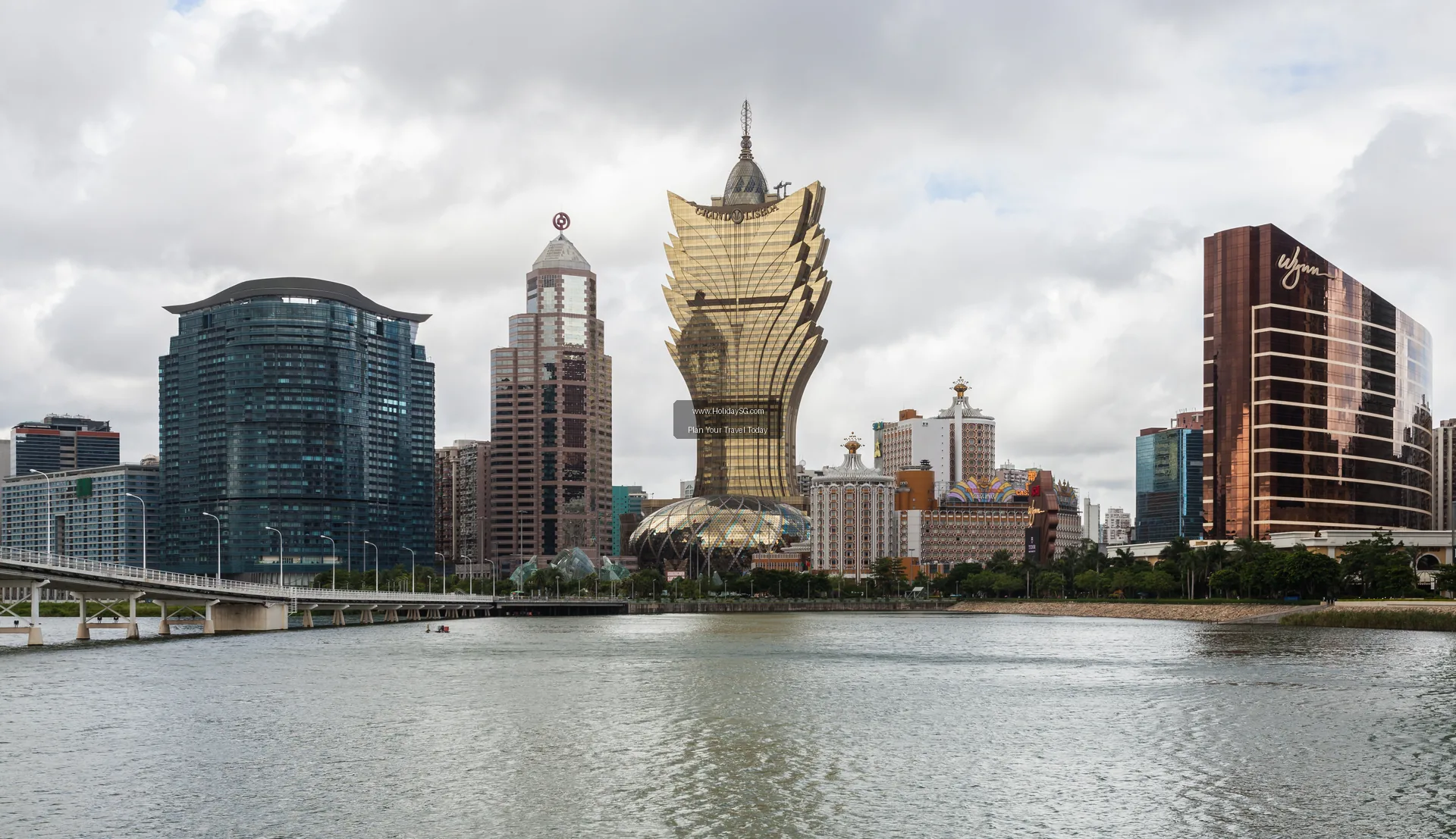
Macau’s reputation as the “Las Vegas of Asia” isn’t an exaggeration—it’s the world’s largest gambling hub, with casino revenues dwarfing those of its American counterpart. But Macau’s resorts offer far more than just gaming tables. The Venetian Macao, the largest casino in the world, is a spectacle in itself. Step inside, and you’ll find a recreation of Venice’s canals, complete with gondola rides and singing gondoliers. The resort’s Grand Canal Shoppes are a shopper’s paradise, while the House of Dancing Water show is a must-see for its jaw-dropping acrobatics and water stunts.
For a taste of luxury, the Wynn Palace and MGM Macau offer opulent interiors, Michelin-starred dining, and even floral displays that change with the seasons. The City of Dreams complex takes things a step further with its House of Dancing Water show and the surreal Hard Rock Hotel, where a massive guitar-shaped lobby greets visitors. Even if you’re not a gambler, these resorts are worth visiting for their sheer scale and entertainment value.
If you’re looking for a break from the casino buzz, the Macau Fisherman’s Wharf offers a more relaxed vibe. This themed entertainment complex features replicas of the Colosseum, a Tang Dynasty palace, and even a volcano that erupts nightly. It’s kitschy, but in a fun, family-friendly way.
Adrenaline and Altitude: The Macau Tower
For a bird’s-eye view of Macau, head to the Macau Tower, which soars 338 meters above the city. The observation deck offers 360-degree views of the skyline, the Pearl River Delta, and even Hong Kong on a clear day. If you’re feeling brave, the tower’s sky walk lets you stroll around the outer rim—with nothing but a harness between you and the ground below.
For the ultimate adrenaline rush, take the plunge with the Macau Tower bungee jump, the highest commercial bungee jump in the world. Leaping from a platform 233 meters up is not for the faint-hearted, but those who do it are rewarded with an unforgettable rush—and a certificate to prove it. If you prefer to keep your feet (relatively) closer to the ground, the tower’s sky jump is a controlled descent that’s just as thrilling.
After all that excitement, refuel at the Macau Tower 360 Revolving Restaurant, where the buffet offers a mix of international and local dishes—all while the restaurant slowly rotates, giving you a constantly changing view of the city.
Beyond the Tourist Trail: Temples and Local Life
Macau’s charm isn’t just in its grand landmarks—it’s also in its quieter corners, where local life unfolds away from the crowds. The A-Ma Temple, built in 1488, is one of the city’s oldest and most atmospheric. Dedicated to the goddess Mazu, protector of fishermen, the temple is a maze of prayer halls, stone lions, and incense-filled courtyards. It’s said that Macau’s name derives from A-Ma-Gau (Bay of A-Ma), a nod to the temple’s significance in the city’s history.
For a glimpse into Macau’s Portuguese past, wander through the Taipa Village and Coloane Village. Taipa’s Rua do Cunha is a foodie hotspot, lined with shops selling almond cookies, pork jerky, and other local snacks. Coloane, once a sleepy fishing village, is home to Lord Stow’s Bakery, where the original Portuguese egg tart was perfected. The village’s Seac Pai Van Park is a peaceful escape, with walking trails and a small zoo featuring Macau’s famous (and adorable) giant pandas.
If you’re visiting during Chinese New Year or the Mid-Autumn Festival, don’t miss the Taipa Houses-Museum, a cluster of five green-and-white colonial houses that host cultural exhibitions and festive events. The nearby Taipa Flea Market, held on the third Sunday of every month, is a great place to pick up handmade crafts, vintage finds, and local street food.
Planning Your Visit: Practical Travel Guide
When to Go: Timing Your Trip Right
Macau’s subtropical climate means hot, humid summers and mild winters, but the best time to visit is during autumn (October to December). During these months, temperatures hover around 20-25°C (68-77°F), and rainfall is minimal, making it ideal for exploring on foot. Spring (March to May) is also pleasant, though slightly rainier.
Summer (June to September) can be sweltering, with temperatures often exceeding 30°C (86°F) and high humidity. This is also typhoon season, with occasional storms disrupting travel plans. If you do visit in summer, pack light, breathable clothing and be prepared for sudden downpours. Winter (January to February) is cool and dry, but temperatures can drop to 10°C (50°F), so a light jacket is advisable.
Macau’s peak tourist seasons coincide with major holidays, such as Chinese New Year (January/February), Golden Week (early October), and Christmas. During these periods, hotels and flights are more expensive, and attractions are crowded. If you prefer a quieter trip, aim for the shoulder seasons—late September or early January.
Getting There: From Singapore and Beyond
Macau is easily accessible from Singapore, with multiple daily flights operated by Scoot, Jetstar, and Air Macau. The flight takes around 4 hours, and prices typically range from SGD 200-400 for a round-trip economy ticket, depending on the season. Upon arrival at Macau International Airport, you can take a taxi (around MOP 50-100 to the city centre) or the airport shuttle bus (MOP 6) to your hotel.
For a more seamless experience, consider a private cross-border transfer, which can whisk you from the airport to your hotel—or even across the border to Hong Kong or Guangdong—without the hassle of public transport.
If you’re already in Hong Kong, Macau is just a short ferry ride away. TurboJET and Cotai Water Jet operate high-speed ferries from Hong Kong Island (Sheung Wan) and Kowloon (Tsim Sha Tsui) to Macau’s Outer Harbour Ferry Terminal or Taipa Ferry Terminal. The journey takes about 55-75 minutes, and tickets cost around HKD 170-200 one-way. Ferries run frequently, with departures every 15-30 minutes during peak hours.
Getting Around: Buses, Taxis, and Free Shuttles
Macau’s public transport system is efficient, affordable, and easy to navigate. The city’s buses are the most budget-friendly option, with fares starting at MOP 6 for most routes. The Macau Pass, a rechargeable smart card, can be used on buses and some taxis, making it a convenient choice for short stays. Key bus routes for tourists include:
- Route 3: Macau Ferry Terminal → Ruins of St. Paul’s → Taipa Village
- Route 10A: Macau Ferry Terminal → Senado Square → A-Ma Temple
- Route 26: Macau Ferry Terminal → Coloane Village → Hac Sa Beach
Taxis are another option, with fares starting at MOP 19 for the first 1.6 km and MOP 2 for each subsequent 240 meters. While taxis are metered, drivers may not always speak English, so it’s helpful to have your destination written in Chinese or saved on your phone. Ride-hailing apps like Uber and DiDi are also available in Macau.
One of the best-kept secrets for getting around Macau is the free shuttle bus service operated by the major casino resorts. These shuttles run between the ferry terminals, the airport, and the casinos, making them a convenient (and cost-free) way to travel. Just look for the shuttle stops outside the ferry terminals or ask your hotel for a schedule.
Money Matters: Currency, Costs, and Budgeting
Macau’s official currency is the Macanese Pataca (MOP), but Hong Kong Dollars (HKD) are widely accepted at a 1:1 exchange rate. In fact, many businesses prefer HKD, so it’s a good idea to carry both currencies. Credit cards are accepted at most hotels, restaurants, and shops, but smaller vendors and street food stalls may only take cash.
A mid-range trip to Macau typically costs around MOP 800-1,200 (SGD 140-210) per day, covering accommodation, meals, local transport, and entry fees to attractions. Here’s a rough breakdown of daily costs:
- Accommodation: MOP 500-1,000 (SGD 85-170) for a mid-range hotel or guesthouse
- Meals: MOP 150-300 (SGD 25-50) for street food, casual dining, and one sit-down meal
- Transport: MOP 50-100 (SGD 9-17) for buses, taxis, and occasional ferry rides
- Attractions: MOP 100-200 (SGD 17-35) for entry fees, tours, and activities
If you’re on a tighter budget, you can get by on MOP 500-700 (SGD 85-120) per day by staying in hostels, eating street food, and using public transport. On the other end of the spectrum, luxury travelers can easily spend MOP 2,000 (SGD 340) or more per day on high-end hotels, fine dining, and VIP casino experiences.
Language and Entry Requirements
Cantonese is the primary language in Macau, but English is widely spoken in tourist areas, hotels, and casinos. Many signs are in Chinese, Portuguese, and English, making it easy to navigate. That said, learning a few basic Cantonese phrases—like néih hóu (hello) and dòjeh (thank you)—can go a long way in charming locals.
Macau has a visa-free policy for citizens of many countries, including Singapore, the US, the UK, and most EU nations. Singaporeans can stay for up to 30 days without a visa, while travelers from other countries may be granted 7-90 days depending on their nationality. Always check the latest entry requirements for your passport before traveling, as rules can change.
If you plan to visit Hong Kong during the same trip, note that Macau and Hong Kong are separate customs territories. You’ll need to go through immigration when traveling between the two, even though they’re both part of China.
Is Macau Worth Visiting? Answering Your Top Questions
How Does Macau Compare to Hong Kong?
Macau and Hong Kong are often mentioned in the same breath, but they offer distinctly different experiences. While Hong Kong is a bustling metropolis with a skyline of towering skyscrapers, Macau is smaller, quieter, and more focused on history and entertainment. Hong Kong’s attractions lean toward urban exploration—think Victoria Peak, bustling markets, and world-class shopping—while Macau’s highlights are a mix of historic sites, casino resorts, and cultural fusion.
One key difference is the pace: Macau feels more relaxed, with a slower rhythm that encourages leisurely exploration. It’s also more affordable than Hong Kong, particularly when it comes to dining and accommodation. If you’re short on time, you could visit both cities in a single trip, as they’re just an hour apart by ferry. For a deeper dive into Hong Kong’s urban charm, consider spending a few days there before or after your Macau adventure—similar to what we cover in our guide to Hong Kong’s best neighborhoods for first-time visitors.
Is Macau Family-Friendly?
Absolutely! While Macau’s reputation as a gambling hub might suggest otherwise, it’s a fantastic destination for families. The city’s compact size makes it easy to explore with kids, and there’s no shortage of attractions to keep them entertained. The Venetian Macao offers gondola rides and a massive indoor playground, while the House of Dancing Water show is a hit with all ages. The Macau Science Center, with its interactive exhibits, is another great option for curious young minds.
For outdoor fun, Hac Sa Beach in Coloane is a popular spot for swimming and picnics, while the Macau Giant Panda Pavilion is home to adorable pandas Kai Kai and Xin Xin. The Macau Fisherman’s Wharf features a replica of the Colosseum and a volcano that erupts nightly, adding a touch of drama to family outings.
Food-wise, Macau’s mix of Portuguese and Chinese cuisine offers plenty of kid-friendly options. Try minchi (a savory minced meat dish), pork chop buns, or egg tarts from Lord Stow’s Bakery. Many restaurants also offer high chairs and children’s menus.
What About the Food? A Culinary Fusion Like No Other
Macau’s cuisine is a delicious reflection of its cultural heritage, blending Portuguese, Chinese, and even African influences. The result is a unique culinary scene that’s as diverse as it is flavorful. Start your food adventure with Macanese dishes, a fusion of Portuguese and Chinese cooking. Must-tries include:
- African Chicken: A spicy, coconut-based grilled chicken dish with roots in Mozambique.
- Minchi: A comfort food staple made with minced meat, potatoes, and spices, served over rice.
- Bacalhau: Portuguese salted cod, often prepared with potatoes, olives, and eggs.
- Tacho: A hearty stew of Chinese sausage, pork belly, and vegetables, cooked in a clay pot.
For a taste of Macau’s street food scene, head to Rua do Cunha in Taipa Village, where you’ll find shops selling almond cookies, pork jerky, and egg rolls. Don’t miss the chance to try Portuguese egg tarts, a Macau specialty that’s even better than the ones you’ll find in Hong Kong. Lord Stow’s Bakery in Coloane is the most famous spot, but Margaret’s Café e Nata in the city center is another excellent choice.
If you’re looking for a more upscale dining experience, Macau has no shortage of Michelin-starred restaurants. Robuchon au Dome at the Grand Lisboa offers French fine dining with a view, while The Eight at the Grand Lisboa serves exquisite Cantonese cuisine. For a unique buffet experience, the Triple Feast of Taste, Vision, and Hearing at The Venetian combines international dishes with live entertainment.
Final Verdict: The Unique Charm of Macau
So, is Macau worth visiting? The answer is a resounding yes—especially if you’re looking for a destination that offers something different from the usual Asian travel itinerary. Macau’s blend of Portuguese and Chinese culture, historic charm, and world-class entertainment make it a fascinating place to explore. Whether you’re wandering through the UNESCO-listed Historic Centre, marveling at the grandeur of The Venetian, or taking in the views from the Macau Tower, there’s no shortage of experiences to keep you engaged.
It’s also a great destination for food lovers, with a culinary scene that’s as diverse as it is delicious. And while Macau’s casinos are a major draw, the city has plenty to offer beyond the gaming tables, from family-friendly attractions to adrenaline-pumping adventures.
If you’re short on time, Macau can easily be explored in 2-3 days, making it a perfect add-on to a trip to Hong Kong or Guangdong. But if you have the luxury of a longer stay, you’ll find that Macau’s slower pace and rich history make it a rewarding destination in its own right.
Recommended HolidaySG Tours
Ready to experience Macau for yourself? Here are some of our top-recommended tours to help you make the most of your trip:
- Macau Private Charter: Airport/Hotel Cross-Border Transfers
- Macau Tower Bungy Jump
- Macau Tower 360 Revolving Restaurant Buffet (Limited Time Offer)
- Macau Standard Price Buffet: The Triple Feast of Taste, Vision, and Hearing
- Macau Trip Moments: Photographer Guide with Parisian-Themed Photoshoot
Conclusion: Embracing Macau’s Unique Fusion
Macau is a destination that defies expectations. It’s a place where you can explore centuries-old temples in the morning, indulge in a Michelin-starred lunch at noon, and try your luck at the world’s largest casino by evening. It’s a city where East and West collide in the most delightful ways—whether it’s in the architecture of the Historic Centre, the flavors of Macanese cuisine, or the vibrant energy of its resorts.
For travelers seeking a mix of history, culture, and excitement, Macau delivers in spades. It’s compact enough to explore in a few days but rich enough to reward those who linger. And while it may not have the global fame of Hong Kong or the sheer scale of Shanghai, that’s part of its charm. Macau is a destination that invites you to slow down, savor the details, and embrace its unique fusion of influences.
Ready to start your Macau adventure? Book a seamless private transfer to explore Macau hassle-free →
Book with HolidaySG online for Macau Private Charter Airporthotel Cross Border Transfers Guangdong Hong Kong Macau Cross Border Private Charter Cro, Macau Standard Price Buffet Buffet Dinnerexperience The Triple Feast Of Taste Vision And Hearing, Macau Trip Momentsphotographer Guide With Parisian Themed Photoshoot Macau Ruins Of St Pauls Cinematic Video Make.
“`html
Frequently Asked Questions
Where can I book Macau activities and experiences?
You can book a variety of unique Macau experiences directly through HolidaySG. For example, arrange a private cross-border transfer, indulge in a luxury buffet dinner, capture stunning photos with a professional photoshoot, or take the plunge with the Macau Tower Bungy Jump. For a memorable meal with a view, check out the Macau Tower 360 Revolving Restaurant Buffet.
Do foreigners (non-citizens) need a different ticket, price, or visa for Macau?
Entry requirements for Macau vary depending on your nationality. Many travelers, including those from the US, UK, Canada, Australia, and EU countries, can enter Macau visa-free for stays ranging from 7 to 90 days. However, some nationalities may require a visa, which can often be obtained on arrival or in advance. Prices for attractions and activities are typically the same for foreigners and locals, but it’s always wise to check official sources or your ticket provider for any exceptions. For the most current visa and entry requirements, refer to the Macau Government Tourism Office or your local consulate before traveling.
What is the best time to visit Macau?
The best time to visit Macau is during the cooler, drier months from October to December, when temperatures are pleasant (around 20–26°C) and rainfall is minimal. This period offers ideal conditions for exploring outdoor attractions like the Ruins of St. Paul’s and Senado Square. If you prefer fewer crowds, consider visiting in late September or early January. For specific activities, the best time of day varies: visit historic sites like the Macau Museum or A-Ma Temple in the morning to avoid midday heat, while evening is perfect for enjoying the vibrant lights of the casinos and the Macau Tower’s night views.
How long should I spend in Macau?
A well-rounded trip to Macau typically requires 2 to 3 days. This allows enough time to explore the historic center (a UNESCO World Heritage Site), visit major attractions like the Ruins of St. Paul’s and Senado Square, experience the vibrant casino scene, and enjoy local cuisine. If you’re short on time, a day trip from Hong Kong is possible, but you’ll only scratch the surface. For a deeper dive into Macau’s culture, food, and nightlife, extend your stay to 4 days.
Is Macau worth visiting?
Absolutely! Macau is a unique blend of Portuguese and Chinese cultures, offering a rich tapestry of history, architecture, and cuisine that you won’t find anywhere else. It’s perfect for travelers who love exploring UNESCO-listed sites, indulging in world-class dining, or trying their luck at glamorous casinos. Beyond the glitz, Macau’s charming streets, vibrant festivals, and warm hospitality make it a rewarding destination for all types of travelers.
How do I get to Macau?
Macau is easily accessible by air, sea, and land. Macau International Airport (MFM) serves flights from major Asian cities like Singapore, Kuala Lumpur, Bangkok, and Shanghai. If you’re coming from Hong Kong, the most popular option is the high-speed ferry, which takes about 1 hour from Hong Kong Island or Kowloon. Ferries also connect Macau to other cities in the Greater Bay Area, such as Shenzhen and Guangzhou. For a seamless transfer, consider booking a private cross-border transfer.
Is Macau family-friendly?
Yes! Macau is a great destination for families. Kids will love attractions like the Macau Tower’s observation deck, the interactive exhibits at the Macau Science Center, and the thrilling rides at Fisherman’s Wharf. The historic sites, such as the Ruins of St. Paul’s and Senado Square, offer a fun, educational experience, while the Venetian Macau’s gondola rides and indoor canals provide a touch of magic. Many hotels and resorts also offer family-friendly amenities, including pools and kids’ clubs.
What are the must-see attractions in Macau?
Macau’s must-see attractions include:
- Ruins of St. Paul’s: The iconic 17th-century façade and steps leading up to it are a symbol of Macau.
- Senado Square: A lively plaza surrounded by colorful colonial buildings and bustling shops.
- Macau Tower: Offers breathtaking views, a bungy jump (book here), and a revolving restaurant (book here).
- Casinos: The Venetian Macau, Wynn Palace, and MGM Macau are architectural marvels worth visiting, even if you don’t gamble.
- A-Ma Temple: A serene 15th-century temple dedicated to the goddess Mazu, offering insight into Macau’s spiritual heritage.
- Coloane Village: A charming, laid-back area with Portuguese-style cafés and the famous Lord Stow’s Bakery.
What is MOP (Macanese Pataca) / HKD, and can I use credit cards?
MOP (Macanese Pataca) / HKD is the Macau Pataca (MOP), but Hong Kong Dollars (HKD) are widely accepted at a 1:1 exchange rate. Credit cards (Visa, Mastercard, and American Express) are accepted in most hotels, restaurants, and larger shops, but smaller vendors, street food stalls, and local markets may prefer cash. ATMs are readily available throughout the city for withdrawing MOP or HKD.
What should I pack for a trip to Macau?
Pack light, breathable clothing for Macau’s subtropical climate, especially if visiting in summer. Comfortable walking shoes are a must for exploring the historic streets and hilly terrain. Bring a light jacket or sweater for cooler evenings or air-conditioned indoor spaces. If visiting in the rainy season (April–September), pack a compact umbrella or raincoat. Don’t forget sunscreen, sunglasses, and a hat for sun protection. For casino visits, smart casual attire is recommended (no flip-flops or shorts).
Is Macau safe for tourists?
Macau is generally very safe for tourists, with low crime rates and a strong police presence. Violent crime is rare, but petty theft like pickpocketing can occur in crowded areas, so keep an eye on your belongings. The city is well-lit at night, and tourist areas are safe to explore after dark. As with any destination, use common sense: avoid unlit alleys, don’t flash valuables, and be cautious when crossing busy streets.
What is the weather like in Macau?
Macau has a humid subtropical climate with four distinct seasons:
- Spring (March–May): Mild and pleasant, with temperatures ranging from 18–26°C. Occasional rain showers.
- Summer (June–September): Hot and humid, with temperatures often exceeding 30°C. Typhoon season runs from July to September, so be prepared for sudden downpours.
- Autumn (October–December): The best time to visit, with cool, dry weather and temperatures between 20–26°C.
- Winter (January–February): Cool and dry, with temperatures ranging from 12–18°C. Light layers are recommended.
What are some local customs or etiquette I should be aware of?
Macau is a blend of Chinese and Portuguese cultures, so etiquette reflects both influences. Here are a few tips:
- Greetings: A handshake is common, but close friends may greet with a light hug or kiss on the cheek (Portuguese influence).
- Dining: It’s polite to wait for the host to invite you to start eating. Try a bit of everything offered, as refusing food can be seen as impolite.
- Temples: Dress modestly when visiting religious sites, and avoid pointing your feet at altars or statues.
- Gambling: If visiting casinos, be mindful of local customs—avoid loud or boisterous behavior, and don’t touch chips or cards unless you’re playing.
- Tipping: Not mandatory, but appreciated in hotels and restaurants (10% is standard).
What are some must-try foods in Macau?
Macau’s cuisine is a delicious fusion of Portuguese and Chinese flavors. Must-try dishes include:
- Portuguese Egg Tarts: Flaky pastry filled with creamy custard, best enjoyed at Lord Stow’s Bakery or Koi Kei.
- African Chicken: A spicy, grilled chicken dish with a unique blend of African, Portuguese, and Chinese influences.
- Minchi: A comfort food made with minced meat, potatoes, and spices, often served with rice.
- Bacalhau (Salted Cod): A Portuguese staple, often served in casseroles or fried with potatoes.
- Pork Chop Bun: A crispy pork chop sandwiched in a soft bun, a popular street food.
- Serradura: A creamy Portuguese dessert made with crushed biscuits and whipped cream.
For a unique dining experience, book a luxury buffet to sample a variety of local and international dishes.
How do I get around Macau?
Macau is compact and easy to navigate. The most convenient ways to get around include:
- Public Buses: Affordable and efficient, with routes covering all major attractions. Fares are paid using a Macau Pass or exact change.
- Taxis: Readily available and metered, but drivers may not speak English, so have your destination written in Chinese.
- Free Casino Shuttles: Most major casinos offer free shuttle services from the ferry terminal, airport, and border gates.
- Walking: The historic center is best explored on foot, as many attractions are close together.
- Ride-Hailing Apps: Uber and local apps like DiDi operate in Macau, offering a convenient alternative to taxis.
Are there any day trips from Macau worth taking?
Yes! Macau’s central location in the Greater Bay Area makes it a great base for day trips. Popular options include:
- Hong Kong: Just a 1-hour ferry ride away, Hong Kong offers world-class shopping, dining, and attractions like Victoria Peak and Disneyland.
- Zhuhai (China): A short bus ride across the border, Zhuhai is known for its scenic parks, beaches, and the Chimelong Ocean Kingdom theme park.
- Shenzhen (China): A bustling metropolis with modern attractions like Window of the World, Splendid China, and shopping districts like Huaqiangbei.
- Guangzhou (China): A 2-hour ferry ride away, Guangzhou offers historic sites like the Chen Clan Ancestral Hall and Canton Tower.
For hassle-free cross-border travel, consider booking a private transfer.
Is Macau expensive?
Macau can be as budget-friendly or as luxurious as you make it. While the city is known for its high-end casinos and hotels, there are plenty of affordable options. Budget travelers can enjoy street food (MOP 20–50 per meal), public transport (MOP 3–6 per bus ride), and free attractions like the Ruins of St. Paul’s and Senado Square. Mid-range travelers can expect to spend MOP 500–1,000 per day on meals, attractions, and transport. Luxury experiences, such as fine dining, high-end hotels, and casino VIP rooms, can easily exceed MOP 2,000 per day.
What language is spoken in Macau, and will I have trouble communicating?
Macau’s official languages are Chinese (Cantonese) and Portuguese, but English is widely spoken in tourist areas, hotels, and casinos. Most signs and menus are in Chinese, Portuguese, and English. While you won’t have trouble communicating in major attractions, learning a few basic Cantonese phrases (e.g., “néih hóu” for “hello” or “m̀h gōi” for “thank you”) can enhance your experience and show respect for local culture.
Are there any cultural festivals or events I should plan my trip around?
Macau’s calendar is packed with vibrant festivals and events that showcase its unique cultural heritage. Some of the most notable include:
- Macau Arts Festival (May): A month-long celebration of music, dance, theater, and visual arts.
- Dragon Boat Festival (June): Features thrilling dragon boat races and traditional zongzi (sticky rice dumplings).
- Macau International Fireworks Display Contest (September–October): One of the world’s most spectacular fireworks competitions, held over the Macau skyline.
- Macau Grand Prix (November): A high-octane Formula 3 race through the city’s streets, attracting motorsport fans from around the world.
- Lunar New Year (January/February): Celebrated with lion dances, parades, and festive decorations throughout the city.
- Feast of the Drunken Dragon (May): A unique local festival featuring dragon dances, martial arts, and plenty of wine.
What are some hidden gems or off-the-beaten-path attractions in Macau?
Beyond the well-known attractions, Macau has plenty of hidden gems worth exploring:
- Taipa Village: A charming, less touristy alternative to Senado Square, with narrow streets, colonial architecture, and local eateries.
- Coloane Trail: A scenic hiking trail offering panoramic views of Macau’s coastline and countryside.
- Macau Museum of Art: A quiet, underrated museum showcasing Chinese and Portuguese art, often overlooked by tourists.
- Guia Fortress and Lighthouse: Offers stunning views of the city and a glimpse into Macau’s military history.
- Lou Lim Ieoc Garden: A peaceful, traditional Chinese garden perfect for a relaxing stroll.
- Ilha Verde: A small, green island connected to Macau by a bridge, offering a tranquil escape from the city.
Is Macau accessible for travelers with disabilities?
Macau is making strides in accessibility, but some areas remain challenging due to the city’s hilly terrain and historic streets. Most modern attractions, hotels, and casinos are wheelchair-accessible, with ramps, elevators, and accessible restrooms. Public buses are equipped with low floors and wheelchair spaces, but older areas like the historic center may have uneven sidewalks or steps. It’s advisable to contact attractions or hotels in advance to confirm accessibility features. For a smoother experience, consider booking a private transfer with accessible vehicles.
“`
What things cost in Macau
Live HolidaySG prices for the experiences in this guide, so you can sanity-check a budget before you commit.
| Experience | Where | From price |
|---|---|---|
| TurboJet ferry boat ticket (Hong Kong→Macau) | Macau | From S$25.70 |
| Legend Heroes Park | Macau | From S$38.43 |
| Macao Open Top Bus | Macau | From S$24.47 |
| Museu Do Grande Prémio De Macau Macao Grand Prix Museum | Macau | From S$15.63 |
| Studio City Water Park | Macau | From S$74.47 |
| Golden Reel Figure-8 Ferris Wheel | Macau | From S$10.79 |
| Macau Tower | Macau | From S$16.00 |
| House of Dancing Water | Macau | From S$85.07 |