The Notre Dame Cathedral of Saigon is one of the most iconic landmarks in Ho Chi Minh City and an architectural masterpi...
HolidaySG Travel Team
July 29, 2026
24 min read190 views
The Notre Dame Cathedral of Saigon is one of the most iconic landmarks in Ho Chi Minh City and an architectural masterpiece that reflects Vietnam's rich colonial history. Standing proudly in the.
In this guide.
Flight reservation for your visa application
Need proof of onward or return travel for your visa application? Submit your travel details and our team will arrange a flight reservation where available.
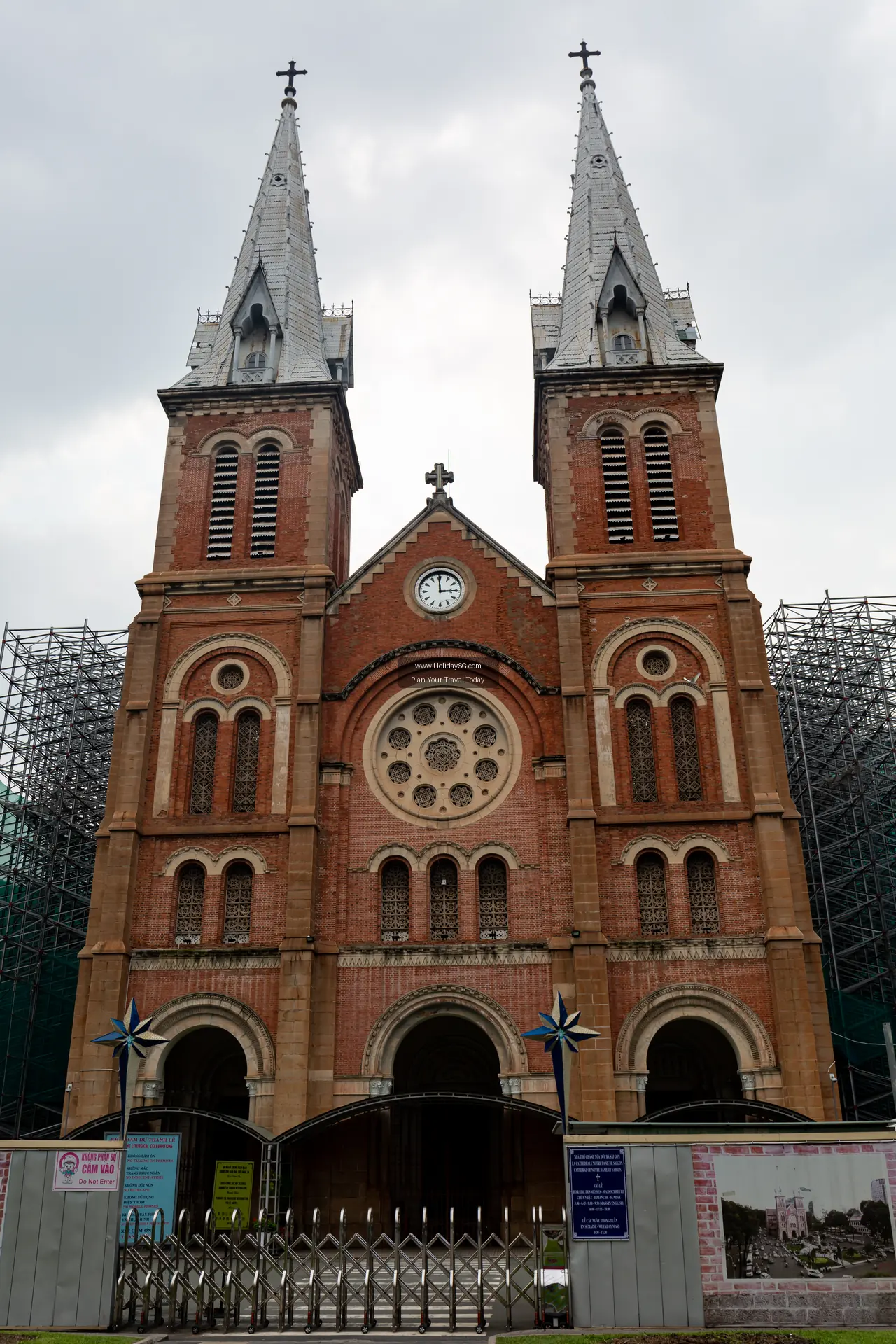
The Notre Dame Cathedral of Saigon is one of the most iconic landmarks in Ho Chi Minh City and an architectural masterpiece that reflects Vietnam's rich colonial history. Standing proudly in the heart of District 1, the cathedral has been a symbol of the city for more than a century, attracting millions of visitors each year. Whether you're interested in history, architecture, photography, or religious heritage, this magnificent cathedral is a popular destination during your trip to Vietnam.
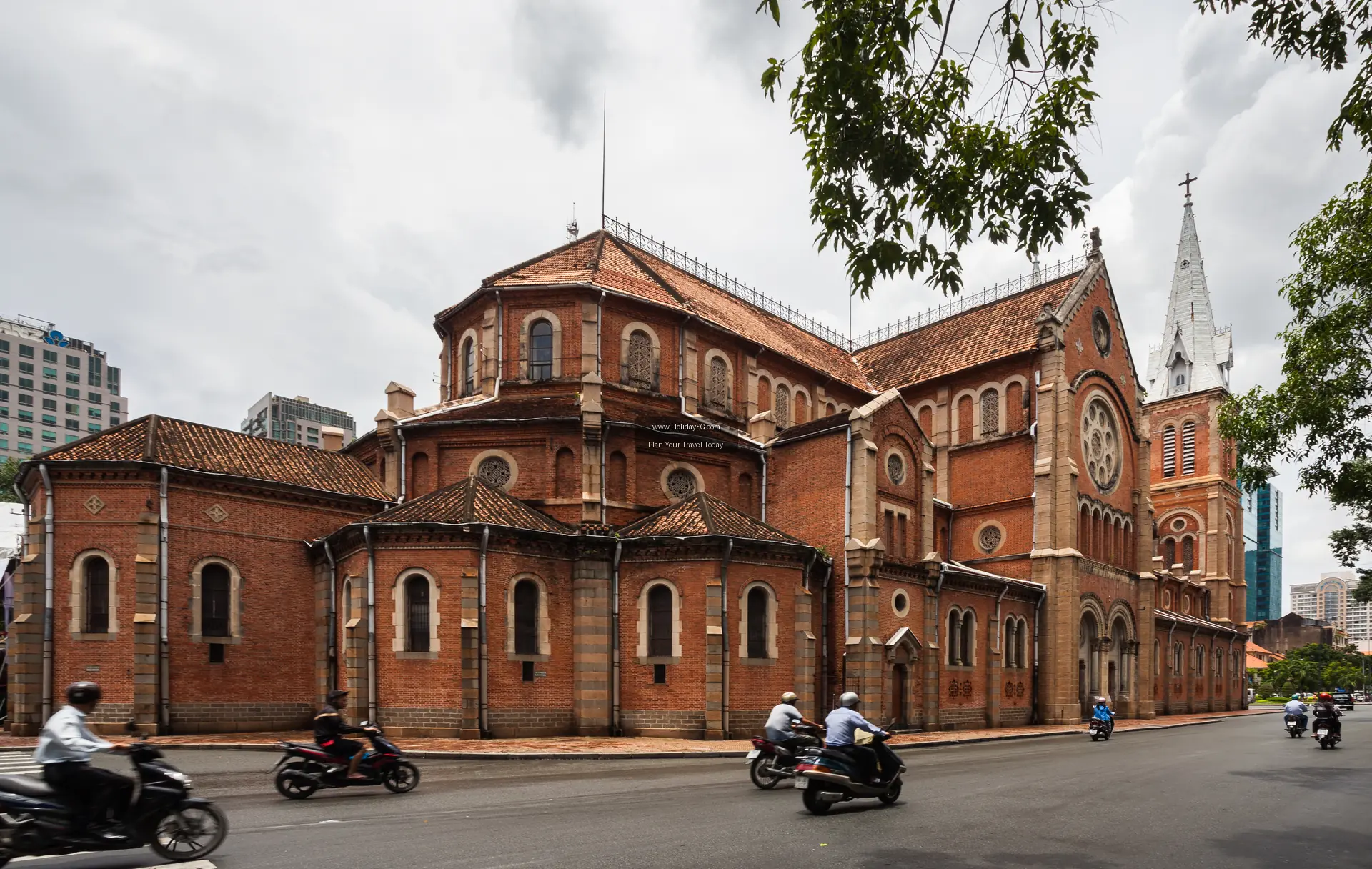
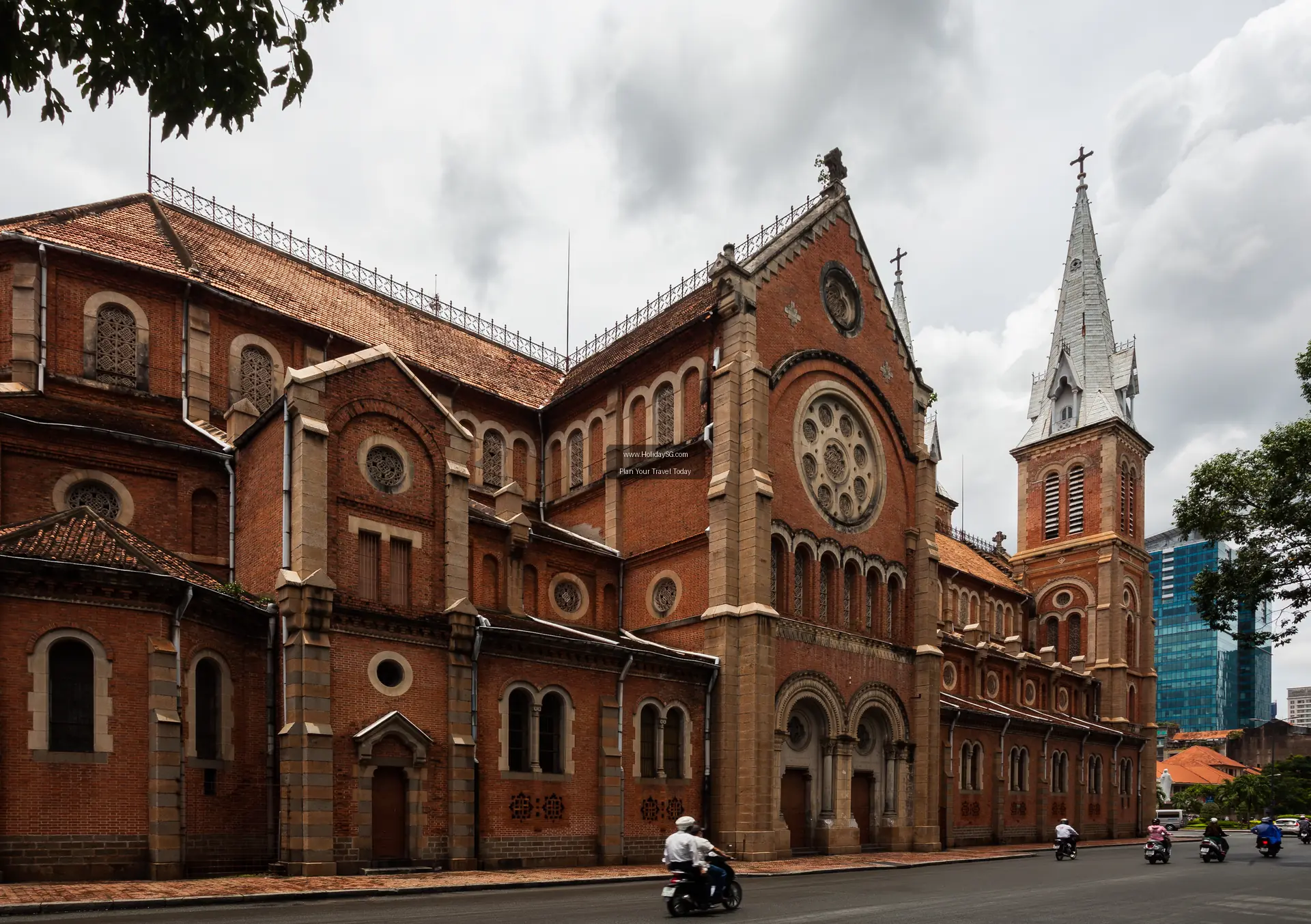
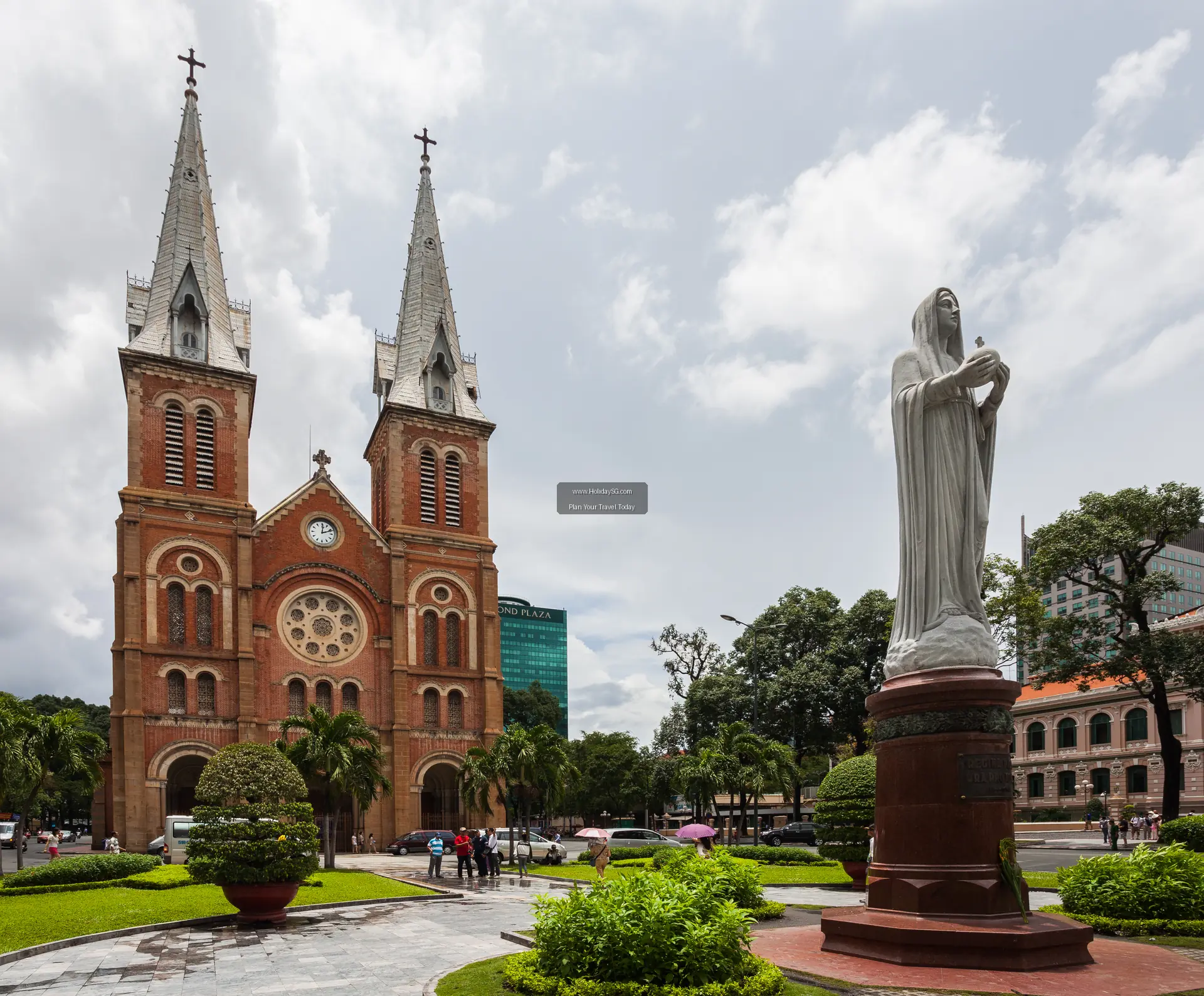
Constructed between 1877 and 1880 during the French colonial period, the cathedral showcases stunning Neo-Romanesque architecture with elements of Gothic design. Nearly all of the construction materials, including the distinctive red bricks and stained-glass windows, were imported from France, contributing to its timeless beauty and historical significance.
The cathedral is famous for its twin bell towers, each rising approximately 58 metres, making it one of Ho Chi Minh City's most recognisable landmarks. The spacious square in front of the church, featuring the Statue of Our Lady of Peace, is a popular gathering place for locals, tourists, and photographers.
Located within walking distance of many of the city's top attractions, including the Central Post Office, Independence Palace, and Nguyen Hue Walking Street, Notre Dame Cathedral is often included in every Ho Chi Minh City itinerary. This complete guide covers everything you need to know before visiting, including history, opening hours, nearby attractions, photography tips, restaurants, hotels, and useful travel advice.
Book with HolidaySG — Tickets, tours and activities online. E-tickets emailed after our team confirms your booking. Browse all activities →
Surrounding square accessible; interior access may vary
Suitable for Kids
Yes
Suitable for Elderly
Yes
Note: The cathedral has undergone restoration work in recent years. Visitor access to the interior may be limited depending on ongoing conservation activities. Always check the latest updates before visiting.
About Notre Dame Cathedral Saigon
The Notre Dame Cathedral was commissioned by the French colonial administration to serve the growing Catholic community in Saigon. Construction began in 1877 under the supervision of French architect Jules Bourard and was completed in 1880.
One of its most distinctive features is the use of red Marseille bricks imported directly from France. Remarkably, many of these bricks have retained their original colour despite decades of tropical weather.
In 1895, two bell towers were added, bringing the cathedral's total height to around 58 metres. The towers house six bronze bells that continue to ring during important religious celebrations.
The cathedral remains an active place of worship while also serving as one of Ho Chi Minh City's most photographed landmarks. Its peaceful atmosphere offers a welcome contrast to the busy streets surrounding District 1.
Why Visit Notre Dame Cathedral?
Here are 20 reasons to visit this iconic landmark:
Admire beautiful French colonial architecture.
Discover one of Ho Chi Minh City's oldest buildings.
Visit an important religious landmark.
See the famous red-brick façade.
Photograph the twin bell towers.
Explore Paris Commune Square.
Visit the nearby Statue of Our Lady of Peace.
Learn about Vietnam's colonial history.
Enjoy peaceful surroundings in the city centre.
Experience one of Vietnam's most photographed attractions.
Walk to nearby historical sites.
Appreciate colourful stained-glass windows.
Observe detailed stone carvings.
Visit during Christmas for festive decorations.
Enjoy free entry to the surrounding grounds.
Relax in one of District 1's most scenic locations.
Ideal for architecture enthusiasts.
Excellent stop for walking tours.
Convenient location near major attractions.
Suitable for visitors of all ages.
Top Highlights
1. Twin Bell Towers
The cathedral's two impressive towers rise approximately 58 metres and dominate the District 1 skyline.
2. Red Brick Exterior
Imported from Marseille, France, the original bricks remain one of the building's defining features.
3. Statue of Our Lady of Peace
Located in front of the cathedral, this white marble statue is a peaceful focal point for visitors and worshippers.
4. French Colonial Architecture
Admire elegant arches, decorative columns, and symmetrical design inspired by European cathedrals.
5. Stained-Glass Windows
The colourful windows enhance the cathedral's interior with beautiful natural light.
6. Historic Interior
When open to visitors, the interior features high vaulted ceilings, wooden pews, and religious artwork.
7. Christmas Celebrations
During December, the cathedral and surrounding square are decorated with festive lights and attract large crowds.
8. Paris Commune Square
The spacious plaza provides excellent viewpoints for photography and relaxation.
9. Nearby Central Post Office
The cathedral stands directly opposite another famous French colonial landmark.
10. Evening Illumination
The cathedral is beautifully lit after sunset, creating excellent photography opportunities.
Things to Do
Admire the cathedral's architecture.
Photograph the red-brick exterior.
Visit the Statue of Our Lady of Peace.
Attend Mass (if open to visitors).
Walk around Paris Commune Square.
Explore nearby cafés.
Visit the Central Post Office.
Learn about colonial history.
Capture evening photographs.
Join a guided city tour.
Relax in the shaded gardens.
Visit during Christmas celebrations.
Explore nearby museums.
Enjoy a walking tour of District 1.
Watch local life around the cathedral square.
Ticket Information
Entry Fee
The exterior grounds are generally free to visit.
If the cathedral interior is open, there is usually no admission fee for visitors, though access may be restricted during religious services or restoration work.
Guided Tours
Many Ho Chi Minh City walking tours include the cathedral as part of their itinerary.
Mobile Tickets
No tickets are required for independent visits.
Opening Hours
The cathedral's exterior can be viewed throughout the day.
Interior visiting hours depend on:
Religious services
Restoration work
Special ceremonies
Best Time to Visit
Early morning
Late afternoon
Sunset for photography
Least Crowded
Weekday mornings
Peak Times
Weekends
Christmas season
Public holidays
How to Reach
From Tan Son Nhat International Airport
Taxi
Grab
Private airport transfer
Journey time is approximately 25–40 minutes depending on traffic.
From District 1
Many hotels are within walking distance of the cathedral.
Public Bus
Several bus routes stop nearby.
Walking
Easy walking access from:
Central Post Office
Independence Palace
Nguyen Hue Walking Street
Ben Thanh Market
Parking
Paid parking is available nearby for motorcycles and cars.
Nearby Attractions
Saigon Central Post Office
Independence Palace
War Remnants Museum
Nguyen Hue Walking Street
Ben Thanh Market
Saigon Opera House
Ho Chi Minh City Museum
Bitexco Financial Tower
Saigon Skydeck
Tao Dan Park
Fine Arts Museum
Bach Dang Riverside
Bui Vien Walking Street
Jade Emperor Pagoda
Saigon River Cruise
Nearby Restaurants
Nha Hang Ngon
Propaganda Vietnamese Bistro
Pizza 4P's
Secret Garden Restaurant
Hum Vegetarian
Quan Bui
Home Saigon Restaurant
Royal Saigon Restaurant
Pho Hoa Pasteur
Mountain Retreat
Cuc Gach Quan
Bep Me In
El Gaucho Steakhouse
The Racha Room
Shri Restaurant & Lounge
Nearby Hotels
Budget
City Backpackers Hostel
Long Hostel
Vy Khanh Hostel
Town House 373
The Common Room Project
Mid-Range
Liberty Central Saigon Centre
Silverland Ben Thanh
Northern Charm Hotel
Alagon Central Hotel
Sanouva Saigon Hotel
Luxury
Park Hyatt Saigon
The Reverie Saigon
Caravelle Saigon
Sofitel Saigon Plaza
Hotel Nikko Saigon
Photography Tips
Visit during sunrise for soft lighting.
Capture the cathedral with the Central Post Office in the frame.
Photograph the illuminated façade after sunset.
Use a wide-angle lens.
Include the statue in foreground compositions.
Visit during Christmas for festive decorations.
Avoid midday glare.
Respect worshippers while taking photos.
Use natural light inside if permitted.
Explore different angles around the square.
Travel Tips
Check restoration updates before visiting.
Dress modestly if entering the cathedral.
Speak quietly inside.
Turn off your phone during services.
Wear comfortable shoes.
Bring water during hot weather.
Combine your visit with nearby attractions.
Carry a camera.
Visit early to avoid crowds.
Respect local customs and religious practices.
Dress Code, Etiquette and Attending Mass
Notre Dame Cathedral Saigon is first and foremost a working Catholic church, and that shapes how you should dress and behave when you visit. Although the building receives thousands of tourists every week, the parishioners who arrive for daily prayer, confession and Sunday Mass expect a degree of respect that goes beyond snapping photos. The unwritten rule most locals follow is to cover your shoulders and knees. Sleeveless tops, short shorts and flip-flops are tolerated by many visitors, but you will feel more comfortable, and look more at ease, in a loose cotton shirt and long trousers or a midi skirt. Light fabric matters a great deal here, because Ho Chi Minh City can reach 33 or 34 degrees Celsius by midday, and the cathedral's interior is cooler than the square but still warm and humid. Carry a thin scarf or wrap in your daypack. It can double as a shoulder cover if you are asked to adjust, and it is useful inside the church when the air conditioning is off, which happens more often than you might expect. Phones should be set to silent before you step through the gate. Hats should come off once you are inside the nave, and sunglasses are better removed as well when you are speaking with a sacristan or sitting in a pew.
If you want to see the cathedral in its natural rhythm, consider attending a Mass. Sunday services are the most crowded, with several celebrations through the morning and early evening, and some are conducted in Vietnamese while others include English or French elements, particularly for visiting congregations. Weekday morning services are shorter and much quieter, and you can usually sit at the back without drawing attention. Schedules shift around feast days and parish events, so it is sensible to confirm current times with the parish office or a staff member at the side entrance before you plan your day. Arrive at least fifteen minutes early for a Sunday service, because the front pews fill quickly and latecomers often end up standing along the side aisles. During the liturgy, avoid taking photographs, stepping into the central aisle to get a better angle, or walking across the sanctuary area. Communion is for those who practise the Catholic faith, and visitors who are not receiving are simply asked to remain seated and observe respectfully. Many travellers find that the experience of hearing the hymns echo beneath the brick arches tells them more about the building than any guidebook can. Wait until the final blessing before leaving, and move calmly toward the exit rather than pushing through the crowd on the steps.
Etiquette also extends to the square and the surrounding stalls. Vendors around Công xã Paris often approach visitors with postcards, hats and small souvenirs, and a polite but firm "không, cảm ơn" (no, thank you) is usually enough to end the exchange without any hard feelings. Do not pose with the cathedral's facade in a way that blocks the entrance for worshippers, and avoid climbing on the low ledges or planters near the gates. Beggars and street sellers are part of the scene here, and while it is natural to feel moved by them, giving small notes directly can encourage crowds of children to swarm tourists. If you want to help, donating to a registered charity or making an offering inside the church is a more effective approach. When you are seated in a café facing the square, keep your voice moderate, since sound carries easily across the open space. Finally, remember that the cathedral is a landmark for many Vietnamese families as well as a symbol for foreign visitors. Greeting the staff with a simple "xin chào" and a smile goes a long way, and it often leads to a friendlier exchange when you ask questions about opening hours, special services or where to find the quietest corners for reflection.
Money, Payments and Daily Costs Near the Cathedral
Vietnam's currency is the Vietnamese dong (VND), and the numbers can feel startling the first time you handle them. A 100,000 VND note is worth roughly four US dollars at recent exchange rates, so it is common to carry a thick bundle of banknotes without carrying a large sum in real terms. Around the cathedral, cash remains the standard for street food, coffee shops, motorbike taxis and small souvenir stalls. Larger hotels, upscale restaurants and some boutiques in District 1 accept Visa and Mastercard, but card terminals are not universal and surcharges are sometimes added to foreign cards. Most ATMs in the immediate area belong to major Vietnamese banks such as Vietcombank, BIDV and Techcombank, and they usually dispense notes in 500,000 VND denominations. Be aware that many machines charge a withdrawal fee on top of your home bank's international charges, and some limit each transaction to around 5 to 10 million VND. Check your balance before you leave the hotel, and try to withdraw a sufficient amount early in the trip so you are not hunting for a machine in the afternoon heat. Small notes are especially useful for tipping and paying for short taxi rides, so ask for smaller denominations whenever you have the chance.
Daily costs in this neighbourhood vary widely depending on where you sit and what you order. A traditional bánh mì from a street cart typically costs between 25,000 and 40,000 VND, while a glass of cà phê sữa đá (iced coffee with condensed milk) at a local café on a side street might cost 25,000 to 45,000 VND. Cafés directly facing the square often charge more, sometimes 60,000 VND or above for the same drink, because you are paying for the view and the air-conditioned seating. A bowl of phở at a busy family-run shop nearby generally sits in the 50,000 to 70,000 VND range, and a bottle of water from a convenience store is around 10,000 to 15,000 VND. For transport, a short motorbike taxi ride across District 1 usually costs 15,000 to 30,000 VND, though you should agree on the fare before you climb on. Metered taxis are a safer option for longer trips, with flag fall rates that are modest by Western standards. Tipping is not expected in street-level eateries, but leaving 5 to 10 percent in sit-down restaurants is appreciated. Rounding up a taxi fare to the nearest 10,000 VND is a common and polite gesture. Keeping a rough mental conversion in mind will help you avoid overpaying and make the everyday spending feel manageable.
HolidaySG eSIM plans
Mobile data for your trip: install a HolidaySG eSIM on your phone before you travel, no SIM card swap needed. Choose your destination on the HolidaySG eSIM page; eSIM plans are bought there, separately from tickets.
A few practical habits will save you money and stress. Always ask for the price before ordering in markets and tourist-facing stalls, and be wary of menus that do not show prices at all, since these are often used to inflate bills for visitors. Keep receipts from larger purchases, particularly if you are buying handicrafts, silk or art, because some shops will issue value-added tax refund forms for qualifying amounts when you present a passport. Currency exchange booths along the streets near the post office sometimes offer slightly better rates than hotel desks, but you should count the notes carefully in front of the teller and avoid any shop that insists on handing you money in a closed envelope. Gold and jewellery shops nearby are reputable in many cases, yet fake gold rings and "bargain" stones are a recurring problem, so buy only from established businesses with clear return policies. If you plan to pay for a cathedral donation or candles in the church, carry a few 10,000 and 20,000 VND notes for offerings. Finally, keep a small amount of cash in a separate pocket or wallet so that a lost or stolen primary wallet does not leave you unable to buy water, pay a taxi or cover a meal while you arrange replacements.
Staying Safe and Avoiding Common Scams
Ho Chi Minh City is generally a welcoming place for travellers, and the area around Notre Dame Cathedral is one of the most walkable and well-patrolled parts of the central district. That said, the combination of dense foot traffic, rapidly moving motorbikes and a steady stream of visitors creates the conditions in which petty crime thrives. Pickpocketing is most common in crowded spots such as the square at peak hours, the steps of the cathedral during weekend services and the pavements leading toward Dong Khoi Street. Phone snatching is a more serious concern, because thieves on motorbikes can grab a phone from your hand while you are checking directions or taking a photograph. Keep your phone secured with a wrist strap or inside a zipped pocket when you are walking, and avoid using it at the kerb while traffic is passing. Carry bags on the side away from the road and in front of your body rather than hanging loosely off one shoulder. Backpacks are best worn on the chest in crowded areas. Traffic itself is another hazard, since motorbikes rarely stop for pedestrians. The safest approach is to cross at marked crossings where possible, walk at a steady pace without sudden stops, and let the flow of traffic pass around you rather than trying to dart across gaps.
Scams in this part of the city tend to follow familiar patterns, and recognising them early makes them easy to avoid. Unlicensed photographers may approach you offering to take a picture of you in front of the cathedral, then demand a fee of several hundred thousand dong once the shot is taken. A polite refusal before the camera comes out is the simplest defence. Some people wearing official-looking lanyards claim to be student guides or tour representatives and then lead visitors to a shop where they receive commissions on purchases. Shoe shiners, bracelet sellers and cyclo drivers sometimes insist that they have already performed a service and expect payment, so be clear that you did not ask for it. Another common approach involves a stranger who begins a friendly conversation, mentions a nearby exhibition or café, and then suggests a drink or a massage that turns out to be expensive. If someone offers unsolicited help with directions or invites you to an unknown location, thank them and continue on your way. Motorbike taxi drivers who quote a fare that doubles once you reach the destination are also a problem, so confirm the price in Vietnamese dong before you set off, and take a photo of the license plate if you feel uneasy.
If something does go wrong, remain calm and act quickly. Report thefts to the nearest police post, which you can usually find on the larger avenues around District 1, and ask for a written report if you need it for travel insurance or a replacement passport. The tourist police are generally more accustomed to dealing with visitors, and a short note on your phone with the date, time and location of the incident will help them process your statement. Keep photocopies or digital scans of your passport, visa and insurance documents stored separately from the originals, and note the emergency numbers for your embassy or consulate in Ho Chi Minh City. For medical emergencies, pharmacies near the centre can offer basic treatment, but for anything serious it is better to go directly to a private international clinic, where staff speak English and are used to foreign patients. When you are out at night, especially after a few drinks, stick to well-lit streets, use ride-hailing apps or licensed taxis, and share your route with a friend. Trust your instincts. If a situation feels rushed, pushy or unusually friendly, step away, walk into a busy shop or café, and reassess before you commit to anything.
Seasonal Planning: Weather, Crowds and the Best Months
Choosing when to visit Notre Dame Cathedral Saigon can shape your experience as much as the sights themselves. Ho Chi Minh City has two distinct seasons, a dry season that runs roughly from December through April and a rainy season from May through November. The dry months are the most comfortable for walking, with daytime temperatures typically between 25 and 33 degrees Celsius and relatively low humidity in December and January. By March and April, however, the heat becomes intense, often pushing above 35 degrees in the afternoon, and the square offers little shade. If you are sensitive to high temperatures, plan your outdoor time for early morning and late afternoon, and use the cathedral's cool interior as a midday refuge. The rainy season is not as bleak as its name suggests. Rain usually arrives in heavy but short bursts during the afternoon or early evening, often lasting thirty minutes to an hour, and mornings are frequently clear and bright. Locals tend to schedule errands before noon for exactly this reason. Showers can flood low-lying streets briefly, so carry a lightweight poncho or compact umbrella, and wear shoes that can handle wet pavements.
Crowd levels are another factor to weigh. Weekends draw the largest number of domestic visitors, particularly families from outlying provinces, and the square becomes a busy social space with photographers, vendors and street performers competing for attention. Weekday mornings, roughly between 8 and 10 AM, are typically the calmest times to visit, when the light is soft and you can take unhurried photographs of the facade without waiting for a clear line of sight. Late afternoon, around 4 to 5 PM, is another good window, since the sun sits lower and the brickwork glows warm before the evening crowds arrive. Vietnamese public holidays and the lunar new year period bring substantially more people into the centre, and some businesses close for several days, so check your dates against the national calendar before you book flights or accommodation. The lunar new year, known as Tết, is especially memorable for its decorations and flower markets, yet it can make it harder to find open restaurants and transport in the surrounding streets. Shoulder months such as late November, early December and late April often strike a good balance, with reasonable weather, manageable prices and fewer visitors than the peak season.
Packing for the season you choose will make your visit noticeably more pleasant. For the dry months, bring breathable clothing in natural fibres, a wide-brimmed hat, high-factor sunscreen and a refillable water bottle, since dehydration creeps up quickly in the heat. During the rainy season, pack quick-drying trousers, a waterproof layer and sandals that can get wet without ruining your feet, and store electronics in sealed plastic bags to protect them from humidity. Year-round, a small pair of earplugs can be useful, as traffic noise picks up in the early morning and the square can be loud in the evening. Sunrise and sunset times vary by roughly an hour between the seasons, so check them if you are planning photography around the golden hour. Finally, think about how many days you can dedicate to the area. A single visit of two to three hours covers the cathedral, the post office and the immediate square, but spending a full day lets you explore the quieter lanes, have a long lunch and return when the light changes. Matching your schedule to the season, the crowd patterns and your own energy levels will leave you with a far more rewarding experience than simply arriving on a random afternoon.
Frequently Asked Questions
Is Notre Dame Cathedral Saigon worth visiting?
Yes. It is one of Ho Chi Minh City's most famous landmarks and a beautiful example of French colonial architecture.
Can visitors enter the cathedral?
Access to the interior depends on restoration work and religious services. The exterior and surrounding square remain popular sightseeing spots.
How much time should I spend here?
Most visitors spend between 30 minutes and one hour exploring the cathedral and nearby attractions.
Is there an entrance fee?
The cathedral grounds are generally free to visit.
What is the best time to visit?
Early morning and late afternoon provide pleasant temperatures, softer lighting, and fewer crowds.
Why Book with HolidaySG?
Conclusion
Notre Dame Cathedral of Saigon is one of Ho Chi Minh City's most treasured landmarks, offering visitors a fascinating blend of history, architecture, culture, and spirituality. From its striking red-brick façade and elegant bell towers to its peaceful square and central location, the cathedral remains a highlight of any visit to Vietnam's largest city. Whether you're interested in photography, history, or simply enjoying the city's colonial charm, this iconic attraction deserves a place on your itinerary.
The history of the cathedral
The cathedral was built by the French colonial administration in the late nineteenth century, and its twin bell towers and red brick facade reflect the architecture of that era. It was constructed with materials brought from France, and it has been a place of worship for the local Catholic community since it opened. The building has seen decades of change around it, but its form remains one of the most recognisable landmarks in the city centre.
What to see inside and outside
The cathedral's interior has stained-glass windows, carved wooden altars and rows of pews that give a calm atmosphere. Visitors are welcome outside service times, but they should dress modestly and keep their voices low. The square in front of the building is a popular meeting point, and the red brick and tall towers look striking in the late afternoon light. Photographs of the exterior are generally allowed, but ask before photographing worshippers.
Comparing the central landmarks
Several historic landmarks sit within walking distance of one another, and the cathedral is one of them. The table below compares the main sights in the centre by their age, their main interest and the kind of visitor who will enjoy them most.
Landmark
Built
Main interest
Best for
Notre Dame Cathedral
Late nineteenth century
Architecture and worship
Architecture fans
Central post office
Late nineteenth century
Interior design and postcards
Quick visits
Reunification Palace
Mid-twentieth century
Recent history
History lovers
Frequently asked questions about the cathedral
Can I go inside during the day?
Visitors can usually enter outside service times. Check the posted times at the entrance, since they can change for ceremonies.
What should I wear?
Dress modestly, with shoulders and knees covered, and remove hats inside.
How long does a visit take?
A visit to the cathedral and the square takes about thirty to forty-five minutes, which fits well into a walk around the centre.
A walking route through the centre
For a walk, this cathedral makes a good starting point. From the square, walk to the post office, then continue to the Opera House and the nearby boulevards. The Reunification Palace is a short ride away, and the riverside is a pleasant finish for the day. The distances are short, and the route passes many cafés and shops for breaks.
Photography and light
The best light for the cathedral is early morning or late afternoon, when the red brick glows and the towers cast soft shadows across the square. Stand back to include the full facade, and use the wide setting on your camera. Avoid photographing worshippers, and ask permission before taking close-up shots of people in the square.
Frequently asked questions about the area
Is the square busy?
The square is busy at weekends and in the evenings, when families and visitors gather. Mornings are usually quieter.
Are there places to eat close by?
Yes. Cafés and restaurants line the surrounding streets, offering coffee, snacks and full meals.
Christmas and the festive season
The square in front of the cathedral comes alive during the festive season, with lights, decorations and crowds gathering in the evenings. Christmas Mass attracts large congregations, and the surrounding streets are decorated and busy. Visitors who wish to attend a service should arrive early and dress respectfully, since seating fills quickly and the atmosphere is devout.
The surrounding architecture
Beside the cathedral, the central post office and other colonial buildings show the design influences of the period. Yellow walls, arched windows and iron details are common, and many of the buildings have been carefully restored. Looking at the facades from the square gives a useful introduction to the city's architectural history.
Frequently asked questions about the festive season
Is it safe to visit the square during festivals?
The square is generally safe, but crowds can be large. Keep your belongings secure and agree on a meeting point if you are with a group.
Can I attend a service as a visitor?
Visitors are welcome to attend services, but they should arrive early, dress modestly and follow the lead of the congregation.
Google reviews
5.0 ★★★★★
Based on 129 reviews of HolidaySG on Google
★★★★★
I booked all my tickets on this Singapore website. The process was smooth and efficient I’m very satisfied and would definitely use it again
Vincent Yu · 7 months ago on Google
★★★★★
Tickets are issued very fast. Price is also reasonable. Very satisfied purchase!
David Yap · 3 months ago on Google · Flight reservation customer
★★★★★
Fantastic experience with Holiday SG , i have planned 5 days Singapore for my daughters from India. The whole package includes Hotel Booking,Transport, Sightseeing, VISA...
Santosh Mkar · 7 months ago on Google
★★★★★
Had an amazing 3 Days Malaysia Tour with HolidaySG! Everything was perfectly organized from hotel pickup to sightseeing. Our itinerary included Day 1: Kuala Lumpur City T...
Htun · 4 months ago on Google
More from HolidaySG
Things to do worldwide
Attractions, tours and experiences in destinations around the world.
Mobile data for your trip: install a HolidaySG eSIM on your phone before you travel, no SIM card swap needed. Choose your destination on the HolidaySG eSIM page; eSIM plans are bought there, separately from tickets.
Important: Some of the links recommended here are paid placements or have sponsored our stay in one way. We have paid for these accommodations ourselves. If you book through any of our links, we make a small commission at no extra cost to you. This helps keep our site running – so thank you in advance for your support!
Written by
HolidaySG Travel Team
Singapore-based travel specialists covering attractions, tours and travel experiences across Asia-Pacific and beyond. Licensed travel agency (TA04014).
Last updated: November 26, 2026
#Notre Dame Cathedral Saigon Guide#Notre Dame Cathedral Ho Chi Minh City#Saigon Notre Dame Cathedral#Notre Dame Cathedral Vietnam#Ho Chi Minh City Cathedral#Notre Dame Basilica Saigon
This conversation was resolved. Reply below to continue, or
We use cookies
We use cookies to enhance your browsing experience, serve personalised content, and analyse our traffic. By clicking "Accept All", you consent to our use of cookies.