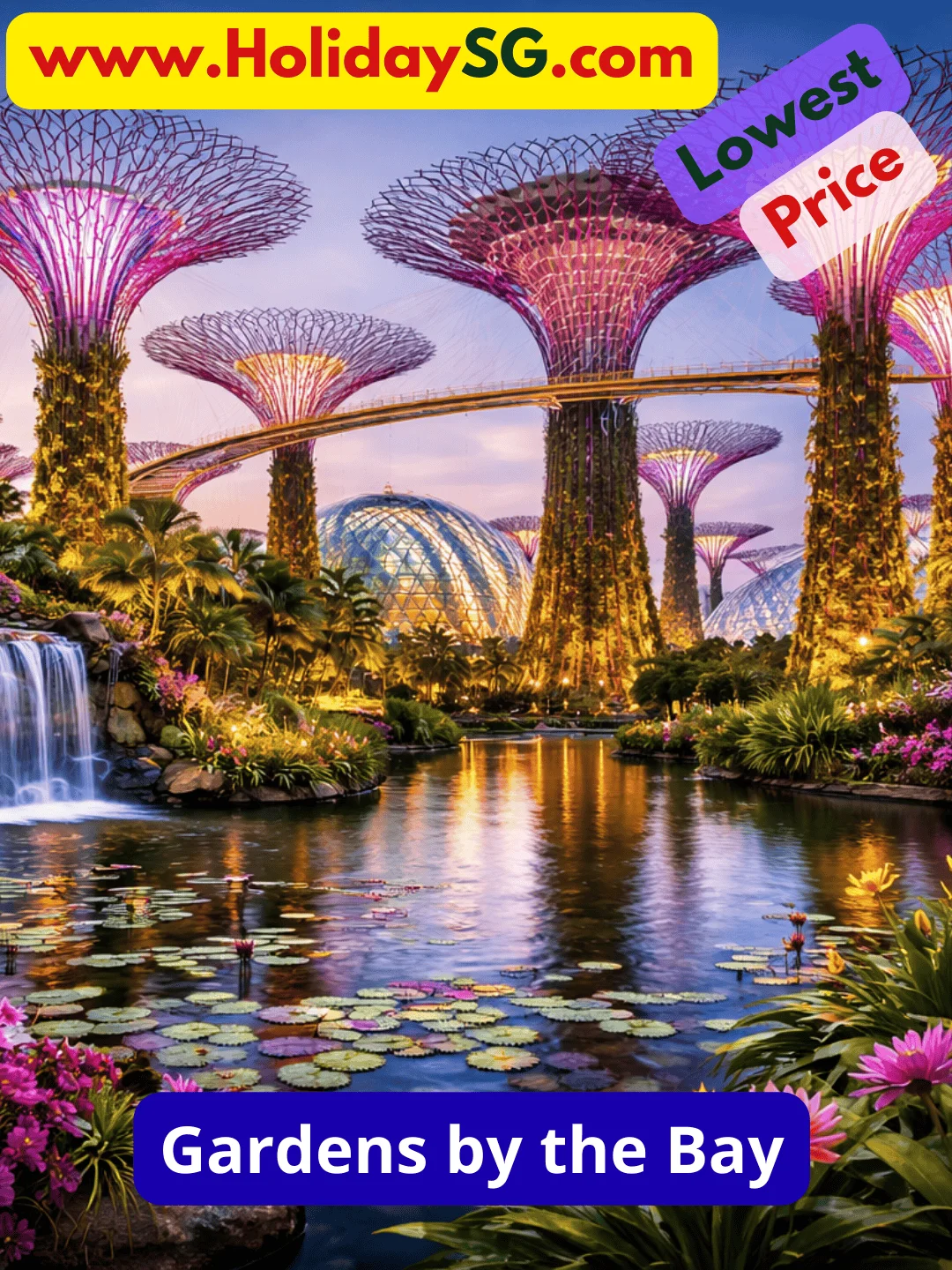

Gardens by the Bay transforms into a luminous, otherworldly landscape after the sun sets. The towering Supertrees pulse with light and music, while the reflective domes of the conservatories shimmer against the skyline. For photographers, this nightly spectacle offers a chance to capture Singapore’s futuristic heart. This guide on how to photograph Gardens by the Bay at night will take you from the best vantage points to the ideal camera settings, ensuring you come home with stunning memories of this iconic garden.
Arrive at the Supertree Grove about 45 minutes before sunset to capture the magical blue hour. Use a tripod for long exposures during the 7:45 PM or 8:45 PM “Garden Rhapsody” light show, and consider the OCBC Skyway for unique elevated angles of the light display.
The Heart of the Action: Photographing the Supertree Grove Light Show
The centerpiece of any nighttime visit is the “Garden Rhapsody” show, a dazzling synchronization of vertical garden lights and music. This free spectacle happens twice nightly at 7:45 PM and 8:45 PM, with each show lasting about 30 minutes. For a more comfortable experience, the first show almost always has smaller crowds, making it easier to find your ideal shooting spot. This is especially true on weekends and public holidays, when the second show can see very dense gatherings.
Your Prime Photographic Locations
Your choice of location will define your composition. The public walkways circling the base of the Supertrees are your free and essential base camp. This area is perfect for low-angle shots that emphasize the colossal scale of the structures. By shooting upwards from the grove’s grounds, you can frame the entire Supertree canopy as it erupts in light, with the Marina Bay skyline often providing a stunning backdrop.
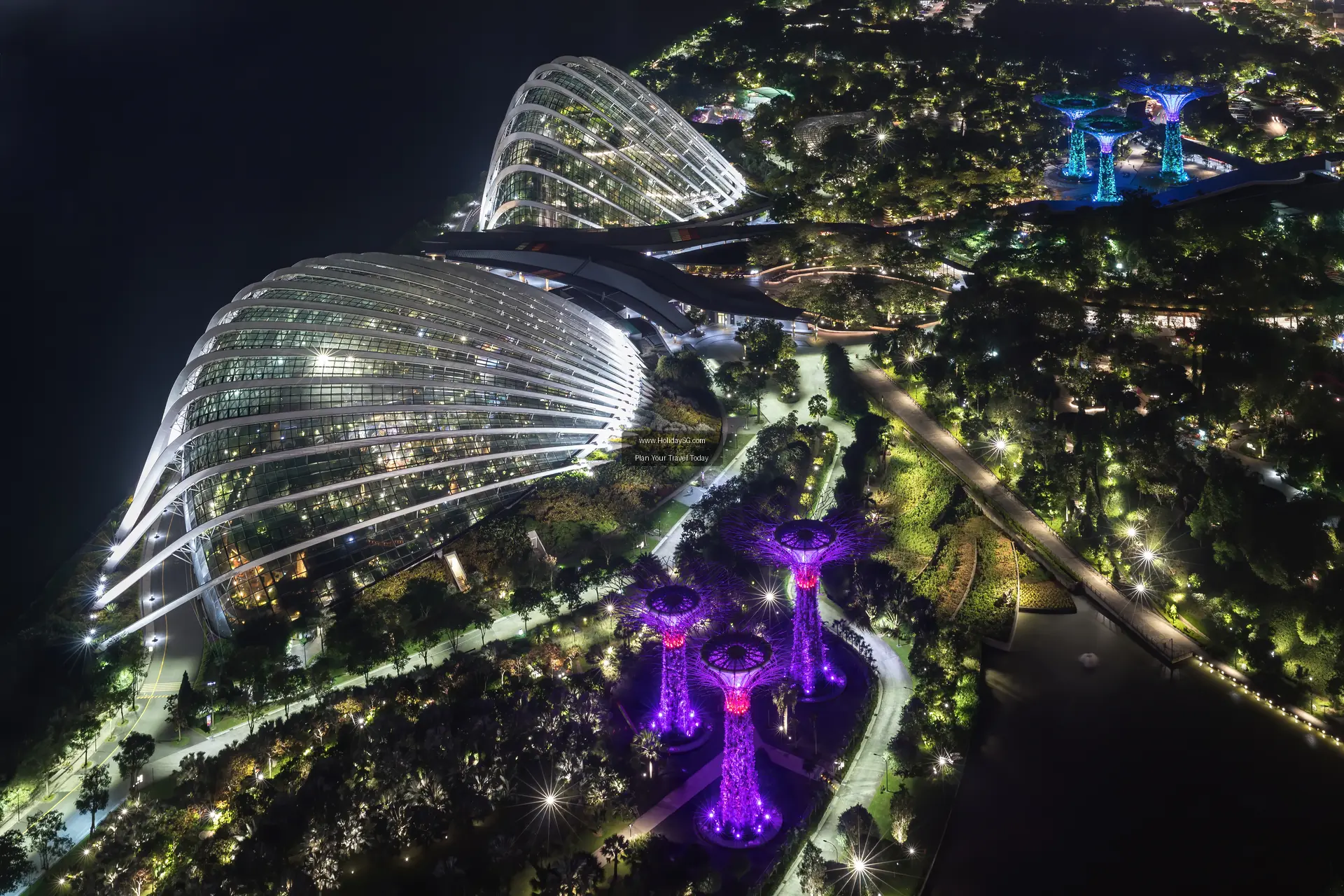
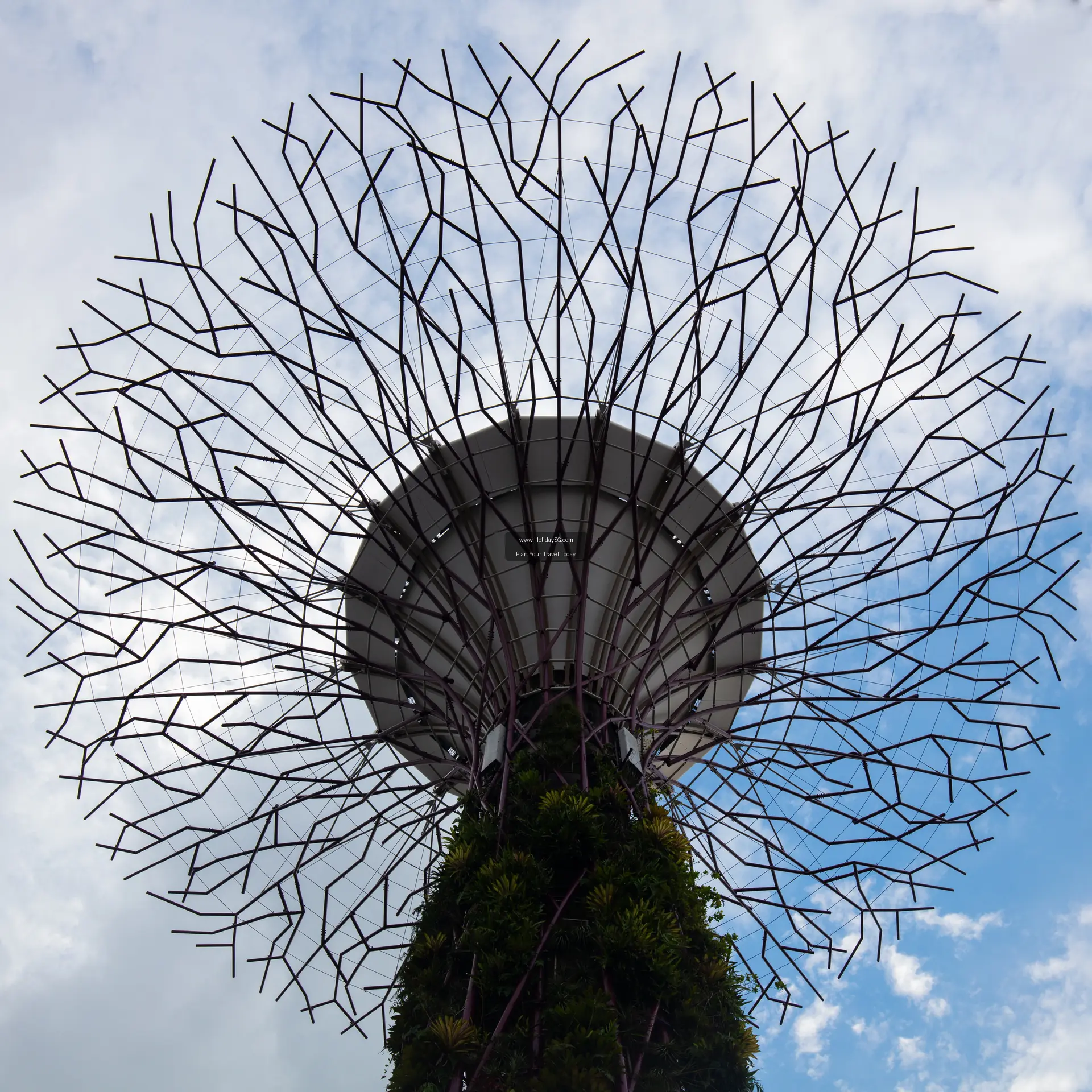
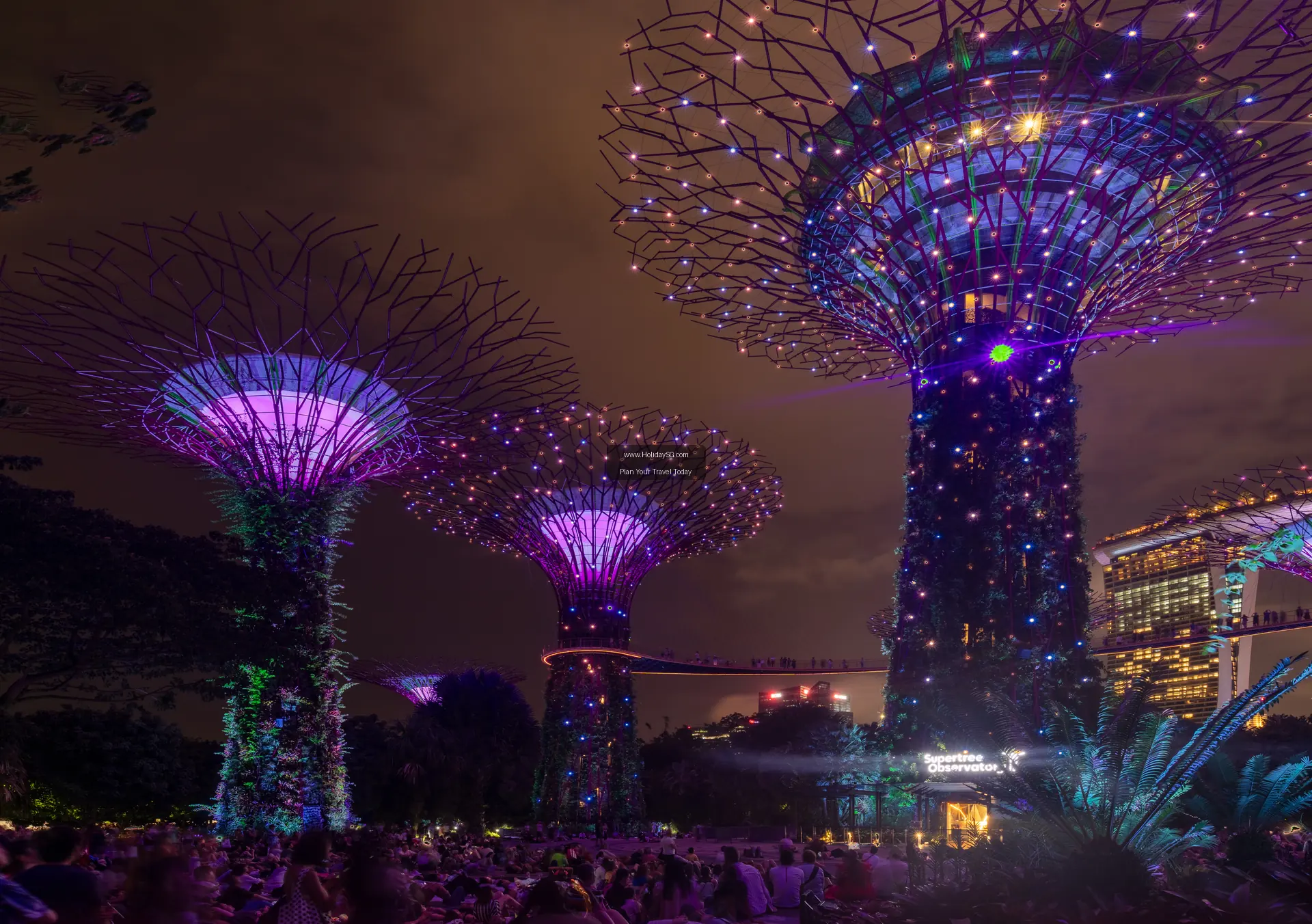
For a perspective that truly elevates your portfolio, the paid OCBC Skyway is unparalleled. This 128-meter aerial bridge connects two Supertrees at a height of 22 meters. A ticket (S$14 for adults) grants you a close-up, panoramic view, allowing you to shoot the light show from within the canopy itself. You can capture unique angles of the light patterns on adjacent Supertrees and the city lights beyond. The walkway’s own lighting can also add an interesting element to your long-exposure shots.
Mastering the Transition: The Golden Hour and Blue Hour
Ready to go? Book Treasure Race At Gardens By The Bay with HolidaySG.
Timing is everything. Don’t just arrive for the light show; arrive for the transformation. Plan to be at the Gardens 30 to 45 minutes before sunset. This window lets you capture the “blue hour,” that magical period of twilight where the sky holds a deep blue hue and the artificial lights of the Gardens and city begin to glow.
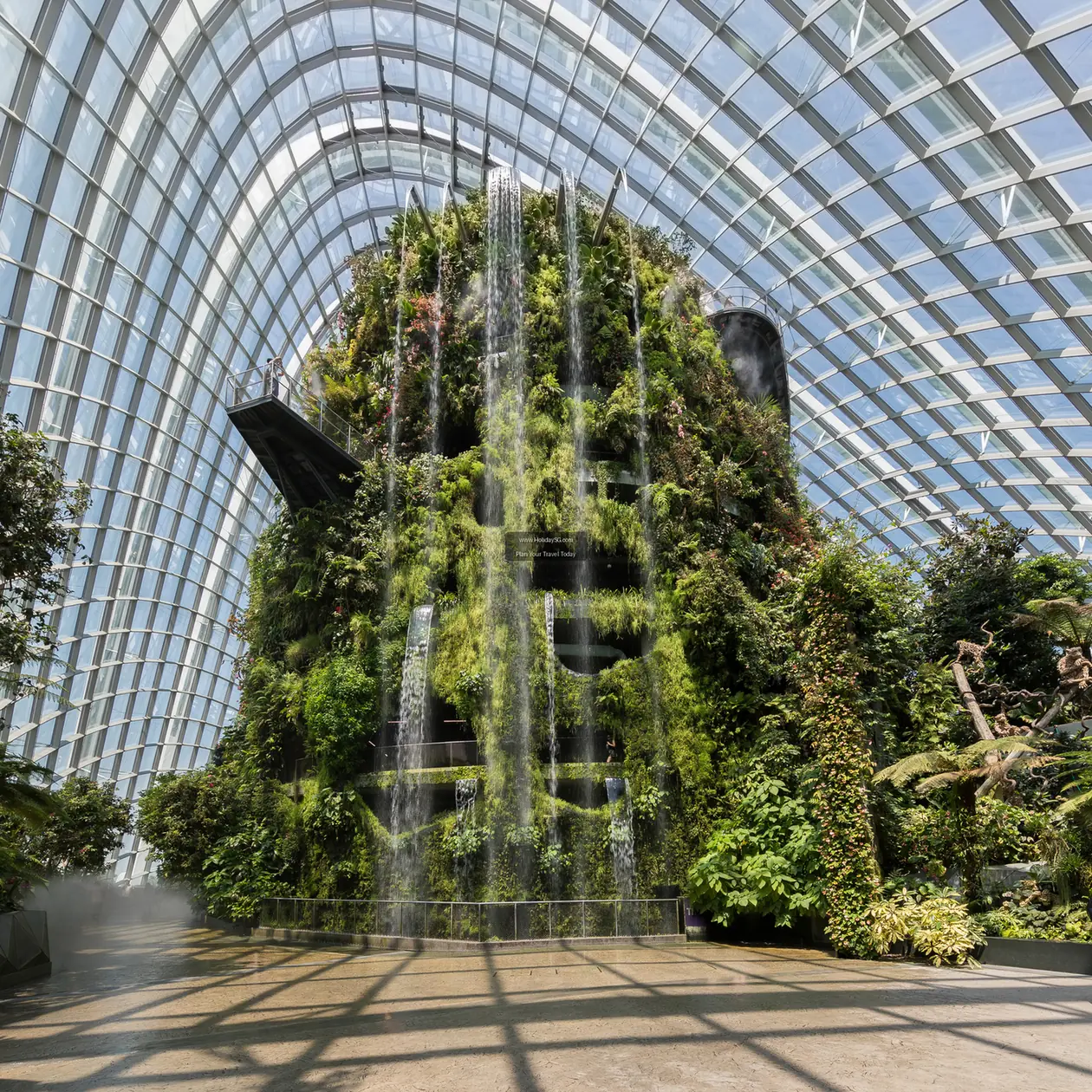
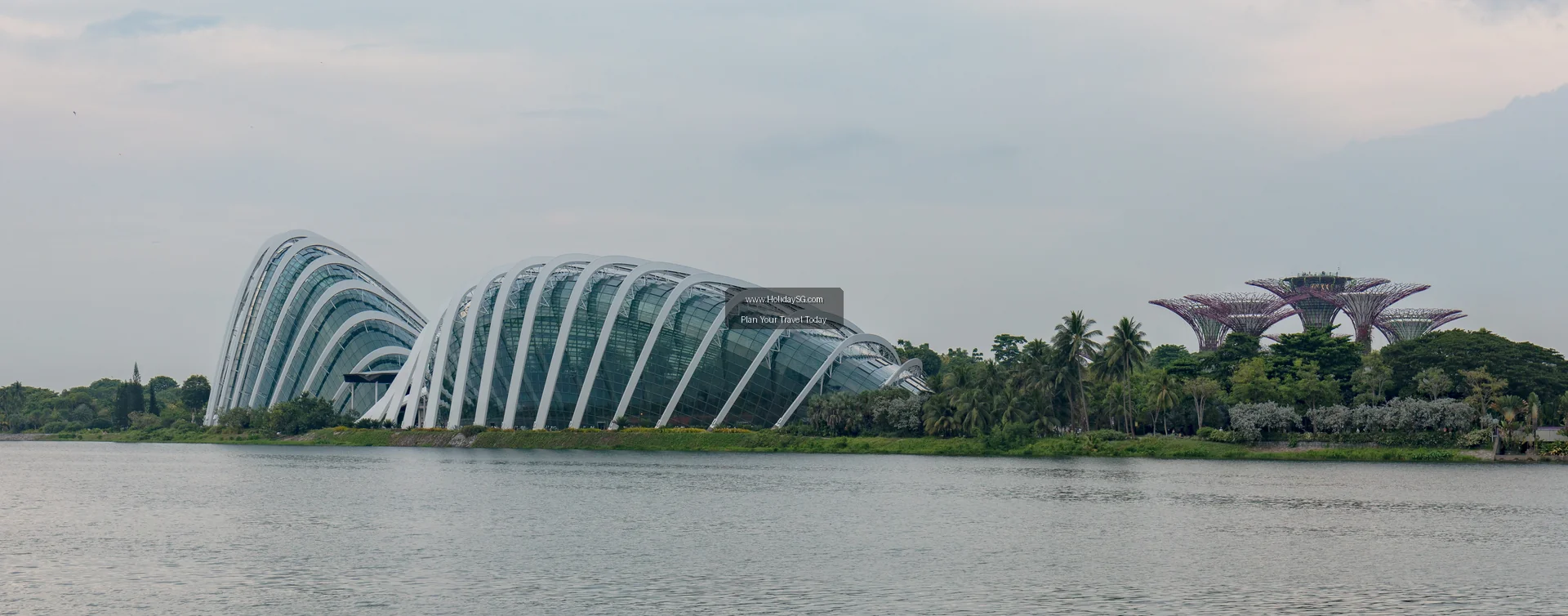
Shooting during this transition provides a balanced exposure where neither the sky nor the lights are blown out. You can capture the silhouettes of the Supertrees against the colorful dusk sky, then watch as they slowly ignite for the show. This same timeframe is ideal for capturing the reflective glass of the Flower Dome and Cloud Forest conservatories, which close at 9 PM and aren’t externally lit. As the last natural light fades, their surfaces mirror the twilight sky and emerging city lights beautifully.
Essential Gear and Camera Settings for Dynamic Nightscapes
A tripod is your most important piece of equipment for sharp, dramatic night photos. While tripods are generally permitted in the outdoor areas, staff may restrict their use during peak crowd times. A compact travel tripod or a monopod can be excellent alternatives. If you’re without one, try stabilizing your camera on a railing, bench, or even your bag on a low wall.
Here are the recommended camera settings to capture the magic:
- ISO: Keep it low, between 100 and 400. This minimizes grain and preserves detail in the dark areas.
- Aperture: Use a small aperture (a higher f-number like f/8 to f/16) to ensure everything from the Supertree bases to the distant skyline is in focus. It also creates beautiful starburst effects on the individual lights.
- Shutter Speed: This is where you experiment. Use long exposures of 2 to 10 seconds to blur the movement of the light show, creating fluid streaks of color. A remote shutter release or your camera’s timer will prevent shake.
- Focus: Switch to manual focus. Use Live View to zoom in on a distant, bright light (like a building) and adjust focus until it’s perfectly sharp. This ensures your Supertrees will be crisp.
- White Balance: Consider setting it to “Tungsten” or a custom Kelvin value to counteract the warm artificial lights, or shoot in RAW to adjust it perfectly later.
Wider Perspectives: Alternative Vantage Points
Ready to go? Book Treasure Race At Gardens By The Bay with HolidaySG.
While the grove itself is the main event, don’t miss the surrounding areas for wider, contextual shots. The nearby Helix Bridge offers a classic vantage point to include the entire Marina Bay Sands structure and the ArtScience Museum alongside the glowing Supertrees. Similarly, walking along the boardwalk in front of Marina Bay Sands provides a stunning foreground for water-reflection shots of the Gardens’ silhouette against the city lights. These spots are perfect for landscape-oriented compositions that tell the story of Singapore’s integrated urban design.
Practical Tips for Your Shoot
Access and Costs: The Supertree Grove and its surrounding walkways are free to access. Only the OCBC Skyway and the conservatories (Flower Dome and Cloud Forest) require a ticket. If you’re driving, parking at the Gardens costs between S$5-7 after 5 PM.
Crowds and Weather: As noted, the 7:45 PM show is your best bet for avoiding the thickest crowds. If you’re planning a dedicated photography trip, a weekday visit will be significantly calmer. The light shows typically proceed in light rain, which can actually create fantastic reflections on the wet paths and structures. However, heavy downpours may lead to cancellation. The outdoor paths are not fully covered, so come prepared with rain gear for yourself and your camera.
Recommended HolidaySG Tours
Ready to go? Book Treasure Race At Gardens By The Bay with HolidaySG.
- Singapore Marina Bay Night Walk With Spectra Garden Rhapsody Shows
- Gardens By The Bay
- Treasure Race At Gardens By The Bay
- Marina Bay Night Bicycle Tour By Lets Go Tour
Composing Your Nighttime Masterpiece
Photographing Gardens by the Bay at night is about blending preparation with patience. Arrive early for the golden hour, secure your spot and setup before the crowds, and don’t be afraid to experiment with different angles and exposures. Whether you’re capturing the grand scale from the grove floor or the intimate details from the Skyway, this Singaporean icon offers endless possibilities to create vivid, memorable images of the city’s dazzling nightscape. Similar techniques for capturing illuminated city landmarks are covered in our broader guide to Singapore night photography hotspots.
Ready to capture your own shots? Test your knowledge of the Gardens with our interactive Treasure Race At Gardens By The Bay.
Book these with HolidaySG:
- Singapore Gardens And Satay By The Bay Private Guided Tour
Book with HolidaySG online for Treasure Race At Gardens By The Bay, Gardens By The Bay, Marina Bay Night Bicycle Tour By Lets Go Tour.
Frequently Asked Questions
Where can I book tickets or tours for Gardens by the Bay at night?
You can book tickets and tours for night photography experiences through official partners. For general admission to the gardens, visit Gardens By The Bay. For guided night walks that include light shows, check out Singapore Marina Bay Night Walk With Spectra Garden Rhapsody Shows. Other options like the Marina Bay Night Bicycle Tour By Lets Go Tour or Singapore Gardens And Satay By The Bay Private Guided Tour are also available for combined experiences.
Do foreigners (non-citizens) need a different ticket, price, or visa for Singapore?
Ticket prices for Gardens by the Bay are generally the same for all visitors, regardless of nationality. For entry into Singapore, visa requirements vary by country—it’s essential to check the official Singapore Immigration & Checkpoints Authority website or your local embassy for the most current rules, as policies can change. Most tourists from many countries enjoy visa-free entry for short stays, but always verify before traveling.
What is the best time (season, or time of day for the site/activity) to go for night photography?
The best time for night photography is after sunset, typically from around 7:00 PM to midnight, when the Supertree Grove lights and Garden Rhapsody shows are active. In terms of season, Singapore is year-round, but aim for drier months like February to April to avoid rain. Check the official schedule for light show timings to plan your shots accordingly.
How long should I spend at Gardens by the Bay for night photography?
Plan for at least 2-3 hours to explore different spots, capture the light shows, and adjust to varying conditions. The Garden Rhapsody show lasts about 15 minutes, so arriving early secures good positions. If you’re combining with nearby attractions, you might spend longer.
What are the typical costs involved for a night photography visit?
Access to the outdoor gardens is free, making it budget-friendly for photography. If you want to visit conservatories like Cloud Forest or Flower Dome, tickets apply—check Gardens By The Bay for current prices. Nearby tours may have additional fees, but public areas offer ample free opportunities.
How do I get to Gardens by the Bay at night?
Gardens by the Bay is in the Marina Bay area. Take the MRT to Bayfront station (Circle or Downtown Line), then follow signs. Buses, taxis, and ride-sharing services like Grab are also convenient. The area is well-connected, and signage is clear even at night.
Is Gardens by the Bay family-friendly for night visits?
Absolutely! The gardens are well-lit and safe for families, with engaging light shows that appeal to all ages. Children can enjoy the illuminated Supertrees, and pathways are stroller-friendly. Just watch for crowds during peak times.
What should I pack or bring for night photography at Gardens by the Bay?
Bring a tripod for stability, extra camera batteries, and a lens with good low-light capability. Wear comfortable shoes, and consider a light jacket for breezy evenings. Pack water, snacks, and a rain poncho, as Singapore’s weather can be unpredictable. A small flashlight might help with navigating darker spots.
Is the area accessible for people with disabilities?
Yes, Gardens by the Bay is designed with accessibility in mind, featuring ramps, lifts, and wheelchair-friendly pathways. Most outdoor areas are accessible, but specific attractions may have limitations—check the official site or ask staff for assistance.
Is it safe to visit Gardens by the Bay at night?
Singapore is known for its safety, and Gardens by the Bay is well-patrolled, well-lit, and popular with locals and tourists. Stick to designated paths, keep an eye on your belongings, and avoid isolated areas. Overall, it’s a secure destination for evening visits.
What is the weather like at night in Singapore?
Nights are warm and humid, with temperatures around 24-28°C (75-82°F). Sudden rain showers can occur, so carrying an umbrella is wise. Check the weather forecast beforehand to plan your photography session.
Are there any local etiquette tips for photography at Gardens by the Bay?
Be respectful of other visitors—don’t block pathways or crowded spots with tripods. Some areas may restrict tripod use during events, so observe signs. If photographing people, ask for permission when possible. The gardens are a public space, so practice courteous photography.
What are nearby food options after night photography?
Head to Satay by the Bay for affordable local dishes in a hawker setting. For upscale dining, explore restaurants at Marina Bay Sands. See Singapore Gardens And Satay By The Bay Private Guided Tour for a guided food experience combining gardens and cuisine.
What other attractions can I visit at night near Gardens by the Bay?
The Marina Bay area offers the Spectra light and water show at Marina Bay Sands, the ArtScience Museum with night projections, and the Helix Bridge for skyline views. These spots complement a night photography itinerary and are within walking distance.
Are there guided tours focused on night photography at Gardens by the Bay?
Yes, several tours incorporate night experiences and photography tips. For example, the Singapore Marina Bay Night Walk With Spectra Garden Rhapsody Shows includes guided insights into the light shows and best photo spots.
What camera settings should I use for night photography at Gardens by the Bay?
Use manual mode with a wide aperture (e.g., f/2.8 or lower), slow shutter speed (10-30 seconds for light trails), and a low ISO (100-400) to minimize noise. A tripod is essential for stability. Experiment with white balance settings to capture the vibrant colors of the Supertrees.
Can I use a tripod for photography at Gardens by the Bay?
Tripods are generally allowed in outdoor areas, but they might be restricted on crowded walkways or during events. Check for signage or ask staff if unsure. To avoid issues, visit during less busy times or use a monopod as an alternative.
Are there any entry fees for night access to the outdoor gardens?
No, the outdoor gardens, including the Supertree Grove, are free to access 24/7, making night photography cost-effective. Paid attractions like the conservatories have specific hours and fees—refer to Gardens By The Bay for details.
How do I avoid crowds for better photos at Gardens by the Bay?
Visit on weekdays or early in the evening, around 7:00 PM, before peak hours. Avoid weekends and public holidays when it’s busier. For light shows, arrive 15-20 minutes early to secure a spot with minimal obstructions.
What are the lighting conditions like at night at Gardens by the Bay?
The Supertrees are illuminated with dynamic, colorful LEDs that change during shows, offering vibrant photo opportunities. Ambient lighting from pathways and nearby buildings adds depth, but areas can be mixed—use a histogram to balance exposure. The Garden Rhapsody show provides dramatic highlights.
What things cost in Singapore
Live HolidaySG prices for the experiences in this guide, so you can sanity-check a budget before you commit.
| Experience | Where | From price |
|---|---|---|
| Adventure HQ | Singapore | From S$65.55 |
Understanding the Supertree Grove: Architecture and Illumination Strategy
Most visitors arrive expecting the Supertrees to be simple light displays, but they're actually living structures—each one a vertical garden housing real plants and horticultural installations. This matters for your photography because the lighting design changes seasonally, and the trees themselves grow and shift their appearance year to year. The 18 steel structures range from 25 to 50 meters tall, and their positioning around the central Grove means you'll need to scout multiple angles to understand how light interacts with each tree's unique canopy shape.
The illumination system uses over 200,000 LED lights programmed to create the nightly light show that runs roughly 19:45 and 20:45 (check current schedules before you visit). Between these performances, the trees remain lit but static, creating a stable shooting environment. Most photographers concentrate on the 25-minute show itself, but the quieter pre-show and post-show periods often yield more creative compositions because crowds thin out and the soft ambient lighting reveals detail you'd miss in full performance mode.
Understanding the Supertree Grove's structural layout helps you anticipate where the next color wave or movement will occur. The trees aren't arranged in a simple grid—they cluster in groups with varying heights, creating natural layering opportunities. If you position yourself near the Heritage Tree (the oldest and tallest), you gain a central vantage point where foreground trees frame the taller structures behind them, adding depth to your compositions.
What makes the Supertree lighting effect different from other architectural illumination projects?
The Supertrees use color-changing LEDs synchronized to music and choreographed themes, so the light patterns are animated sequences rather than static washes. This means your camera needs to capture movement and rapid color transitions, requiring faster shutter speeds than you'd use for typical building photography. The orchestrated nature also means timing matters—shooting at the exact moment a color shift occurs versus a beat too late can mean the difference between a dynamic frame and a flat one.
Night Photography Composition Techniques for Gardens by the Bay
Beginners often fill the frame with every Supertree at once, resulting in cluttered compositions where no single element commands attention. Instead, try isolating two or three trees with negative space, letting the dark Singapore sky become part of your composition rather than something to fill. This approach works especially well during the 15-20 minute gaps between light shows when ambient lighting is lower and the sky transitions to deep blue or black.
Leading lines become your strongest compositional tool at night. The Supertrees' vertical trunks naturally draw the viewer's eye upward, but you can enhance this by positioning yourself so foreground elements—a bench, pathway, or other trees—create diagonal lines leading into the Supertree Grove. The Boardwalk that winds through the area offers particularly strong sight lines; standing on it and shooting back toward the trees creates a strong sense of movement and depth.
Layering foreground, middle ground, and background elements separates forgettable snapshots from gallery-worthy images. Use the lower garden plantings or pathside structures as soft, out-of-focus foreground elements. Mid-ground should contain one or two key Supertrees lit in complementary colors. Background can include the darker silhouettes of trees beyond or sections currently unlit. This three-layer approach adds dimensionality that flat, straight-on shots lack entirely.
How can I use reflection and water features in my night photography at Gardens by the Bay?
The gardens feature several water features and wet surfaces that reflect the illuminated Supertrees, essentially doubling your visual content. Position yourself low and shoot across wet pavement or toward water features during or just after rain for mirror-like reflections. This technique requires fast shutter speeds (1/30th to 1/60th depending on the light intensity) to prevent blur while capturing both the trees and their reflections in sharp detail.
What's the difference between shooting the light show live versus photographing the static evening illumination?
The light show involves rapid color changes and synchronized patterns, requiring you to anticipate moments and shoot in bursts to capture peak frames. Static evening lighting is more forgiving—the colors stay constant long enough for you to compose carefully and adjust settings. Many experienced photographers shoot both: dynamic action shots during the show for energy and movement, then slower, more deliberate compositions during the quieter lit periods for detail and subtlety.
Managing Singapore's Humidity and Weather Challenges for Night Photography
Singapore's tropical humidity—regularly 70-90 percent at night—creates optical challenges that many photographers underestimate. Moisture doesn't just affect your skin; it fogs lens elements and filters, degrades autofocus performance, and causes condensation on your sensor if you move between air-conditioned indoors and warm night air without acclimating your gear. Arriving two hours before you plan to shoot and leaving your camera bag closed during this time lets your equipment reach ambient temperature, minimizing condensation issues.
Lens fogging happens most when you move from a climate-controlled space (hotel, shopping center) directly into humid night air. Bring a lens cloth and a small bulb blower (the rubber squeeze kind, not compressed air). If your lens fogs, resist cleaning it immediately—let it sit 10-15 minutes while the temperature equalizes, then gently blow away moisture with the bulb before wiping. Compressed air cans aren't reliable in tropical climates and can leave residue when the can gets cold from rapid spraying.
Rain occurs frequently but often passes quickly—Singapore rarely has all-night downpours. If you're caught in rain, duck into the nearby Dome or under any available shelter rather than rushing to pack up. Bring a rain sleeve or even a plastic bag for your camera; modern digital sensors handle brief moisture exposure, but salt water from coastal humidity combined with rain can corrode electronics. A microfiber cloth and a waterproof camera bag with silica gel packets are non-negotiable items for night shooting here.
When is the least humid time to shoot at Gardens by the Bay?
Late evening between 21:00 and 22:30, after the second light show, is often slightly less humid because wind picks up and some of the day's accumulated heat disperses. December through February are Singapore's driest months, though humidity still remains in the 60-75 percent range. Shooting immediately after the nightly thunderstorms in the afternoon (not during evening hours) is rare timing but yields dramatically clearer air and lower humidity for an hour or two.
How does rain or overcast weather affect night photography at Gardens by the Bay?
Overcast skies eliminate the possibility of any starry background and create a flat gray tone overhead, so you'll need to frame tighter on the illuminated trees themselves. Rain doesn't cancel the light show, but moisture in the air scatters light diffusely, softening the crisp color transitions and reducing contrast. Heavy rain can make the display barely visible from distance, so position yourself closer to the Supertrees during wet conditions than you would on clear nights.
Pre-Shoot Planning: Scouting and Timing Strategy for Gardens by the Bay
Serious night photographers visit Gardens by the Bay at least once during daylight before shooting at night. This seems obvious but many skip it, arriving at dusk without understanding sightlines, crowd patterns, or lighting geometry. A 30-minute daytime walk lets you identify the best vantage points, spot obstacles (temporary structures, crowds, maintenance areas), and plan where you'll position yourself for specific tree combinations. You'll also notice how the ground is laid out, which helps you move efficiently when it's dark and you can barely see your feet.
The Supertree Grove is roughly circular, approximately 1 hectare in size, with multiple entry/exit points and internal pathways. If you intend to shoot during the light show itself, arrive 45-60 minutes beforehand to secure a good position. The most accessible vantage points near the pathways fill up first, especially central viewing areas facing the tallest Supertrees. Early arrival also lets you acclimate your eyes to the darkness and test your camera settings before the action begins.
Weekday evenings attract fewer crowds than weekends. If you visit Tuesday through Thursday, you'll encounter more space to move around and fewer tourists photobombing your compositions. School holidays in Singapore (typically early April, late May to early June, late November to early January, and mid-June to early July) draw both local and international visitors, making weekend and holiday nights extremely congested. Practical tip: if you must shoot during peak season, arrive for the first light show of the evening (usually 19:45) rather than the second.
What's the optimal time between the two nightly shows for repositioning and getting better shots?
The gap between shows is typically 30-40 minutes, which gives you enough time to move to a new position, let crowds disperse, and shoot composition studies of the statically-lit trees. Use this time to shift from your first-show vantage point to a more creative angle you've identified. The lighting is stable, crowds are distracted or leaving, and your camera settings from the first show are already dialed in.
Should I scout the location on the same day I'm planning to photograph, or is advance planning better?
Separate trips are ideal because you can check conditions without the pressure of a photo session, but if you're visiting Singapore briefly, combining a daytime visit with evening shooting the same day is workable if you arrive early enough to scout by mid-afternoon. This leaves you time to grab food, let your camera acclimate to evening conditions, and mentally prepare before shooting begins.
Post-Processing Workflow for Gardens by the Bay Night Images
Night photographs of the Supertrees often need careful editing to reveal detail without introducing excessive noise or losing the nighttime mood. Many beginners over-brighten their images, turning night scenes into artificial daytime renderings. Resist this impulse. Instead, selectively brighten mid-tones while preserving deep shadows, which maintains the nocturnal atmosphere while making the illuminated trees pop against the darkness.
Color grading requires restraint. The Supertrees' LED colors are already highly saturated; aggressive saturation boosts make them look unrealistic and fatiguing to view. Instead, consider subtle desaturation of the sky to make it deeper and more dramatic, while keeping the tree colors relatively true to what you saw. If the sky appears an unnatural greenish-gray due to light pollution, selective color correction can push it toward blue or charcoal without destroying credibility.
Noise reduction is essential. Night photographs shot above ISO 1600 will show luminance noise (speckled grain) and chroma noise (color speckles in shadows). Use luminance-focused noise reduction that preserves detail while smoothing grain. Chroma noise reduction can be more aggressive since color data in shadows is less critical than luminance. Apply it locally to shadow areas rather than across the entire image to maintain micro-contrast in the brightly lit Supertrees.
Lens corrections often matter at night more than daylight. Ultra-wide lenses introduce barrel distortion that's barely noticeable when the sky is bright, but becomes obvious against a dark night sky where the horizon should be straight. Apply lens profile corrections automatically in your editing software. Vignetting (darkening at the frame edges) is also more visible in night shots; subtract 10-20 percent to restore even brightness, but preserve some natural vignetting to keep compositional focus on the center Supertrees.
How much ISO noise should I accept when shooting the light show sequences?
During the choreographed show, prioritize shutter speed (1/30th to 1/80th to freeze motion) over ISO. ISO 3200-6400 is acceptable because the majority of the frame is brightly lit by the LEDs, and noise becomes less visible in saturated colors. Reserve your lowest-ISO, cleanest shots for the post-show static lighting, where you can use ISO 800-1600 with longer shutter speeds and still maintain sharp detail.
Advanced Techniques: Long Exposure and Light Painting at Gardens by the Bay
Long exposures—typically 2-15 seconds—transform the light show into abstract streaks and motion trails. This requires a neutral density filter (ND2, ND4, or ND8 depending on ambient light) to prevent overexposure, and an absolutely solid tripod because any movement ruins the entire frame. Position your camera on the tripod before darkness falls; focusing on illuminated trees is possible, but slow and frustrating once the show begins. Use manual focus, zone in on the Supertrees' mid-height, and lock the focus ring with tape or a rubber band to prevent accidental shifts.
Long exposures during the light show create painterly effects where rapid color changes streak across the frame as blurred trails of light. A 5-second exposure captures the Supertrees' movement while maintaining their recognizable silhouettes. A 15-second exposure turns the trees into ghostly, abstracted shapes dominated by light streaks. Neither approach is inherently better; they're stylistic choices that create different emotional responses. Shoot multiple durations during your session and evaluate which artistic direction resonates.
Light painting—moving a light source during the exposure—is technically possible but impractical during the public light show because of crowd density and the risk of photobombing. The quiet post-show hours are better suited for this technique. Use a small LED light, torch, or even a mobile phone flashlight to paint details onto stationary objects in the foreground while your shutter remains open for 5-10 seconds. This creates painterly halos and light trails that integrate with the ambient Supertree illumination.
What neutral density filter strength should I use for Gardens by the Bay night photography?
An ND4 or ND8 filter (reducing light by 2 or 3 stops) is usually sufficient for long exposures during the light show. Test the first few frames without the ND filter to assess how much ambient light exists; if the preview screen shows blown highlights with a 4-second exposure at f/8, add the filter. An ND16 or stronger filter is rarely needed unless you're shooting at very wide apertures or attempting extremely long exposures over 20 seconds.
Neighboring Attractions and Extended Evening Photography Routes
The waterfront around Gardens by the Bay also provides night photography subjects that are just as compelling as the gardens themselves. Marina Bay itself contains the iconic hotel architecture of Marina Bay Sands and ArtScience Museum, visible from various vantage points within and around the gardens. The Helix Bridge (DNA-shaped pedestrian bridge) is 10 minutes' walk away and creates striking night compositions with its illuminated architecture reflected in the water. Planning an extended evening session that includes multiple venues maximizes your time and creates visual variety across your portfolio.
The East Coast of Marina Bay features promenade walkways with excellent sight lines back toward the Supertrees and bay architecture. Walking from Gardens by the Bay toward the Esplanade or Fullerton Hotel area, you'll discover vantage points where foreground interest (bollards, railings, or architectural details) frames the illuminated gardens in the distance. These shots work particularly well with wide lenses (14-24mm equivalent) because they compress the bay vista into layered compositions.
Clarke Quay, approximately 1.5 km away via a scenic waterfront walk, features illuminated colonial buildings and river reflections that create a completely different aesthetic. The contrast between Gardens by the Bay's futuristic glow and Clarke Quay's historical ambiance makes for strong story-based photo series. Budget 2-3 hours if you intend to photograph both locations in a single evening; rushing creates technically mediocre images from both sites.
Can I photograph both the Supertree Grove and Marina Bay Sands architecture in a single evening session?
Yes, though it requires efficient planning. The walk between them is 10-15 minutes depending on your starting point. Shoot the Supertree Grove during the first light show (approximately 19:45), spend the inter-show break moving toward Marina Bay Sands, then photograph the hotel's illuminated facade during the 20:45 show. This approach minimizes downtime while capturing both icons.
Building Your Photography Skills: Progressive Challenges at Gardens by the Bay
If you're developing your night photography skills, structure your visit as a progressive series of challenges rather than trying every technique simultaneously. Start with automatic or semi-automatic exposure modes to understand how your camera meters the scene. Move to manual mode with exposure compensation once you're comfortable with the lighting. Progress to manual focus and custom white balance once the first show is over and pressure decreases. Save advanced techniques like long exposures or light painting for follow-up visits when your fundamentals are solid.
Challenge yourself to capture at least three distinct compositional approaches during each visit: wide environmental shots showing the entire Supertree Grove, medium shots isolating 2-4 trees with foreground elements, and intimate close-ups of individual tree details (bark texture with gentle backlighting, specific clusters of foliage). These three focal lengths and framings teach you different compositional skills and create a more complete visual story of your session.
Shoot with intention rather than volume. Ten thoughtfully composed images beat 500 random frames. Before raising the camera, ask yourself: what story am I telling with this image? Is the Supertree the hero, or is it a supporting element framing the night sky? Am I capturing the show's drama, or the quiet beauty of the gardens at rest? This intentional mindset elevates your photography far beyond mindless shutter-pressing.
How do I shoot the light show without it being the same as everyone else's photos?
Move away from the central viewing areas where 95 percent of tourists congregate. Shoot from edge positions, low angles, or through foreground elements that isolate specific trees rather than showing the entire grove. Photograph during the inter-show quiet periods when colors are static and unexpected. Capture environmental context showing gardens, visitors, or Singapore's skyline rather than Supertrees in isolation.
Equipment Care and Maintenance During Tropical Night Shoots
Singapore's tropical environment is harsh on camera equipment. Salt-laden coastal humidity accelerates corrosion of metal components, while heat and moisture degrade electronic contacts and sensor coatings. Bring a dedicated camera bag with silica gel packets; replace or dry them daily if you're shooting multiple nights. Store your gear in this bag, not in a hotel room, where air conditioning creates condensation stress every time you return.
Clean your sensor and lens optics frequently. Dust and salt particles settle on optical surfaces and degrade image quality. Use a manual air blower (squeeze bulb style) and sensor cleaning swabs rated for digital cameras. Avoid compressed air cans in hot climates—the can becomes too cold during rapid spraying and can deposit liquid propellant on your sensor. Mirror boxes and LCD screens also collect dust; gently wipe these weekly with a soft microfiber cloth.
Battery performance deglines in heat and humidity. Bring spare batteries charged and stored separately from your camera bag in a cool location (your hotel room refrigerator works if kept in an airtight bag to prevent condensation). Tropical humidity also drains batteries faster than dry climates; expect 20-30 percent shorter battery life than your normal temperate-climate experience.
What's the fastest way to dry a lens that's fogged from humidity?
Don't wipe a fogged lens immediately—allow 10-15 minutes for the temperature to equalize and condensation to evaporate naturally. Use a bulb blower to gently push away loose moisture, then wipe with a microfiber cloth in a circular motion. If the lens remains fogged, repeat the waiting period. Patience prevents smearing condensation into the lens coatings, which causes permanent damage.
Quick Answers
How do I avoid blown-out highlights when photographing the bright LED lights on the Supertrees? Use exposure compensation (approximately -0.5 to -1.5 stops) and shoot in manual mode with a shutter speed around 1/60th at ISO 800-1600 depending on aperture. Review your histogram to ensure highlights don't clip; if they do, reduce shutter speed or add another stop of exposure compensation.
What's the difference between autofocus and manual focus for night photography at Gardens by the Bay? Autofocus struggles in low-ambient-light conditions and often hunts back and forth seeking contrast. Manual focus is more reliable; focus on the brightest part of the Supertrees during the show, or use live view and magnify to precisely focus during pre-show static lighting. Once focused, tape the focus ring to prevent accidental shifts.
Can I get acceptable night images with a mobile phone camera? Modern flagship phones have night modes that produce surprisingly good results for casual photography, but they lack manual control and produce heavy computational processing that softens detail. If you're serious about night photography, a dedicated camera provides superior dynamic range, manual focus control, and the ability to shoot in raw format for post-processing flexibility.
Is it worth returning to Gardens by the Bay multiple nights during my Singapore visit? Absolutely. Weather varies (clear nights versus overcast or rainy), lighting moods change seasonally, and different crowd levels offer distinct shooting environments. Your technique and artistic vision also evolve between sessions. Three or four evening visits over a week-long Singapore trip yields substantially stronger images than a single visit, especially if you intentionally try different techniques and compositions each time.