


Ask anyone who has travelled around Southeast Asia what surprised them about Singapore, and a fair number will say the same thing: the room. Not the view, not the food, the room. After weeks of spacious guesthouses in Bangkok or Bali, they open the door on a Singapore budget hotel and find a bed, a very clean bathroom and not a great deal of space for anything else. Singapore is a small island with expensive land, and hotels price every square metre accordingly.
The good news is that the city is also one of the easiest places in the world to stay cheaply without feeling it. The trains are fast, the streets are safe late at night, and some of the best food on the island costs a few dollars at a hawker centre. If you choose the right area and understand the trade-offs, a modest room can be the base for a genuinely great trip.
This guide is about strategy rather than a list of hotel names. We look at which neighbourhoods give you the most for your money, what "budget" actually means here, how to time your booking, how to keep the rest of your costs down, and the mistakes that make cheap stays feel expensive. If you have already decided on a specific area, our separate guides to staying near Marina Bay and staying near Sentosa and HarbourFront go deeper on those districts.
One note before we start: HolidaySG sells attraction tickets, tours and transfers. Hotel booking on the site is not live yet, so we do not quote nightly rates here. Room prices in Singapore move a lot with the calendar, and any figure we gave you would be out of date by the time you read it. Where we mention HolidaySG products, the prices are "from" prices at the time of writing (September 2026).
The short answer: where should a budget traveller stay?
If you read nothing else, read this table. It compares the neighbourhoods we most often suggest for travellers on a budget.
| Area | Why it saves money | Trade-offs | Best for |
|---|---|---|---|
| Chinatown | Lots of small hotels and hostels, cheap food on every corner, central MRT lines | Rooms often small, some streets noisy at night | First-timers, food lovers, solo travellers |
| Little India | Good value rooms, excellent cheap food, two MRT lines nearby | Very crowded at weekends, not everyone enjoys the bustle | Budget travellers who like character |
| Bugis and Kampong Glam | Central, walkable to the Civic District, lively cafés | Prices creep up closer to the malls | Couples, shoppers, first-timers |
| Lavender and Jalan Besar | Often cheaper than the historic quarters, still one or two stops from the centre | Quieter at night, fewer sights on the doorstep | Repeat visitors, longer stays |
| Outer MRT neighbourhoods | Lower prices, local life, easy train rides in | Longer travel times, fewer dining options late at night | Longer trips, travellers who like local neighbourhoods |
| Near Changi Airport | Handy for very early or late flights | A long way from most sightseeing | One-night stopovers |
The single most important rule: stay within a short walk of an MRT station. A cheap room that is a 15-minute walk from the train will cost you in taxis, sweat and time, and in Singapore's heat that walk is longer than it sounds.
What "budget" means in Singapore
It is worth resetting expectations. Singapore is one of the more expensive cities in Asia for accommodation, and budget here tends to fall into four broad types.
Hostels and capsule hotels
The cheapest beds are in dormitories and capsule (pod) hotels. Singapore's hostels are generally very clean, secure and well run, and many have female-only dorms, lockers and simple breakfasts. Capsule hotels give you a private sleeping pod in a shared room, which is a good compromise if you want a little more privacy than a bunk. They suit solo travellers and anyone who plans to be out all day.
Budget and "economy" hotels
These are small private rooms with an en-suite bathroom, often in converted shophouses or compact modern buildings. Some rooms have no windows, which is worth checking if that bothers you. They are clean and functional rather than stylish.
Value international chains
Well-known chains such as ibis, Novotel and Comfort-branded hotels have properties in Singapore that offer predictable standards, reliable air conditioning and sometimes a pool. They are rarely the cheapest option, but they often give the best value per square metre, and they are a safe choice for families.
Serviced apartments
For longer stays or families, a serviced apartment with a kitchenette can work out cheaper than a hotel once you factor in meals and space. Availability for short stays varies, so read the minimum-night rules carefully.
The neighbourhoods in more detail
Chinatown
Chinatown is where many budget travellers end up, and for good reason. It is central, well connected by several MRT lines, and it has some of the best-value food in the city. The streets around Pagoda Street and Temple Street are full of restored shophouses, temples and small shops, and the hawker centres nearby serve dinner for the price of a coffee in many Western cities.
The trade-offs are room size and noise. Many Chinatown hotels occupy narrow shophouses, and rooms can be tiny. Streets near the nightlife can be loud late at night, so if you are a light sleeper, ask for a room at the back or on a higher floor.
If you want to get your bearings quickly, a guided Chinatown hawker food tour (from around S$48 on HolidaySG at the time of writing) is a smart first-evening activity: you learn what to order, where, and what a fair price looks like, which pays for itself over the rest of your stay. The Chinatown Heritage Centre, from around S$20, recreates the cramped living conditions of early migrants in the shophouses, and puts your own small room into some perspective.
Little India
Little India is loud, colourful and alive, and it is one of the best areas in the city for value. Rooms tend to be cheaper than equivalent ones in Chinatown, and the food, from vegetarian thalis to roti prata and biryani, is some of the most satisfying and affordable in Singapore. Two MRT lines serve the area, so getting around is easy.
It is not for everyone. Weekends, especially Sunday, are very crowded, and some travellers find the energy overwhelming. We think it is part of the charm, but if you want calm, look elsewhere.
Bugis and Kampong Glam
Bugis sits between Little India and the Civic District, and it is walkable to many of the museums and to Marina Bay on a cooler evening. Kampong Glam, around the Sultan Mosque and Arab Street, has independent shops, cafés and a relaxed feel. Prices here are a little higher than Little India, but the location is excellent for first-timers.
Lavender, Jalan Besar and the fringes
A stop or two beyond the historic quarters, these neighbourhoods often have noticeably cheaper rooms, particularly among newer small hotels. They are quieter at night and more residential, with local coffee shops rather than tourist restaurants. For a longer stay or a return visit, they can be the sweet spot between price and convenience.
Outer neighbourhoods on the MRT
Singapore's heartland towns, the residential estates away from the centre, have a handful of hotels and serviced apartments that can be significantly cheaper. Because the MRT is so good, you can still be at the main sights within 30 minutes or so. You also see a side of the city that most visitors miss: hawker centres full of families, wet markets and neighbourhood parks. The downside is time. If your trip is short, the saving may not be worth the commute.
Near the airport
For a single night before a very early flight, a hotel near Changi can make sense. For anything longer, it is too far from the action. Jewel, the dome next to the terminals, is worth a look if you have a few hours to spare; Canopy Park at the top, from around S$6.85 on HolidaySG at the time of writing, is a cheap and cheerful way to fill a layover.
What about Marina Bay, Orchard and Sentosa?
These are generally not budget areas. Marina Bay and Sentosa are home to some of the most expensive hotels in the city, and Orchard Road is mostly mid-range to luxury. That does not mean you cannot visit them; it means you are usually better off sleeping somewhere cheaper and travelling in. The exceptions are occasional deals, which are more likely at off-peak times.
A quick word on how we would choose between them
When travellers ask us to pick one area, we usually ask three questions back. How long are you staying? What do you most want to do? And how do you feel about noise and crowds? For a short first visit focused on sightseeing and food, Chinatown wins. If you love markets, spice and a bit of chaos, Little India. If you want to walk to museums and cafés and do not mind paying slightly more, Bugis. For a week or longer, when a quieter room and a lower rate start to matter more than being in the thick of things, the fringe neighbourhoods come into their own. There is no wrong answer as long as the MRT is close.
How to time your booking
Singapore's room rates are driven more by events than by weather. Prices tend to jump during:
- The Formula 1 night race, usually around September or early October, when hotels near the circuit and across the centre fill up.
- Christmas, New Year and Chinese New Year, when regional travel peaks.
- Major conferences and concerts, which can fill the city unexpectedly. It is worth checking the events calendar for your dates.
- School holiday periods in Singapore and neighbouring countries.
Quieter periods can bring better deals, but they shift from year to year. Our general advice is to book early for peak dates, keep a cancellable booking, and check again a few weeks before you travel. If the price has fallen, you can often rebook.
Keeping the rest of your trip cheap
The room is only part of the story. A few habits make a bigger difference to your total spend than saving a small amount per night.
Eat at hawker centres
Hawker centres are Singapore's great leveller. Everyone eats there, from office workers to families, and the food is freshly cooked, safe and cheap. A plate of chicken rice, laksa or char kway teow costs a fraction of a restaurant meal. If your hotel is near a hawker centre, you will save money on every meal. Maxwell, Chinatown Complex, Tekka and Lau Pa Sat are all popular with visitors.
Use the MRT and buses
The trains are clean, air-conditioned and frequent. You can tap in with a contactless bank card or phone, which is simpler than buying single tickets. Buses fill in the gaps. Taxis and ride-hailing are reasonably priced by international standards, but they add up if you use them for every trip.
Choose free sights between paid ones
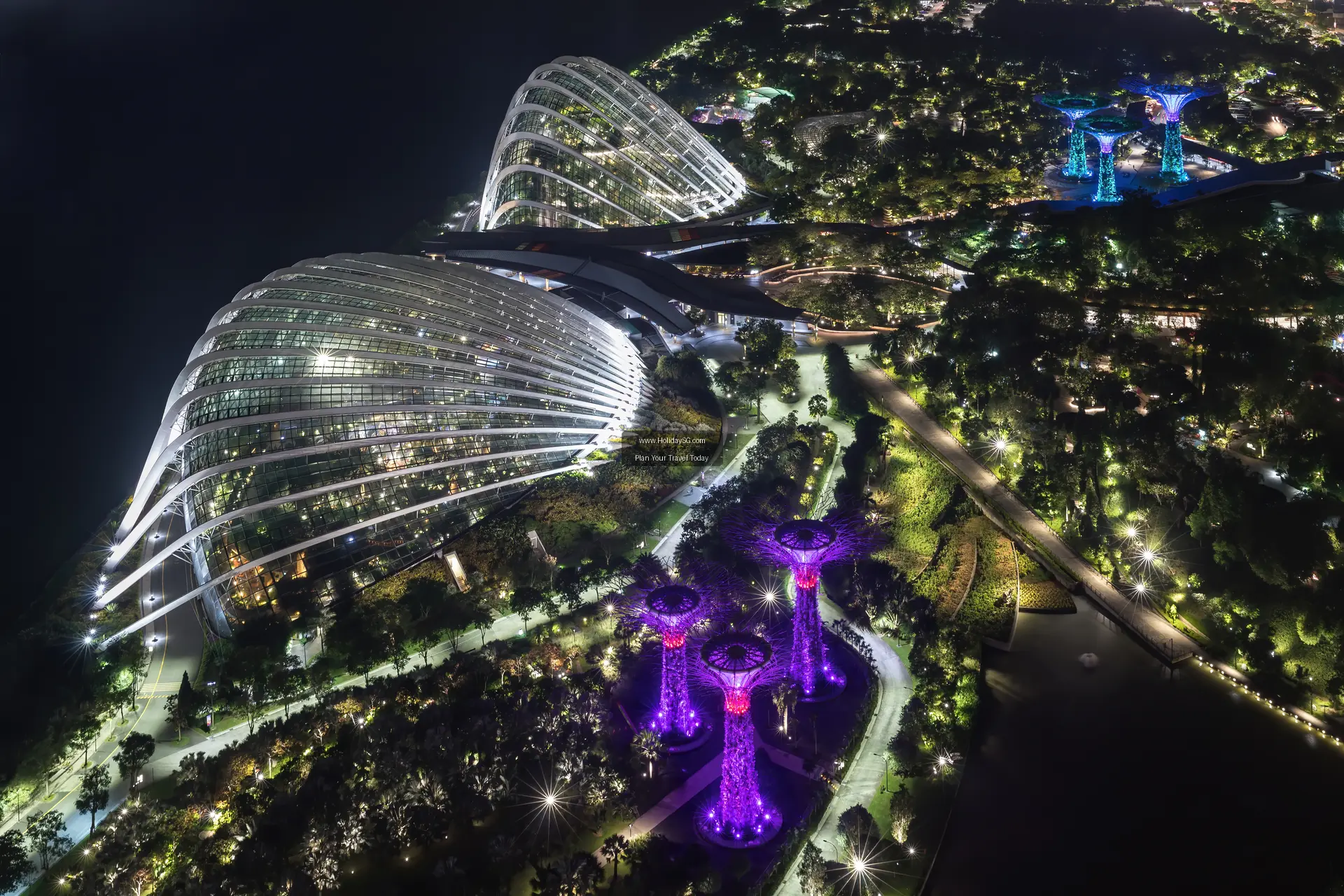
Singapore has an unusual number of excellent free things: the Marina Bay waterfront, the outdoor gardens at Gardens by the Bay and the evening Supertree light show, the Singapore Botanic Gardens, the Southern Ridges walk, temples and mosques, and the heritage streets of Chinatown and Kampong Glam. Alternate one paid attraction with one free experience each day, and your budget will stretch much further.
Pick paid attractions carefully
When you do spend, choose things you will remember. The conservatories at Gardens by the Bay, from around S$32 on HolidaySG at the time of writing, are a good example: two very different worlds under glass in one ticket. A Singapore River cruise, from around S$17.57, is an inexpensive way to see the old quays and the bay in one go, especially in the evening.
Free and nearly free things close to the budget areas
One advantage of staying in the older neighbourhoods is how much you can do on foot without spending anything. A few favourites, grouped by where you are staying:
- From Chinatown: the Buddha Tooth Relic Temple, Sri Mariamman Temple and Thian Hock Keng Temple are all within walking distance and free to enter (dress modestly). Ann Siang Hill and Club Street are lovely for an evening stroll, and Duxton Plain Park is a quiet green strip for a rest.
- From Little India: Sri Veeramakaliamman Temple, the colourful Tan Teng Niah house, and the market at Tekka Centre, which is worth seeing even if you do not buy anything.
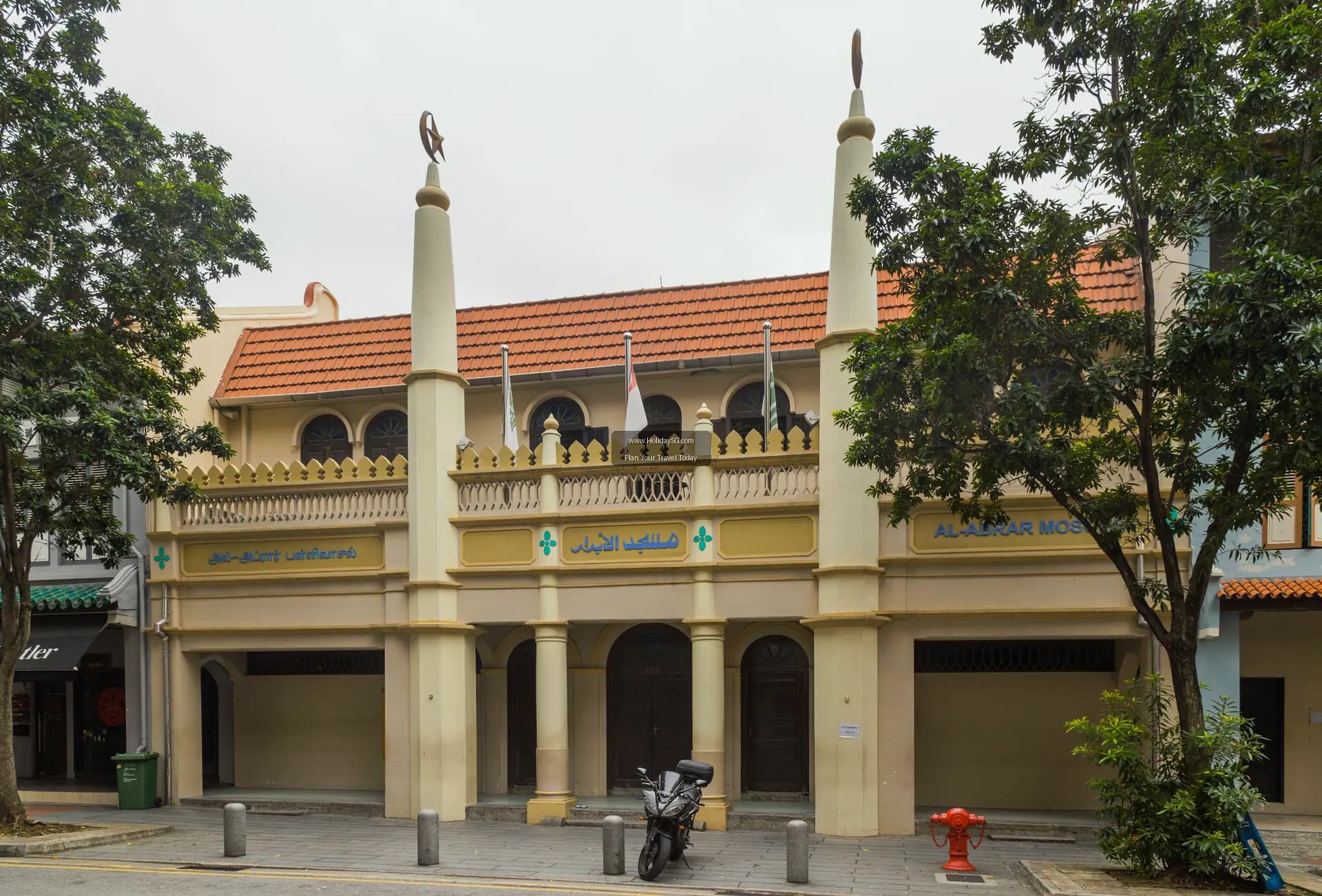
- From Bugis and Kampong Glam: the Sultan Mosque (visiting hours apply), the murals and small boutiques of Haji Lane, and a walk to the Civic District's colonial buildings and the Padang.
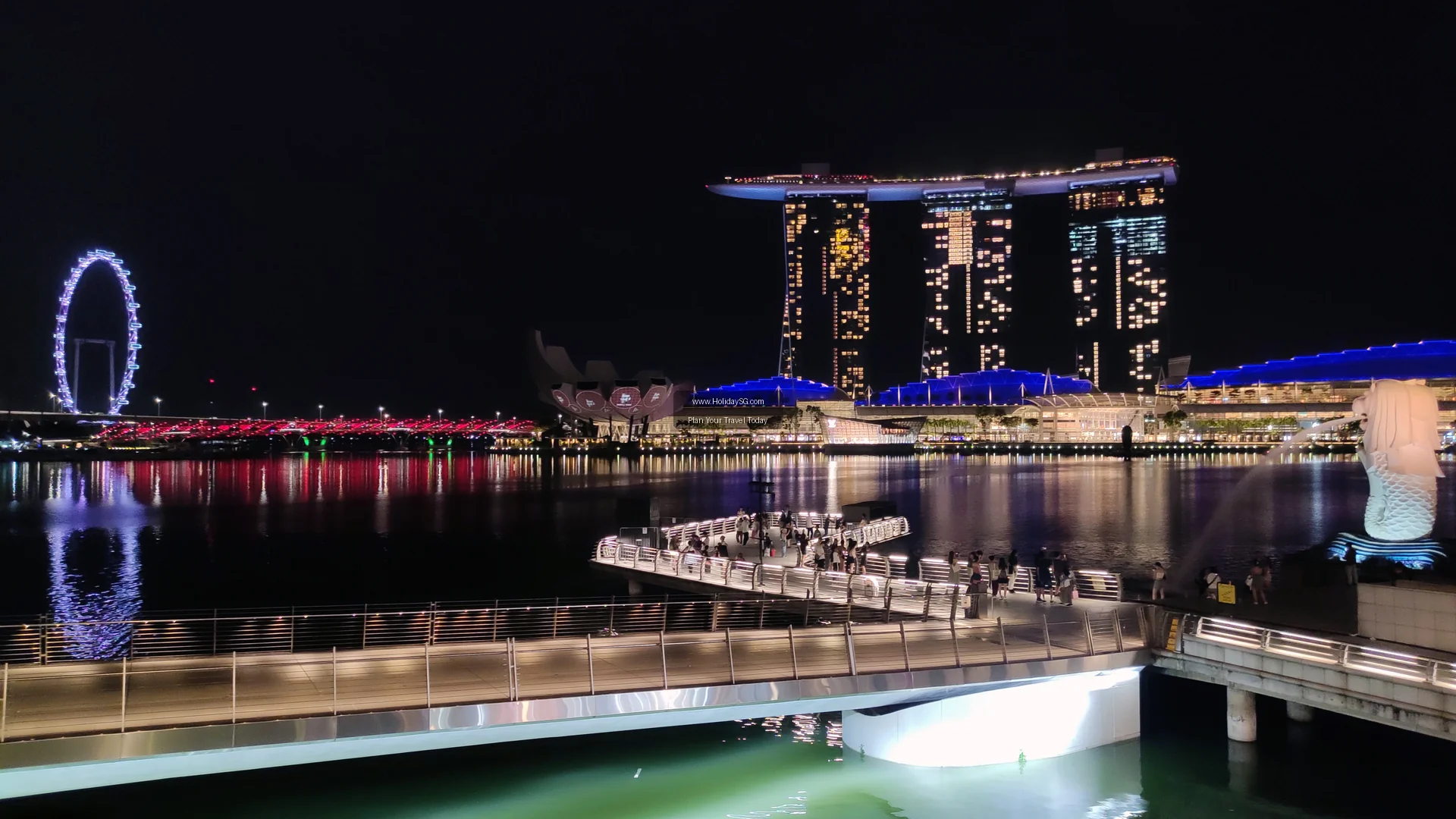
- From anywhere central: the Marina Bay waterfront loop, the Merlion, and the evening light shows at the bay and among the Supertrees.
Put two or three of these into each day and you will find the city surprisingly affordable once the room is paid for.
Staying connected and paying cheaply
Two small things can quietly eat into a budget. The first is mobile data: roaming charges from home can be steep, so a local SIM or a travel eSIM is usually much cheaper, and free Wi-Fi is widely available in malls, libraries and many cafés. The second is payment fees. Most places in Singapore accept contactless cards, and many hawker stalls take local QR payments, but a few still prefer cash. Carry a small amount of Singapore dollars for hawker centres, bumboats and older shops, and use a card with low foreign transaction fees for everything else. Withdrawing larger sums less often usually keeps ATM fees down.
Getting from the airport on a budget
Changi is well connected. The MRT is the cheapest option and reaches the city in roughly 30 to 50 minutes, with a change of train for most central areas. It is fine with a backpack or a small case, but it can be awkward with large luggage or tired children, and the first stretch runs on a branch line that needs a change.
Taxis and ride-hailing are quicker and not too expensive by international standards, especially if you are sharing. If you land late at night or want certainty, a pre-booked transfer removes the guesswork: HolidaySG lists a one-way Changi Airport transfer to downtown from around S$60.88 at the time of writing, which is per vehicle rather than per person, so it can be good value for a family or group.
A sample three-day plan on a budget
Day 1: Chinatown and the river
- Check in, then walk around Chinatown's temples and shophouse streets.
- Lunch at a hawker centre.
- Late afternoon: walk along the Singapore River to Boat Quay and Clarke Quay.
- Evening: a river cruise, or simply the free waterfront walk to Marina Bay and the evening light show.
Day 2: Gardens and the bay
- Morning: Singapore Botanic Gardens (free) before the heat.
- Afternoon: Gardens by the Bay conservatories.
- Evening: the free Supertree light show, then dinner at a nearby hawker centre.
Day 3: Little India, Kampong Glam and Sentosa
- Morning: breakfast in Little India, then walk to Kampong Glam.
- Afternoon: head to HarbourFront and take the Sentosa Island Express (from around S$6 on HolidaySG at the time of writing) for a beach afternoon. The beaches themselves are free.
- Evening: back to VivoCity for an inexpensive dinner.
Matching the stay to the traveller
"Budget" means different things to different people, and the right choice for a backpacker is the wrong one for a family of four. Here is how we would think about it for the most common types of trip.
Solo travellers and backpackers
A good hostel or capsule hotel in Chinatown, Little India or Bugis is hard to beat. You get a central location, a social atmosphere if you want one, and the lowest cost per night in the city. Look for places with lockers large enough for your bag, reading lights and power sockets in each bunk or pod, and a common area where you can meet people. Female-only dorms are widely available. If you are a light sleeper, a pod hotel is usually quieter than a traditional dorm.
Couples
A small private room in a shophouse hotel is often the best fit. It is intimate, central and full of character, even if it is compact. If space matters more than character, a value chain hotel a stop or two from the centre gives you a larger room for a similar price. Spend what you save on one special evening out: a drink with a view or a nice dinner by the river.
Families
Families are where budget hotels in Singapore get tricky, because many standard rooms only take two people and cannot fit an extra bed. Look specifically for family rooms, connecting rooms or serviced apartments, and check the occupancy rules before paying. A hotel with a pool is worth a little more if you have children: an hour in the water after a hot afternoon resets everyone's mood. A kitchenette lets you prepare breakfast and snacks, which makes a real difference over a week.
Location matters even more with children. Being able to pop back to the room for a nap between morning and evening plans is priceless in the heat, so stay close to the MRT line that serves the places you most want to visit.
Stopovers and short business trips
If you are only in town for a night or two, pay a little more to be very close to where you need to be. The value of a cheap room disappears if you spend two hours of a 36-hour visit commuting. For a single overnight between flights, a hotel near or at the airport removes the stress entirely.
Practical things nobody tells you
- Check-in times are strict. Standard check-in is usually mid-afternoon. Most hotels will store your bags if you arrive early, so you can go straight out to explore.
- Deposits are common. Many hotels take a card authorisation or a cash deposit at check-in, released when you leave.
- Air conditioning is a lifeline. Make sure it works when you arrive, and ask to move if it does not. Nothing ruins a budget stay faster than a warm room in Singapore.
- Laundry is easy. Self-service laundrettes are common in residential areas, and some hostels have machines. It lets you pack lighter.
- Durians are banned in many hotels. This is a real rule, not a joke. Eat them at the stall.
- Smoking rules are strict. Smoking is not allowed in rooms and is restricted in many public places. Look for the designated areas.
- Quiet hours matter. Shophouse walls are thin. Be considerate late at night, and pack earplugs in case your neighbours are not.
Splitting your stay between two bases
On a longer trip, it can be worth splitting your nights. For example, spend the first three nights in Chinatown for the city sights and food, then move to a hotel near HarbourFront for a couple of nights if you are planning to spend a lot of time on Sentosa. Moving once costs you an hour or two, but it can save hours of travel and make the Sentosa days feel more relaxed.
Most people do not need to do this for a short trip, because the MRT makes the whole island easy to reach from one central base. But if your plans include several days at the theme parks or beaches, a second base is worth pricing up.
Checking a budget hotel before you book
Photos can flatter a small room. Before you commit, it is worth checking a few things carefully:
- Room size and windows. Some budget rooms are internal and windowless. If that matters to you, look for it in the description.
- Distance to the MRT. Check it on a map yourself, not from the hotel's description.
- Bathroom type. "Shared" bathrooms are common in hostels and some budget hotels.
- Recent reviews. Look for comments about cleanliness, air conditioning and noise from the last few months.
- What is included. Breakfast, taxes and service charges can change the real price. Singapore hotel prices often have service charge and GST added on top.
- Cancellation rules. A slightly more expensive flexible rate can save you money if plans change.
- Family rules. Budget rooms may not take extra beds or cots. Check the occupancy limits if you are travelling with children.
Common mistakes to avoid
- Choosing the cheapest room far from the MRT. You will spend the savings on taxis and lose time every day.
- Ignoring event dates. Booking late for Formula 1 weekend or New Year can double what you pay.
- Forgetting taxes and service charges. Compare the final price, not the headline rate.
- Staying in the most expensive area "for convenience". The city is small; a well-connected cheaper area is almost always just as convenient.
- Booking a windowless room without realising. Some people do not mind; many do.
- Eating every meal in malls or hotel restaurants. Hawker centres are cheaper, faster and often better.
- Taking taxis everywhere. The MRT is faster than a car for most central journeys at rush hour.
- Overpacking the itinerary with paid attractions. Mix in the excellent free experiences.
Frequently asked questions
What is the best area for budget hotels in Singapore?
Chinatown and Little India offer the best mix of value, food and transport for most budget travellers. Bugis and Kampong Glam are slightly pricier but very central. Lavender and Jalan Besar are good for longer stays.
Are hostels in Singapore safe?
Yes, generally very. Singapore has low crime, and most hostels have secure key-card access, lockers and staff on duty around the clock. As anywhere, lock your valuables and read recent reviews.
Is it worth staying near Marina Bay or Sentosa on a budget?
Usually not. Those areas are dominated by upmarket hotels. You can reach both easily from cheaper neighbourhoods by MRT. If you want to stay there anyway, our area guides explain the trade-offs.
How far in advance should I book?
For peak periods such as Formula 1 weekend, Christmas, New Year and Chinese New Year, book as early as you can. For quieter dates, a few weeks ahead is often fine. Choosing a flexible rate lets you rebook if prices fall.
Do budget hotels include breakfast?
Some do, many do not. Breakfast at a nearby coffee shop or hawker centre, such as kaya toast, soft-boiled eggs and local coffee, is cheap and delicious, so a room-only rate is often the better deal.
Can I pay a different price as a foreign visitor?
Hotel room rates in Singapore are generally the same for everyone. Entry requirements depend on your passport, so check the official immigration rules before you travel.
How many days should I spend in Singapore on a budget?
Three to five days covers the main areas comfortably. Because food and transport are affordable, a longer stay is less expensive than people expect; the room is the main cost.
Is the MRT easy with luggage?
It is manageable with a backpack or a medium case, and stations have lifts. With large luggage or at rush hour, a taxi or pre-booked transfer is more comfortable.
Is it cheaper to stay in Johor Bahru and commute?
Some travellers try it, because rooms across the border in Malaysia are cheaper. In practice, the causeway crossing can be slow and unpredictable at peak times, and you need to clear immigration twice a day. For a short holiday, the time and stress usually outweigh the savings. We would only consider it for a long stay with flexible plans.
Are windowless rooms common?
In some budget hotels, yes, especially in converted shophouses where internal rooms have no outside wall. They are usually cheaper and can be very quiet, but some people find them claustrophobic. Hotels normally state it in the room description, so read it carefully.
Can families stay in budget hotels?
Yes, but rooms are small. Look for family rooms, connecting rooms or serviced apartments, and check occupancy rules before booking.
Our honest recommendation
If it is your first time, stay in Chinatown or near Bugis, within a few minutes of an MRT station. You will be central, surrounded by good cheap food and able to walk to many of the sights. Spend your first evening on a hawker food tour so you eat well and cheaply for the rest of the trip, and save your paid tickets for a few highlights like Gardens by the Bay.
A small room in the right place beats a big room in the wrong one. Singapore rewards travellers who spend their money on experiences rather than square metres. For more ideas on what to do once you have your base, browse our Singapore destination page.