The first time I went up into the Supertrees at Gardens by the Bay, I made the classic mistake. I arrived at 1 pm in March, wearing jeans, with a phone at 9% battery and no idea which of the metal giants actually had a platform on top. Twenty minutes in, I was sweating through my shirt, squinting at a signboard, and wondering why the "tree" I could see people standing on wasn't the one I was queuing under. If you have read a few sparse guides and still feel vaguely unsure what the Supertree Observatory is, how it differs from the walkway between the trees, or when you should actually go, this one is written for you. I have been back many times since, in the morning, at dusk, in a downpour and once with a toddler on my shoulders, and I have worked out a rhythm that I now hand to every friend who lands in Singapore.
One honest note before we start: opening hours, ticket prices and show times at a major attraction shift over the year, so treat anything I say about timings as the pattern I have seen, and confirm the live details when you book. Where I mention a price, it is the current "from" price on our site and it will update as the product does.
What the Supertree Observatory actually is
Start with the layout, because most confusion comes from here. The Supertree Grove at Gardens by the Bay is a cluster of eighteen vertical gardens, ranging roughly from 25 to 50 metres tall. They are not real trees. Each is a steel frame wrapped in living plants, mostly ferns, orchids, vines and bromeliads, and some of them carry solar panels and vents that tie into the cooling systems of the nearby conservatories. At night, they glow. In daylight, they look like something a very ambitious set designer dreamed up for a film about the future of the tropics.
There are two different ways to get above the ground in the Grove, and they are sold and experienced separately. The first is an elevated walkway that strings between two of the Supertrees at about 22 metres. The second is the observatory itself, the viewing deck at the top of the tallest tree, around 50 metres up, with an open-air platform where you can walk a loop and look back at the Marina Bay skyline. People say "the Supertree Observatory" and mean either one, and the old guides online blur them. I would rather you know the difference up front, so you can decide whether you want one or both.
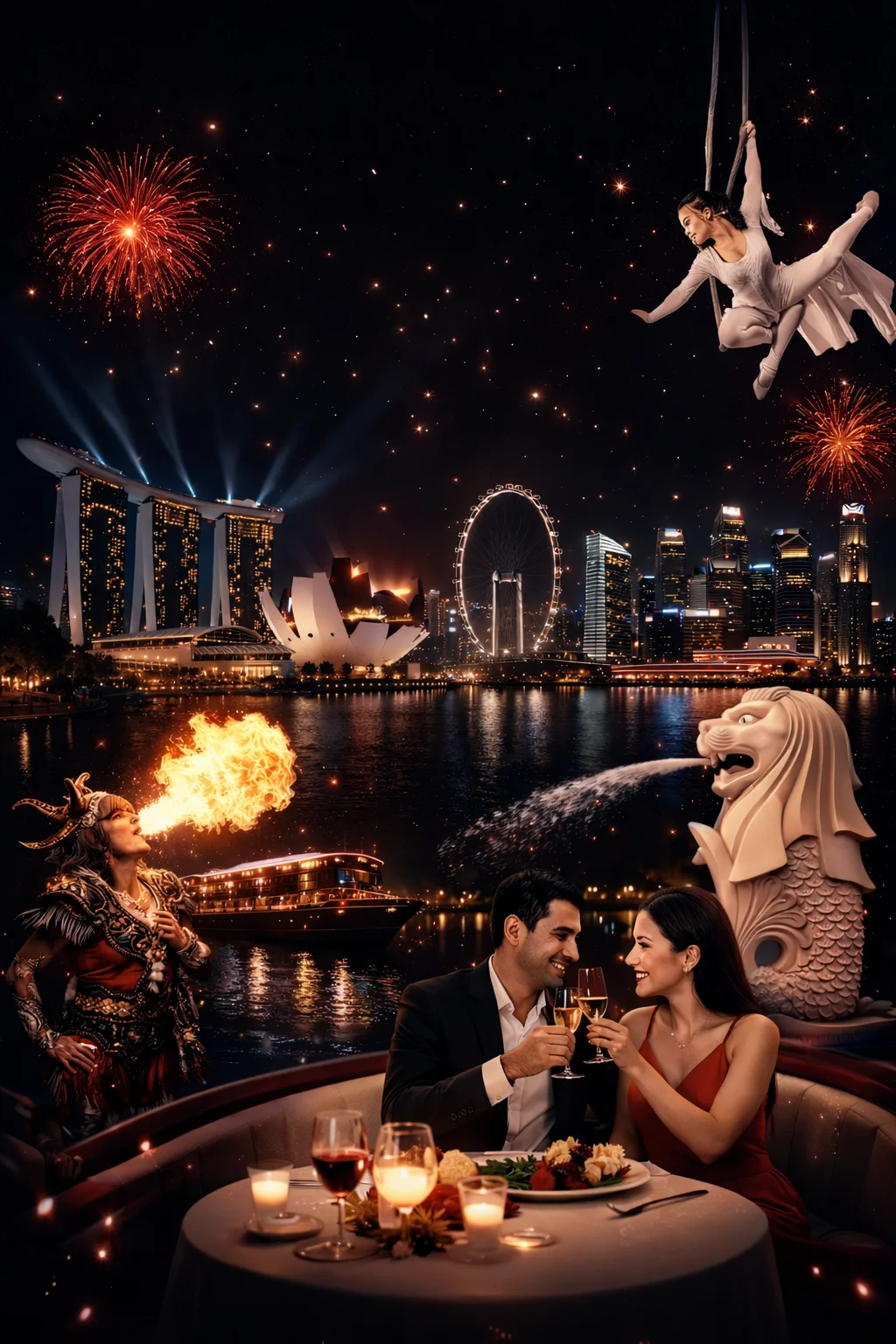
From the observatory platform you see three things at once: the grove below you, the glass domes of the Flower Dome and Cloud Forest on the water side, and beyond them the silhouettes of Marina Bay Sands, the Singapore Flyer and the financial district. That combination is why I think it is the best single viewpoint for understanding how this part of the city fits together. The Flyer gives you distance, the hotel sky deck gives you height, but the Supertrees give you the garden and the skyline in one frame, with plants nearly touching your elbows.
Observatory deck versus walkway: pick your height
If you only have the energy for one, here is how I would choose. The walkway is lower, more intimate and slightly wobbly in the way that makes people hold the rail a little tighter. It puts you at canopy height, close to the planting, so you can see the detail of the vines and the way water drips from the structures after rain. The observatory is higher and calmer, a proper platform, where you can stand and take in the whole scene without being nudged by someone trying to get past. Photographers prefer the top, couples prefer the top at dusk, and parents with small children usually prefer the walkway because the exit is closer.
| Feature | Elevated walkway | Observatory deck |
|---|---|---|
| Approximate height | About 22 m | About 50 m |
| What you see | Plants up close, the grove from the side | Whole garden, domes, bay and skyline |
| Feel | Busier, a little bouncy, very photogenic | Quieter, more open, a bit windy |
| Time needed | 15 to 25 minutes | 20 to 40 minutes |
| Best for | Families, first-timers, photos of the trees | Sunset, skyline views, couples |
| Rain or lightning | May close for safety | May close for safety |
Both can be paused during storms. Singapore's afternoon thunderstorms are fast and loud, and the platforms are metal, so staff will clear them when the sky turns. That has cost me one visit. I now check the sky at 3 pm and keep a plan B inside the domes.
Getting there without wasting your energy
The cleanest route by MRT is to get off at Bayfront on the Circle and Downtown lines and follow the signs through the underground link, which pops you out near the bay with the Marina Bay Sands mall behind you. From there it is a pleasant ten to fifteen minute walk through the Gardens, over the Dragonfly Bridge and past the lakeside, to the Grove. If you are travelling with older relatives or very small children, the walk is not hard, but it is hot, so give yourself a margin.
The other route is the Gardens by the Bay station on the Thomson-East Coast line, which drops you closer to the Cooled Conservatories side of the park. You will walk across a longer stretch of open lawn, but there is more shade and it feels like a proper arrival into the garden. I take this one if I have already planned to visit the domes first.
If you are staying at a hotel on Sentosa, in Chinatown or out in the east, a private transfer can save you a lot of faff, particularly with luggage or tired children after a theme park day. We list a Singapore hotel to attraction transfer that covers Gardens by the Bay among other stops, from S$39.37. I would not bother for a solo traveller, but for a family of four it is often the same cost as two taxis and a lot less stressful.
The best time to go, from someone who has tried them all
Let me dismantle the usual advice. Older guides say to go at sunrise because it is empty and cool. That is partly true for the park in general, but the observatory has set operating hours, and it does not open at 6 am. If you turn up at that time to chase a sunrise, you will probably end up looking at a closed gate and feeling foolish. Check the day's opening time on your ticket, and plan around that instead.
What I recommend instead is the late afternoon slot, arriving about an hour before sunset. The heat has dropped, the light is warm, and the grove looks lovely as the sky turns from blue to orange. You go up while it is still bright, watch the city lights come on, and then come down in time to see the Supertrees lit up from the ground. If you manage to stay for the free evening light show the Gardens runs, the Garden Rhapsody, you can lie on the grass or sit on the benches around the base and watch the trees move to music. Check the current show times on the day, as they sometimes shift.
| Time of day | Crowds | Heat | My verdict |
|---|---|---|---|
| Opening hour on a weekday | Light | Mild | Best for photos without people in them |
| Midday | Moderate | Brutal | Skip it, go to the air-conditioned domes |
| Mid-afternoon | Moderate | Hot, storm risk | Watch the clouds |
| An hour before sunset | Busy | Pleasant | My favourite slot |
| After dark | Busy on weekends | Warm and humid | Great light, check closing time |
Weekends and public holidays bring the crowds. School holidays in June and December are heavier still. If you can pick a Tuesday or a Wednesday, do. The difference in queue length and in how relaxed you feel on the platform is not subtle.
As for the season, Singapore is hot all year. The wetter stretch runs roughly from November to January, with the occasional hazy week in the dry season when regional smoke drifts in. Hazy days flatten the skyline, so if you are going for the view, glance at the forecast and the air quality reading on the morning you plan to go. I have been up on perfect days and on milky white ones, and the first kind is worth waiting for if your schedule has any slack.
Tickets and what they cost
The old guide I am rewriting claimed that entry was free and that you needed no reservation. That is not how I have experienced it. The observatory and the walkway are ticketed attractions, the Grove itself at ground level is free to walk, and the domes carry their own admission. Here is how I explain the money to friends. The park is mostly free to wander. The things you pay for are the two conservatories, the elevated experiences and the extras like tours. Because prices and bundles change, I will point you to the live numbers instead of repeating figures that could be out of date by the time you read this.
General entry to Gardens by the Bay is available on our site from S$33.94, and if you want the two domes in one go, with an open-top sightseeing ride thrown in, there is a Gardens by the Bay two domes bundle with a FunVee ride from S$41.46. For families who like a bit of structure, the Treasure Race at Gardens by the Bay from S$24.57 turns the park into a team puzzle hunt and keeps older children occupied for a good hour.
| What you want | Where it fits | Live "from" price |
|---|---|---|
| Gardens by the Bay admission | Core visit | S$33.94 |
| Two domes plus FunVee ride | Half-day with transport built in | S$41.46 |
| Treasure Race | Families and groups of friends | S$24.57 |
| Marina Bay night walk with the light shows | Evening, guided | S$77.21 |
| Private Gardens and satay tour | Food lovers, small groups | S$236.15 |
Prices are for adults and shown from the lowest available option. Child, senior and local rates differ, and some ticket types have specific session times, so read the option you pick. Once you place a booking with us, our team confirms it and emails your e-tickets, so do not buy at the last minute for a same-day slot and assume it will be ready in minutes.
How I would structure the whole day
The observatory does not fill a day by itself. It is a twenty to forty minute stop, and the rest of the visit is what makes the trip. Here is a version I have used with friends who had one free afternoon and evening, and it works whether you are two adults or a family with a stroller.
Early afternoon: the domes. Start inside, where it is cool. The Flower Dome is a huge glass greenhouse with a Mediterranean climate and rotating seasonal displays, while the Cloud Forest holds a tall artificial mountain draped in plants with a misty walkway spiralling down it. Do the Cloud Forest first, if you can, because you ride up and walk down, and the cool mist feels like a reward after the walk from the MRT. Give each dome about an hour, a little more if you are a plant person.
Late afternoon: a rest and a snack. There are food stalls and cafes scattered around the park, plus a hawker-style option near the edge of the gardens. Fill your water bottle, eat something cold, and sit down for fifteen minutes. This single break rescues the second half of the day.
An hour before sunset: up into the trees. Walk to the Grove, do the walkway if you want the canopy view, then the observatory deck for the big panorama. Linger for the colour change. Take the photo with the domes on the left and the hotel on the right, then put the phone away for a minute and just look.
Evening: the lights. Come back down and lie on the ground at the base of the Supertrees. The evening light show uses the trees as a backdrop, with music and colour washes, and it is one of the few free things in Singapore that I will happily watch twice in a week. If you like a bit of structure, a Marina Bay night walk that includes the Spectra and Garden Rhapsody shows starts from S$77.21 and takes the guesswork out of timing.
Practical tips I wish someone had told me
Shoes. Wear closed, comfortable shoes. There is a good amount of walking, and the paths around the grove can be slippery after rain. Flip-flops are fine for the lawn but not for stairs.
Water and sun. Carry a refillable bottle and a hat. The shade under the trees is generous but patchy, and the platform at the top gives you none.
Bags and tripods. Large backpacks and tripods may be restricted on the elevated platforms because of crowd flow, so check the rules in advance. A small bag and a phone gimbal are easier.
Heights. If you are nervous about heights, the observatory is steadier than the walkway, but both are open to the air. Go with a friend who does not mind, and look at the horizon, not the ground.
Wind and rain. It can be windier than you expect at fifty metres. Bring a light layer, particularly for the evening. A small rain poncho lives in my bag year round.
Charge your phone. You will take more photos than you expect, and the park is big. Carry a power bank.
Accessibility. The park has smooth, level paths in most areas, and lifts serve many of the elevated spots, but you should confirm which parts are step-free on the day you go. Do not rely on a generic "no reservation needed" line from an old blog. Ask at the information counter, or check the official page before you travel.
Pairing the Supertrees with nearby attractions
Gardens by the Bay sits right next to some of the best-known sights in Marina Bay, so it makes sense to link a few of them into one trip. I like to compare them by what kind of view you get, because that is what people usually want to know when they are choosing between the options.
| Viewpoint | The view | Best time | Live "from" price |
|---|---|---|---|
| Supertree deck | Garden, domes and skyline in one frame | Sunset | See the Gardens page |
| SkyPark Observation Deck | Looking back over the bay and the Gardens from the hotel roof | Late afternoon to dusk | S$35.00 |
| Singapore Flyer | Slow wheel ride with a wide, moving panorama | Evening | S$46.00 |
| River cruise | Skyline from water level | Evening | S$26.52 |
If I had to choose only one extra, I would pick the SkyPark Observation Deck at Marina Bay Sands, because it gives you the reverse view, with the Supertrees as part of the scene. The Singapore Flyer is the relaxed choice, especially for older travellers who prefer to sit, and an evening river cruise is great for people who would rather watch the city glide by.
For orchid lovers, the National Orchid Garden at the Botanic Gardens, from S$10.14, is a calmer companion and a good rainy-day alternative. And if you want to eat your way through the area with a local guide, the private Gardens and satay tour from S$236.15 is a fun way to combine a long walk with a long dinner.
Photography at the Supertrees
You do not need a big camera. A recent phone will cope well, as long as you take a few precautions. Wipe the lens, because humidity and sunscreen smudge it more than you think. Turn on the grid and keep your horizon level, because the trees are tall and straight, and a tilted frame shows immediately.
From the ground, shoot upward from the middle of the grove to make the trees look like a canopy. From the walkway, shoot along the line of the bridge to get the sense of depth and the little silhouettes of people. From the observatory, use the domes as the middle layer, the skyline as the background and a bit of plant in the foreground. At dusk, there is a ten minute window after sunset when the sky is deep blue and the lights are on. That is your moment, so do not spend it queueing for a selfie.
One more suggestion: be generous with other people. The platform is not large, and if you hog the best corner for ten minutes, you ruin the experience for everyone. Take your set, step aside, and let others in. I have had far better conversations with strangers that way.
If you are visiting from abroad: visas and flights
Tickets for attractions are the same whatever your passport says, but your entry into Singapore is another matter. Plenty of nationalities can visit without a visa for a short stay, and others need one arranged before they fly. The rules differ by country and change over time, so rather than trust a blog post, run your passport through our visa requirements checker before you book anything non-refundable, and confirm against the official immigration site.
One practical thing I see travellers trip over is the visa form asking for proof of onward travel or an itinerary. If you need to show a flight plan for an application and do not want to buy a ticket before the visa is approved, our flight reservation service can provide a reservation for visa applications. It is a reservation to support your paperwork, not a purchased air ticket, and it does not promise visa approval, so use it only for what it is. Sort that out first, then plan your Supertree day.
Visiting with children, grandparents or a tight budget
With small children. Take a stroller for the walk but expect to fold it for some elevated areas. Keep the observatory short, because toddlers lose interest quickly, and give them a splash or a snack beforehand. There are water play spaces in the park in the cooler part of the day, and a change of clothes in the bag is worth the weight.
With grandparents. Plan frequent rests, pick the cooler end of the afternoon and use the transport options inside the park where available. A FunVee open-top bus ride from S$28.64 lets you see the area without walking everywhere, and the lifts make the elevated views doable for many people. Confirm step-free access on the day.
On a budget. The grounds are free to enter, the evening show is free, and you can get a great experience by walking the Grove at ground level, then choosing one paid thing, either a dome or the observatory, rather than all of them. Bring your own water and eat at the hawker centres nearby rather than inside the attractions. That alone saves a surprising amount.
Mistakes I see people make
First, arriving at midday and trying to do everything outside. The heat flattens you by two o'clock, and you end up miserable on a platform that is supposed to be the highlight. Second, assuming the observatory and the walkway are the same thing, and finding out at the entrance that you booked the wrong one. Third, relying on an outdated page that says no tickets are needed. Fourth, leaving the booking until you are standing in the queue, and discovering your preferred time has sold out. Fifth, skipping the evening light show because you are tired, when it is the thing most people remember. And finally, trying to cram in the Flyer, the SkyPark, the domes, the Grove and a river cruise in one day. Pick two or three, and do them properly.
A walk through the Grove, step by step
Here is the order I follow when I bring someone for the first time, because the sequence matters more than you would think. I begin on the ground, under the trees, and I make people stand still for a minute and look straight up. The structures look huge from below, and the planting is far denser than it appears in photographs. You can see orchids tucked into the steel, ferns hanging in loose curtains and the occasional bird using a ledge as a perch. That first minute resets your sense of scale, and it makes the climb feel earned.
Next I walk the outer ring of the Grove to find the tree that carries the observatory. It is the tallest, and the lift queue gives it away. I check the queue length before committing. If it is short, I go up straight away. If it is long, I take the walkway first, because the line there tends to move faster, and by the time I come back down the observatory queue has often shrunk. It is a small trick, but it has saved me a lot of standing around in the heat.
At the top, I do a slow lap before I take a single photo. The platform loops around, and each side shows something different: the bay and the hotel on one, the domes on another, the city centre and the Flyer on a third, and the green tangle of the park below. Only after I have seen all four do I decide where to stand for the pictures. People who start snapping at the first railing usually regret it ten minutes later.
Coming down, I stay in the Grove for a little while. The lower paths under the trees have benches, and in the evening the lights change colour slowly. It is one of the best spots in Singapore to sit and do nothing, and that is a compliment. If you only rush through, you miss the point of the place.
What each season is like up there
Singapore does not have four seasons, but it does have moods. From roughly February to April the weather is often at its driest and hottest, with bright skies and hard light. That is wonderful for a clear skyline and miserable for midday walking. From May to September you get a mixed pattern, with warm days, some sudden showers and, in certain years, hazy periods. October to January is the wetter stretch, with long grey afternoons and dramatic skies, which can make for superb photographs if you are patient and the platform is open.
The practical effect is simple. In the dry months, go late. In the wet months, go early or wait for a clearing and keep your plans loose. In every season, bring something to cover your shoulders and something to cover your head, one for the sun, one for the rain. And in every season, check the day's forecast and the operating status before you set out, not the night before.
| Months | Typical conditions | How I would plan |
|---|---|---|
| February to April | Hot, bright, often drier | Domes at midday, trees at sunset |
| May to September | Warm, mixed, some haze in certain years | Check air quality, keep a flexible slot |
| October to January | Wetter, moody skies, storms | Go early, bring a poncho, have a plan B |
Where to eat and drink around the Gardens
Food is one of the quiet pleasures of this trip, and you do not need to spend much. Inside the park there are casual cafes and a hawker-style spot, and they are fine for a cold drink and something quick. For a more local meal, the hawker centres around Marina Bay are a short ride away, and you can eat noodles, chicken rice, satay and a fresh sugarcane juice for the price of one fancy coffee. I like to eat before I go up, rather than after, because I move slower and enjoy the view more on a full stomach, and because the evening queues at food places can be long.
If you want company and a bit of storytelling, the evening food tours in the Marina Bay area are a good option. The Lau Pa Sat night street food tour with a Marina Bay night walk from S$116.03 pairs a hawker dinner with the waterfront lights, and it ends close enough to the Gardens that you can fit a second stop on the same night. Come hungry, and wear shoes you do not mind walking in.
Three sample plans you can copy
If you want to stop thinking and just follow a plan, here are three that I have given to friends and family. Adjust the times to the live opening hours, and remember that everything here is a suggestion, not a promise about how any one day will go.
| Plan | Who it suits | Flow |
|---|---|---|
| The short visit | Layover or one free evening | Arrive an hour before sunset, observatory, ground-level light show, dinner nearby |
| The balanced day | Couples and friends | Domes from early afternoon, rest and snack, trees at dusk, light show |
| The family day | Parents with children | Morning puzzle hunt or water play, long lunch, nap or rest, walkway at dusk |
The short visit. This is the one I do when someone has just landed and has only one evening. We drop the bags, take the MRT to Bayfront, walk through the Gardens, go up at sunset, then lie on the grass for the evening show. It is tiring but efficient, and the first night in Singapore feels special.
The balanced day. Start inside, rest in the middle, finish outside. It protects you from the heat, spreads the walking and leaves the best light for the best view. This is my default for visitors who like gardens and photography.
The family day. Children run out of steam before adults do, so put the high-energy parts first and the quiet viewing last. Let them play and snack, and treat the platform as a short reward rather than the main event. Keep the day flexible, and be ready to skip something if the mood is wrong. A happy child is worth more than a full itinerary.
Whichever plan you pick, book your tickets ahead for the parts that have fixed sessions, leave the rest open, and keep a spare hour in the day. The best moments at Gardens by the Bay tend to happen in the gaps, when you are sitting on a bench with a cold drink, watching the light go from gold to blue.
Featured experiences in this guide
Ready to plan your Marina Bay day?
Book Gardens by the Bay with HolidaySG, add the domes or a night walk, and our team will confirm your booking and email your e-tickets.
Frequently asked questions
Is the Supertree Observatory free?
No. Walking around the Supertree Grove at ground level is free, but going up the observatory deck or onto the elevated walkway needs a ticket. Pricing and bundles change, so check the live option before you travel.
What is the best time to go up?
About an hour before sunset. You get daylight for the views, warm colours as the sun drops, and lights coming on across the bay. Weekday visits are calmer than weekends.
How long should I allow?
Plan twenty to forty minutes on the observatory itself, plus travel from the entrance and any queue. If you include the domes and the evening show, a half-day to a full afternoon and evening is realistic.
Is it suitable for kids and older visitors?
Usually yes, with some planning. Many areas are step-free and lifts serve parts of the elevated routes, but confirm access for your specific route and bring a stroller you can fold. Rest breaks and shade matter more than speed.
What happens if it rains?
Light rain is manageable, but the elevated platforms can close during thunderstorms for safety. Keep an indoor option like one of the domes as a fallback, and check the sky before you set out.
Do I need a visa to visit Singapore?
It depends on your passport. Many travellers can enter without one for a short stay, but not all. Use our visa requirements checker for a first look, and confirm with the official immigration authority before you book flights.
Can you help with a flight reservation for a visa application?
Yes, our flight reservation service provides a reservation to support visa paperwork. It is not an issued air ticket, and it does not guarantee approval of your application.
Can I combine the Supertrees with other Marina Bay attractions?
Easily. The Flyer, the SkyPark and the river cruise are all close by, and a night walk can string several together. Pick two or three rather than all of them, so you can enjoy each one properly.