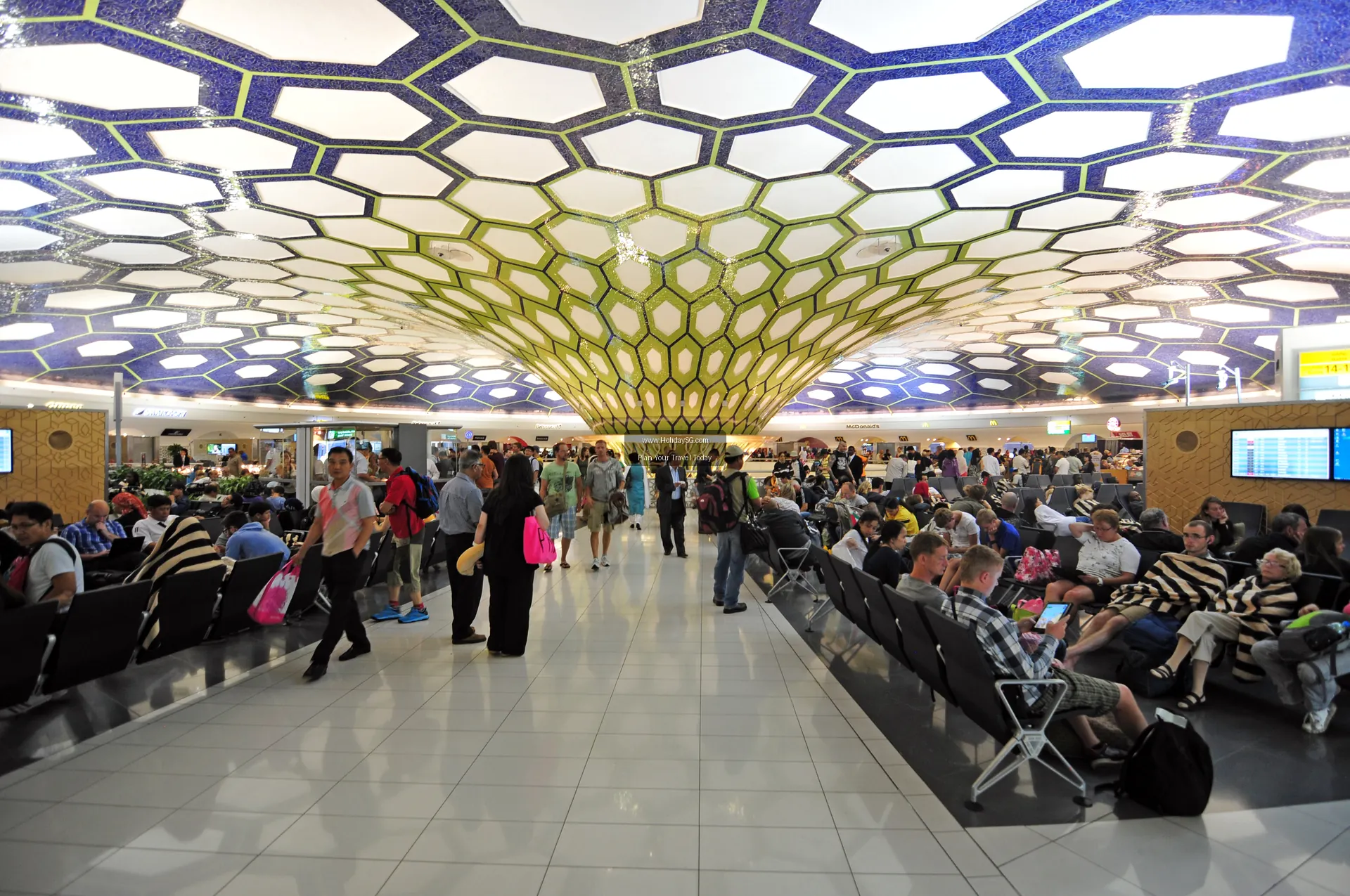
Planning a trip to UAE? This guide covers exactly who needs a visa, what it costs, how long it takes and where to apply — using figures from UAE's official immigration authorities.
Quick answer
Most visitors to UAE need visa on arrival (visa-free entry), with an official government fee of AED 100 (approx), extendable.
UAE visa at a glance
| Visa required? | Yes, for many nationalities |
|---|---|
| Main visa type | Visa on arrival (visa-free entry) |
| Government fee | AED 100 (approx), extendable |
| Processing time | On arrival |
| Validity | Issued at UAE airport on arrival |
| Permitted stay | 14 days |
| Where to apply | https://icp.gov.ae |
| HolidaySG assistance fee | S$65 per applicant (usually S$100) |
Who needs a visa for UAE?
Visa on arrival (visa-free entry): Indian passport holders holding a valid US visa, UK/EU/Schengen residence or visa, or a UAE-linked eligible entry document
Tourist visa (30 / 60 / 90 days): Indian passport holders (and other nationals requiring pre-entry visa); applied via ICP smart services, GDRFA (Dubai), airlines or hotels as sponsor
Tourist Visa (60 days, single/multiple entry): Indian and other visa-required passport holders wanting a longer stay
UAE visa options, fees and processing times
| Option | Official fee | Max stay | Processing | Where to apply |
|---|---|---|---|---|
| Visa on arrival (visa-free entry) | AED 100 (approx), extendable | 14 days | On arrival | https://icp.gov.ae |
| Tourist visa (30 / 60 / 90 days) | From AED 250-350 (varies by sponsor/channel) | 30 days | Typically 2-5 working days | https://smartservices.icp.gov.ae |
| Tourist Visa (60 days, single/multiple entry) | From AED 650 (single) / higher for multiple entry | 60 days | 2-5 working days | https://icp.gov.ae |
Documents required
For the Visa on arrival (visa-free entry):
- Indian passport valid 6+ months
- Valid US visa / UK-EU residence or visa (min 6 months validity)
- Return ticket
How to apply
- Check your requirement by nationality (table below) or use our checker.
- Visa on arrival (visa-free entry): https://icp.gov.ae — allow On arrival.
- Tourist visa (30 / 60 / 90 days): https://smartservices.icp.gov.ae — allow Typically 2-5 working days.
- Tourist Visa (60 days, single/multiple entry): https://icp.gov.ae — allow 2-5 working days.
- Keep your approval/receipt with your passport; carry proof of accommodation, onward travel and funds.
UAE visa for children and families
Children usually need their own visa or entry authorisation, even infants. For family applications, prepare each traveller's passport and photo, and add birth certificates for minors and, where a child travels with one parent or a guardian, a consent letter. Applying for the whole family together keeps travel dates and reference numbers consistent.
Common mistakes, delays and rejection reasons
From handling UAE visa applications, these are the issues that most often cause delays or refusals. Avoiding them is the single biggest thing you can control:
- Passport validity: many countries require at least six months' validity beyond your travel dates — renew early if yours is close.
- Insufficient proof of funds: bank statements that are too thin, too new, or not in your name are a common reason for delays. Show a stable balance over the last 3–6 months.
- Photo specification errors: wrong size, background colour, glasses or a smile can bounce an application. Follow the exact spec for UAE.
- Applying too late: submit well before departure — allow the full processing window plus a buffer, not the minimum.
- Mismatched documents: names, dates and passport numbers must match exactly across your form, flight and hotel bookings.
- Weak ties to your home country: employment letters, leave approval and return bookings help show you intend to return.
- Prior overstays or refusals: declare them honestly; hiding history causes more problems than the history itself.
Practical timeline: application → approval → travel
- 6–8 weeks before travel: check your passport validity, confirm your requirement, and start gathering documents.
- 3–4 weeks before: book refundable flights and accommodation (immigration may ask for these), then submit your UAE application.
- Processing: allow On arrival. Do not make non-refundable bookings until approved.
- On approval: print/save the approval, keep it with your passport, and complete any arrival card before you fly.
Before you travel to UAE
- Onward or return ticket: carry proof — airlines and immigration can ask for it.
- Funds: have evidence of enough money for your stay (card and some AED (UAE Dirham)).
- Travel insurance: strongly recommended, and mandatory for some destinations.
- Copies: keep a digital and paper copy of your visa/approval and passport photo page.
Good to know
- Verify eligibility on ICP (icp.gov.ae) — lists change often.
- Overstay fines apply per day. Applications go through licensed sponsors, not directly.
UAE visa requirements by nationality
| Passport | Requirement | Max stay |
|---|
Frequently asked questions
How much is a UAE visa?
Visa on arrival (visa-free entry): AED 100 (approx), extendable. HolidaySG's assistance fee is a separate flat S$65.
How long does it take?
Upon arrival, visa-free entry applies.
Official sources
- UAE ICP (Federal Authority for Identity, Citizenship, Customs & Ports Security) — verified 19 August 2026
Last updated 20 August 2026. Written and reviewed by the HolidaySG visa team and checked against the official sources above (facts verified 19 August 2026). Visa rules change and depend on your passport, residence and purpose of travel — always confirm with the official source before booking, or use our visa checker. HolidaySG re-confirms current requirements at the time of your application.
Quick answers
Do I need a visa to enter the UAE? Most nationalities receive a visa-free entry or visa on arrival for 30 days. Citizens of around 188 countries enjoy visa-free access, though the length of stay varies. Always verify your specific nationality on the official General Directorate of Residency and Foreigners Affairs (GDRFA) website before booking travel.
Can I extend my UAE visa? Yes, tourist visas can be extended for an additional 30 days through the GDRFA or via your hotel. Extensions must be requested before your current visa expires, and extension fees apply separately from the initial visa cost.
Visa sponsorship and employment visas in the UAE
Most people moving to the UAE for work rely on their employer to sponsor their residency visa—this is not optional, it is the only legal pathway. Your employer or their sponsoring agent handles the bulk of paperwork, but understanding the timeline and your responsibilities prevents costly delays.
Once you have signed an employment contract, your employer initiates the visa process by registering you with the GDRFA and obtaining approval from the relevant free zone authority or municipality. In Dubai, this might involve the Dubai Department of Human Resources and Emiratisation. In Abu Dhabi, the Abu Dhabi Department of Human Resources handles approvals. The sponsorship process typically takes 2 to 3 weeks from application to approval, but can stretch to 4 weeks if documents are incomplete or if the GDRFA requests additional information.
You will need to provide certified copies of your educational diplomas, a clean police clearance certificate from your home country, and a medical fitness report from an approved clinic. Many employers require the medical exam to happen in the UAE after you arrive on a visit visa, rather than before departure. This can add 1 to 2 weeks to the process. Request this information from your employer's human resources department as soon as you sign your contract.
One practical tip: ask your employer whether they use an in-house sponsoring agent or an external recruitment agency. If external, clarify communication channels so you are not left waiting for updates. Some agencies provide weekly progress reports; others respond only when documents are needed. Knowing this upfront saves frustration during the waiting period.
Understanding UAE visa types beyond tourism and employment
The UAE offers several specialized visa categories that most travellers never encounter but can be invaluable for specific situations. These include the Golden Visa (long-term residence), investor visas, freelancer permits, and student visas. Each has distinct requirements, costs, and processing timelines.
The Golden Visa, introduced in 2021, allows eligible individuals to stay for 5 or 10 years without requiring a sponsor. Real estate investors purchasing property valued at 750,000 AED or more, entrepreneurs, specialized professionals, and graduates of top-tier universities can apply. Processing typically takes 30 to 60 days after submission through the GDRFA. This visa does not require you to work for a specific employer, which appeals to remote workers and business owners.
Freelancer visas, available in Dubai, Abu Dhabi, and Sharjah, allow self-employed professionals to work independently without employer sponsorship. You register with your emirate's relevant authority—the Dubai Department of Tourism and Commerce Marketing (DTCM) in Dubai, for example—and pay an annual registration fee. Processing takes 5 to 10 working days. This option suits digital nomads, consultants, and creatives who have clients outside the UAE but want to base themselves here.
Student visas require sponsorship from your educational institution. Universities in Abu Dhabi, Dubai, Sharjah, and other emirates handle the visa application on your behalf. You will need an acceptance letter, proof of financial support, and a health insurance policy. Processing typically takes 2 to 3 weeks. The visa is valid for the duration of your studies plus a grace period, usually 30 days after graduation, giving you time to secure employment sponsorship.
One practical tip: if you are considering a move to the UAE beyond a short holiday, research these categories early. Some paths (like the Golden Visa or freelancer permit) offer more flexibility and may suit your circumstances better than traditional employment sponsorship, even if they require upfront investment or specific qualifications.
Navigating UAE visa processing from outside the country
Applying for a UAE visa from abroad has become simpler in recent years, but the experience varies dramatically depending on where you live and which visa type you need. Most visitors apply online before arrival, while employment sponsorship applicants typically start their paperwork before leaving home.
Tourist visa applications are handled through the GDRFA online portal or via authorized application centres in many countries. If your country has an official UAE visa application centre, visit in person to submit biometric data and original documents. Processing through authorized centres usually takes 3 to 5 working days. If applying online, you upload scanned copies of your documents and receive a digital approval via email, which you print or save on your phone for entry at the airport. No physical visa stamp appears in your passport unless you request one.
For employment visas, your sponsoring employer or their agent submits documents to the GDRFA on your behalf. You coordinate by email, providing scanned copies of your passport, educational certificates, and medical reports. Once approved, you receive a digital approval file that you present at the airport. Upon arrival, you attend a medical examination (if not completed overseas) at an approved clinic, usually within the first week. After the medical clearance, the employer arranges your Emirates ID collection. This entire process from approval email to holding your ID card takes 2 to 4 weeks in the UAE.
A critical detail: document apostillization is often required. Your educational diplomas, police clearance, and birth certificates must be authenticated through your home country's issuing authority or foreign ministry. In most countries, this is called apostille and takes 1 to 3 weeks. Start this process as soon as you know you need these documents—do not leave it until the last moment.
A useful tip is to ask your employer or visa application centre which documents need to be certified and which can be submitted as simple photocopies. Some employers request both versions to cover all bases. Clarifying this early prevents you from chasing multiple certifications unnecessarily.
Medical examination requirements for UAE residence visas
Anyone applying for employment, student, or long-term residence visas must undergo a medical examination approved by the UAE health authorities. This is not a casual check-up; it is a mandatory screening for communicable diseases and certain health conditions. Understanding what is tested and where to get examined prevents unexpected delays and rejection.
The medical examination tests for tuberculosis, HIV, and hepatitis. Chest X-rays, blood tests, and urine samples are standard. Some emirates require additional tests depending on your age, job category, or home country. Nurses or physicians may also assess your general health and mental fitness. The entire appointment usually takes 45 minutes to 2 hours. Approved medical centres operate in every emirate—your employer typically directs you to a specific clinic they have partnered with, so you cannot choose freely.
You can complete the medical exam in your home country before departure or after arrival in the UAE. Employment visa applicants often complete it after arrival since some employers prefer to verify your presence and commitment before investing in the medical process. If you choose to do it at home, use only clinics authorized by the UAE embassy or consulate in your country. Any unapproved exam must be repeated in the UAE, wasting time and money.
Positive results for communicable diseases may lead to visa rejection, though there are cases where individuals with manageable conditions have been granted visas with restrictions or required treatment plans. This is handled on a case-by-case basis. If you have a known health issue, consult with your employer or visa consultancy before proceeding—do not wait to discover complications after applying.
Processing time for medical results is typically 3 to 5 working days. In busy periods (September to November, when many new employment visas are processed), results can take up to a week. One practical tip: ask the medical centre for an estimated date when your report will be ready, then follow up via email a day or two before. This keeps the process moving and alerts you to any issues immediately.
UAE visa price and fee structures explained
UAE visa fees vary significantly depending on visa type, duration, and whether you apply in person or online. Pricing also differs between emirates—a tourist visa in Dubai costs differently than one processed in Sharjah or Ras Al Khaimah. Rather than providing outdated figures, understanding the fee structure helps you budget accurately.
Employment visas involve multiple fees beyond the visa itself. Your employer pays for visa issuance, but you cover the cost of medical examination (typically 300 to 500 AED), Emirates ID issuance (around 100 AED), and labour card fees (around 50 AED). If documents require notarization or courier services, add another 200 to 400 AED. Freelancer licenses cost between 1,000 to 2,000 AED annually depending on the emirate and business classification. Golden Visas do not have a direct visa fee but require investment thresholds (property, business, or professional qualifications) and administrative processing fees.
Extensions of tourist visas cost similar amounts to initial visa fees and are processed through the GDRFA or via hotels. Some hotels offer package deals that include accommodation and visa extension, which can represent better value than applying separately. Student visas are typically sponsored by your university, who pays government fees; you pay for health insurance and medical examinations separately.
Payment methods vary. Tourist visa fees can be paid online via credit card during the application process. Medical examination fees are paid at the clinic on the day of your appointment. Government administrative fees like Emirates ID collection require bank transfer or in-person payment at a government centre. One practical tip: ask your employer for a detailed breakdown of all fees you will incur during the visa and onboarding process, including those hidden in agent commissions. This prevents surprises after you have already relocated or when final payments are due.
Entry requirements and what to expect at UAE airports
Arriving at Dubai International, Abu Dhabi International, or another UAE airport requires more than a valid visa and passport. Border officials conduct thorough checks to ensure your visa, entry purpose, and documentation align. Knowing what authorities look for and what documentation to have ready saves time and avoids unnecessary questioning.
Employment visa holders entering for the first time should have their job offer letter, employment contract, and sponsorship approval email available. If the airline or border staff has any questions about your employment, these documents clarify your status and smooth the process. Your employer or their agent may have informed the immigration system about your arrival, so your name should appear in their system. If there are unexpected delays or errors, contact your employer's human resources department immediately.
Baggage screening in the UAE is rigorous. Certain items are prohibited, including alcohol, pork products, and materials considered offensive to Islam. Medications must be declared if they are controlled substances (check your home country's medication names against UAE prohibited lists before travelling). Electronic devices like laptops and cameras are permitted. Biometric data (fingerprints and possibly a photo) is collected at immigration—this process is mandatory and straightforward.
Processing times vary. During peak hours (afternoons and evenings), you might wait 20 to 40 minutes at immigration. Early morning or mid-morning arrivals are often faster. The entire airport process, from landing to baggage claim, typically takes 60 to 90 minutes unless you encounter delays. One practical tip: arrive early enough that you are not rushed, and ensure all your paperwork is organized in one easily accessible folder. Officers appreciate orderliness and it speeds up the verification process.
Residence permit (Emirates ID) process after visa approval
Your UAE visa is temporary authorization to enter the country. To legally reside and work, you need an Emirates ID and residence permit, which are issued after you have arrived and undergone medical screening. This second phase often confuses newcomers because it happens sequentially and requires additional steps beyond the initial visa approval.
After your visa is approved and you have arrived in the UAE, your employer arranges your medical examination within the first week. Once the medical report is approved, your employer's human resources or sponsoring agent initiates the Emirates ID application. You will visit an official GDRFA office or typing centre to provide biometric data and a photograph. In Dubai, main centres include the GDRFA headquarters in Al Baraha and satellite offices in Dubai Mall and other malls. In Abu Dhabi, the main office is in the Sheikh Zayed Centre building. Processing typically takes 7 to 10 working days.
The Emirates ID is a small laminated card containing your photograph, fingerprints, visa number, and residency information. It is required for banking, renting accommodation, opening utilities accounts, and routine police interactions. Without it, you cannot legally drive, even with an international driving licence. You should carry it at all times, though in practice, most people carry their passport instead and keep the ID card at home.
Your residence permit validity aligns with your visa type. Tourist visas grant a 30-day residence permit (extendable). Employment visas typically grant permits for 2 or 3 years, depending on your employment contract. Student visas grant permits matching your course duration plus a grace period. Upon expiration, your residence visa must be renewed through your sponsor (employer, educational institution, or property owner if you hold a Golden Visa).
Track the expiration dates of your Emirates ID and residence permit. Set a reminder 60 days before expiration to alert your sponsor that renewal is needed. Many people miss renewal deadlines, leading to visa cancellation, fines, and deportation. Your sponsor is responsible for renewal, but they forget if you do not remind them. A simple email asking for a timeline usually prompts action quickly.
Sponsorship transfer and changing employers in the UAE
One of the most misunderstood aspects of UAE employment is that your visa is tied to your employer. If you want to change jobs, you cannot simply resign and join a new company. You must go through a formal sponsorship transfer process, which takes time and involves your old employer's cooperation. Understanding this requirement before accepting a job prevents frustration later.
If your current employer approves your transfer (they provide a No Objection Certificate, or NOC), the process is smoother. Your new employer initiates the sponsorship transfer application with the GDRFA. This typically takes 1 to 2 weeks. During this period, your old visa remains active but cannot be renewed—you are in a transitional state. Once the new sponsorship is approved, you receive a new visa tied to your new employer. Your Emirates ID is updated to reflect the change.
More quick answers
Do I need a medical test before arriving in UAE? Medical examinations are required only for residence visa holders (employment, investor, or family sponsorship visas), not for tourists. You'll typically need tests for tuberculosis, blood-borne illnesses, and general fitness after arrival, conducted at approved clinics in Dubai, Abu Dhabi, or Sharjah.
Can I change jobs while on a UAE employment visa? Sponsorship transfer between employers is possible but requires your current sponsor's approval and formal paperwork. New employers must initiate a transfer application; expect 2-6 weeks for processing depending on which emirate you work in.
What happens after my UAE visa is approved? Once approved, you'll receive a residence visa stamp, but you cannot legally work or rent until you obtain your Emirates ID. Collection happens at General Directorate of Residency and Foreigners Affairs (GDRFA) offices; processing takes 5-10 working days after arrival.
How much does a UAE residence visa cost in 2026? Fees vary by visa type and emirate; tourist visas run 50-150 AED, while employment visas involve employer-covered medical and processing costs. Check the official GDRFA website or your sponsor's HR department for current, exact charges specific to your visa category.
What documents do I actually need at UAE airport arrival?
Travellers often arrive with incomplete paperwork and face delays at immigration. Beyond your passport and UAE visa approval, officers at Dubai International or Abu Dhabi International airports will check return flight tickets, proof of accommodation (hotel booking, sponsor letter, or tenant agreement), and sometimes proof of funds. If you're staying with a host, bring their Emirates ID copy and a notarised letter of invitation.
Residence visa holders arriving for the first time should carry the original approval letter, their sponsor's ID copy, and any pre-arranged medical appointment documents. Immigration officers in Dubai, Sharjah, and Abu Dhabi airports now use biometric systems, so processing is faster, but incomplete documents still trigger secondary screening. Keep originals separate from photocopies; officers sometimes ask for both.
Practical tip: Screenshot your visa approval email and store it locally on your phone with offline access; the WiFi at terminal gates is unreliable, and showing a digital copy to immigration prevents paper loss during transit.
UAE visa processing differences between online and in-person applications
Online applications through the GDRFA portal or approved travel agents are faster—typically 3-7 days for tourist visas—but you cannot amend documents once submitted. In-person applications at typing centres in Bur Dubai or Al Fahidi allow real-time corrections, though processing stretches to 5-10 days. Many applicants wrongly assume online applications are rejected less; they're actually rejected more often because officers cannot clarify unclear photograph uploads or missing document pages.
Employment visas must begin in-person through your sponsor's HR department or an approved visa agent; no fully remote processing exists. However, once your sponsor initiates paperwork at the General Directorate office in Abu Dhabi or Dubai, you can complete final steps (Emirates ID enrollment, medical exams) after landing. Residence visa holders from outside the country should expect 2-4 weeks total if documentation is complete, compared to 3-5 days for tourists applying online.
Applications submitted during Ramadan (fasting hours and post-Iftar evening) often face slower processing at GDRFA offices in Dubai and Abu Dhabi; many staff reduce working hours. Plan accordingly if your visa application falls between mid-February and mid-April.
How does the Emirates ID connect to your UAE visa?
Your residence permit (Emirates ID) is a separate process from visa approval, and many newcomers waste weeks without it. Once your visa is stamped on arrival, you have 30 days to enrol at an GDRFA office in your emirate. In Dubai, the main office at Deira offers same-day appointments if you book via the GDRFA app; Abu Dhabi offices in Khalifa Street and Mussafah operate on a first-come, first-served basis and can be crowded after 9am.
The ID card itself takes 5-10 working days to arrive by post. Until it does, you cannot legally rent an apartment, open a bank account, or register a vehicle—even though your visa is valid. Your sponsor's HR department or the GDRFA website will issue a temporary residence permit number to use for these purposes. Card collection can also happen at typing centres in Al Fahidi or Naif in Dubai if you cannot wait for postal delivery.
Practical tip: Enrol for your Emirates ID on your first working day after arrival, not your second week; weekend offices (Saturday and Sunday in some emirates) are quieter than weekday mornings.
Quick answers (part 3)
Do I need a sponsor to get a UAE visa?
Not for tourist visas—you can apply independently online. Employment and residence visas require an employer or family sponsor in the UAE to file your application through official channels.
What happens if my visa expires while I'm in the UAE?
Overstaying incurs daily fines and may result in exit bans. Apply for an extension before expiry through the General Directorate of Residency and Foreigners Affairs (GDRFA) to avoid penalties.
Can I work on a tourist UAE visa?
No. Tourist visas explicitly prohibit employment. You must hold a valid work visa sponsored by an employer, which requires separate medical tests and background checks.
How long does it take to get an Emirates ID after visa approval?
Processing typically takes 5–10 working days. You collect it from an GDRFA office in your emirate (Dubai's Jumeirah or Abu Dhabi's Al Marjan Island are major hubs) once notified.
Visa rejection: why applications fail and how to avoid it
The practical tip: before submitting anything, print your draft application and cross-check every detail against your original documents three times. Photograph requirements appear on official government portals—follow them exactly, not how you think they should be. Have your bank prepare a statement specifically for visa purposes; some banks include extra detail that helps. Use only government-approved medical centres for your tests (Al Zahra Hospital in Dubai or Medicana in Abu Dhabi are common choices). If you're married or divorced, ensure your civil status documents are officially translated into Arabic and notarised.
How to extend your UAE visa before it expires
When should I apply for an extension?
Apply at least 10 days before your current visa expires—never wait until the last week. Residence visa extensions require employer sponsorship; tourist extensions can sometimes be processed online depending on your nationality.
Where do I physically apply for a UAE visa extension?
Visit your emirate's GDRFA office. In Dubai, that's the main office near Sheikh Zayed Road; in Abu Dhabi, it's at Al Marjan Island. Bring your passport, a completed application form, and a recent passport photograph. Processing takes 3–7 days.
Extension fees differ from initial visa costs and vary by visa type and duration. Your employer (for work visas) or family sponsor typically handles the paperwork, but you'll need to provide updated medical results if required. Some tourists lose their extension application because they didn't realise their health insurance had lapsed—verify coverage before submitting anything.
Things to book on this trip
Plan the rest of your trip
- United Arab Emirates visa requirements - Check who needs a visa, the documents and the processing time.