

Rooftop bars in busan is exactly what this guide covers.
Busan, South Korea’s second-largest city, is renowned for its vibrant nightlife scene and stunning rooftop bars that offer panoramic views of the city. These elevated lounges provide a perfect backdrop for watching the sunset over the ocean or enjoying the lively city skyline after dark. From the 24th floor of the Daesung Building to the highest point at Lotte Hotel Busan, these rooftop bars promise an memorable experience.
Jade Garden Rooftop Bar
Set on the 24th floor of the Daesung Building, Jade Garden Rooftop Bar offers a stunning view of the iconic Busan Tower and the surrounding sea. The bar’s ambiance is sophisticated yet relaxed, making it a favorite among locals and tourists alike. Visitors can enjoy cocktails while savoring the views. Best to visit during early evening for sunset views or late night to experience the vibrant nightlife. It’s advisable to make reservations, especially on weekends, as it can get quite busy. Drinks typically range from KRW 10,000 to KRW 30,000 per person.
Bora Bora Rooftop Bar (Primary Location)
The Bora Bora Hotel in Busan offers a rooftop bar that provides an excellent vantage point over the city’s skyline and ocean views. The atmosphere here is lively with a mix of local and international music, making it a great spot for those who enjoy a vibrant nightlife. It’s recommended to book your spot ahead, especially during weekends when the crowds are at their peak. Drinks can cost anywhere from KRW 10,000 to KRW 30,000 per person, with entry fees including a set number of drinks or hours.
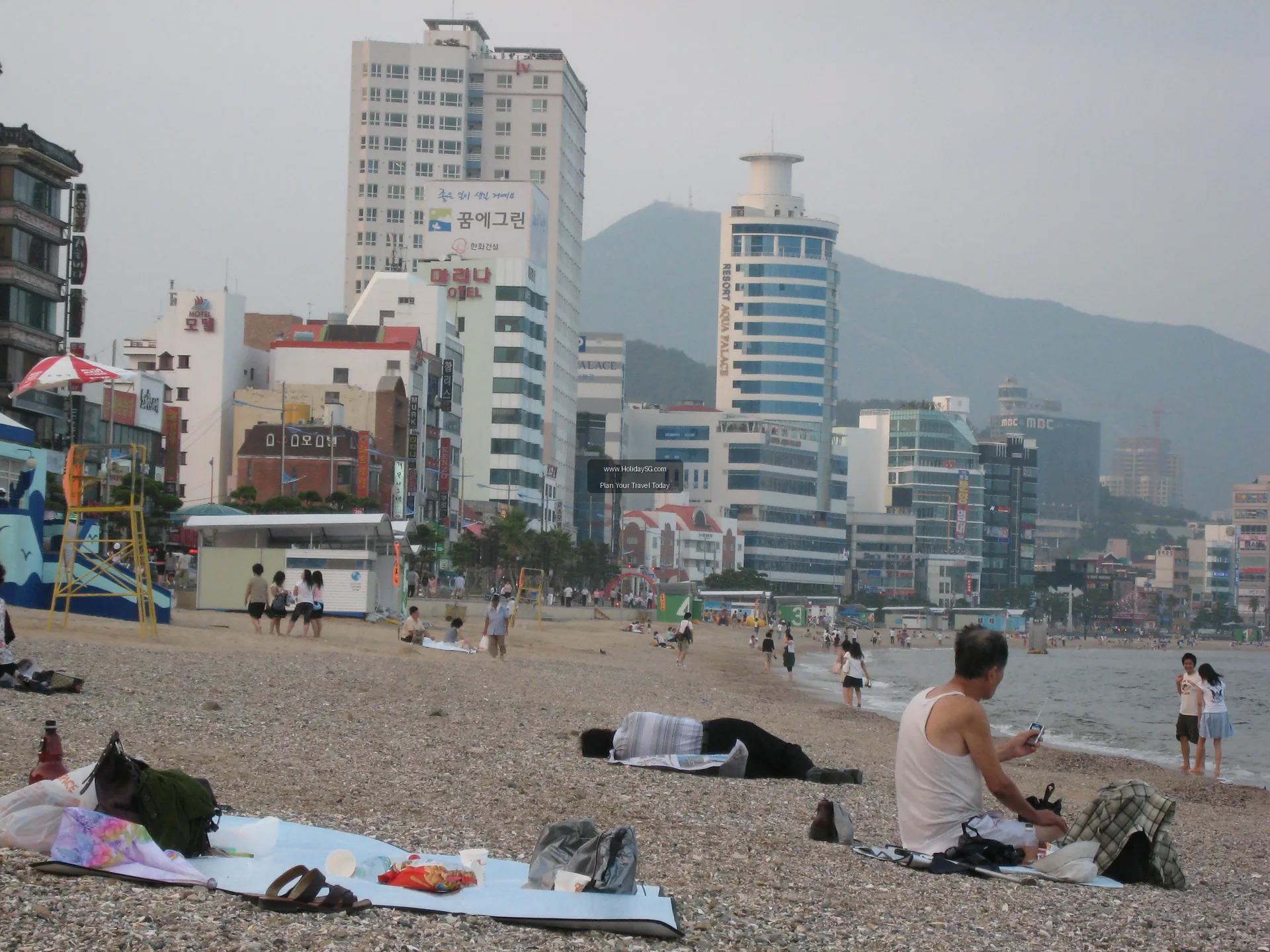
Sky Bar Lotte Hotel Busan
Located on the 42nd floor of the Lotte Hotel Busan, Sky Bar offers breathtaking views of the city and the sea. The bar features an open-air design with comfortable seating and a wide selection of drinks. It’s perfect for those who want to enjoy the night while taking in the stunning views.
Conclusion
Busan’s rooftop bars offer a unique and memorable experience for those looking to enjoy the city’s vibrant nightlife. From the sophisticated ambiance of Jade Garden Rooftop Bar to the lively atmosphere at Bora Bora Hotel, there’s plenty of choice. Whether you prefer a quiet sunset or a night out with friends, these elevated lounges provide an unforgettable backdrop for your next visit to Busan.
Ready to explore? Check out our Visit Busan Pass.
Book these with HolidaySG:
- Travel Photography In Busan South Koreadriver And Director Travel Photography Aerial Photography Wedding
- Sea Life Busan
- Running Man Busan
- Lotte World Adventure Busan
Book with HolidaySG online for Visit Busan Pass, Travel Photography In Busan South Koreadriver And Director Travel Photography Aerial Photography Wedding, Sea Life Busan.
Frequently Asked Questions
Where can I book this / what’s the link?
Do foreigners (non-citizens) need a different ticket, price, or visa for South Korea?
Visa requirements depend on your nationality. Many tourists can enter South Korea visa‑free for short stays, but some countries require a visa in advance. Entry fees for rooftop bars are the same for locals and visitors; there is no separate “foreign” ticket. Always verify the latest visa rules on the official Korea Immigration website or with your nearest embassy before you travel.
What is the best time (season, or time of day for the site/activity) to go?
The ideal time to enjoy Busan’s rooftop bars is after sunset, when the city lights sparkle against the sea. Late spring (May‑June) and early autumn (September‑October) offer pleasant temperatures and clear skies, making outdoor seating comfortable. Summer can be hot and humid, while winter nights are chilly, so dress accordingly.
How much should I expect to spend at a rooftop bar in Busan?
Drinks typically range from ₩12,000–₩25,000 (≈ USD 10–20) for cocktails, with premium selections costing more. Many venues have a minimum spend per person, especially in high‑end locations, which can be around ₩30,000–₩50,000. Adding a small plate or snack usually adds another ₩10,000–₩20,000. Budget‑friendly options are also available, especially in the Haeundae and Seomyeon areas.
How do I get to the rooftop bars? Are they easy to reach by public transport?
Most popular rooftop bars are located in hotels, high‑rise restaurants, or trendy complexes near Busan Station, Seomyeon, and Haeundae. The city’s subway system (Lines 1, 2, and the Busan‑Gimhae Light Rail) and extensive bus network can drop you within a 5‑10‑minute walk of these venues. Taxis are affordable and convenient if you’re traveling late at night when subway service has ended.
What things cost in South Korea
Live HolidaySG prices for the experiences in this guide, so you can sanity-check a budget before you commit.
| Experience | Where | From price |
|---|---|---|
| Alpaca World | Hongcheon | From S$18.56 |
| Alpaca World+Nami Island+Garden of Morning Calm one-day tour D... | Chuncheon | From S$117.00 |
| Aqua Planet, Gwanggyo | Suwon | From S$22.05 |
| Aquafield Goyang | Goyang | From S$28.50 |
| Korean local guide translator Dermatologist Hairstyle Color Te... | Seoul | From S$103.66 |
| Nami Island | South Korea | From S$11.85 |
| Moonlight Seoul Night Tour|Gwangjang Market, Royal Palace, Che... | Seoul | From S$49.86 |
| [Non-Korean] [Prepaid Card] WOWPASS Card | Seoul | From S$7.00 |
Understanding Busan's Rooftop Bar Scene: What Makes It Different from Seoul
Most travellers assume rooftop bars are the same everywhere in South Korea, but Busan's coastal position creates something entirely different from the Seoul experience. The city's rooftop venues benefit from sea views, warmer nights during spring and autumn, and a less formal atmosphere than their capital counterparts. What catches many visitors off guard is that Busan rooftop bars tend to be quieter earlier in the evening—the crowd doesn't peak until after 10 PM, especially on weekends—and they close earlier than you might expect, often wrapping up by 2 or 3 AM rather than staying open until dawn.
The venues scattered across districts like Haeundae, Nampo-dong, and Jung-gu each cater to different moods. Haeundae rooftop bars attract a younger, more energetic crowd and sit within walking distance of beaches. Nampo-dong venues pull in a mix of locals and tourists, particularly around the waterfront. The elevation matters too—Busan sits on hills that slope toward the water, so "rooftop" can mean anything from a three-storey walk-up in an older building to a proper high-rise with unobstructed views of Busan Harbor or Gwangalli Beach.
One practical detail: many rooftop bars here operate as part of restaurants or lounges during the day, then transition to bar service after 6 PM. This means you can eat dinner around 5 or 6 PM and stay for drinks without the jarring shift you'd experience at purpose-built nightlife venues. The dress code is casual by Seoul standards—business casual or smart casual is fine, though certain high-end spots in Haeundae expect the same formality you'd find in the capital.
Practical tip: ask your accommodation concierge or a local coffee shop worker which rooftop bar is quietest on the specific night you're planning to visit. Busan's nightlife shifts dramatically based on whether there's a festival at nearby venues or a football match at Busan Asiad Main Stadium.
Best Time of Year to Visit Rooftop Bars in Busan: Seasonal Considerations
Timing your rooftop bar visit to Busan matters far more than most travellers realize. October through November brings the most comfortable temperatures—averaging 15 to 20 degrees Celsius—with clear skies and the lowest humidity of the year. You can actually sit outside without sweating through your clothes or battling mosquitoes. September is still warm enough but carries occasional rain from typhoons that swing through the Korean peninsula. Late April through May offers similar pleasures, though May humidity begins creeping upward and the summer crowds arrive earlier.
Winter rooftop experiences—December through February—present a trade-off. Temperatures drop to 5 degrees Celsius or below, and wind coming off the Korea Strait cuts through clothing quickly. However, the air is crisp, visibility is exceptional for night views, and rooftop bars are genuinely quiet since most tourists avoid the cold. Some venues provide heated outdoor seating or move crowds indoors, which defeats the rooftop purpose. Summer, June through August, is technically possible but unpleasant: the combination of heat, humidity, and crowding means you're packed shoulder-to-shoulder with others while sweating, and sudden downpours close outdoor areas without warning.
The absolute worst time is mid-August when many South Koreans take their summer holiday and migrate to Busan's beaches and bars. Rooftop venues swell to capacity, prices spike, and the experience becomes more about navigating crowds than enjoying the view. Mid-June through early July also brings heavy rain—the monsoon season—when outdoor rooftop areas close entirely.
Practical tip: if you're flexible with dates, book your Busan rooftop bar visits for a Thursday, Friday or Saturday night in October when the weather peaks and crowds haven't yet reached their festival-season highs.
Navigating Busan's Rooftop Bar Prices: What Your Money Covers
A common misconception is that South Korean rooftop bars operate on cover charges like nightclubs. They don't. You pay for what you order, though some venues do impose a minimum spend if you arrive during peak hours—typically 30,000 to 50,000 Korean won per person—and this minimum varies wildly depending on the day and venue. The actual prices of drinks separate the rooftop bar tiers clearly: casual venues in Nampo-dong charge 8,000 to 12,000 won for beer, while upmarket Haeundae rooftop bars run 15,000 to 18,000 won for the same drink. Cocktails follow a similar pattern, ranging from 12,000 won at casual spots to 20,000 or 25,000 won at premium venues.
Food pushes prices higher. A shared appetizer plate—think Korean fried chicken, tteokbokki (spicy rice cakes), or cheese-topped fries—runs 15,000 to 25,000 won. Main dishes, if the venue serves them, cost 18,000 to 40,000 won. The venues in the Haeundae district near Paradise Hotel or in Jung-gu around the old port neighborhoods are noticeably pricier across the board. Nampo-dong and the adjacent areas near Jagalchi Market offer better value without sacrificing view quality.
Foreigner surcharges don't formally exist, but some establishments do charge slightly more for obvious tourists, particularly if you're clearly unable to read the Korean menu prices. This isn't universal and isn't significant—perhaps an extra 1,000 or 2,000 won—but it's a reality in certain spots. The best defense is looking at the Korean-language menu board before ordering or pointing at what another table is drinking.
One detail most guides miss: many rooftop bars offer happy hour pricing from 5 to 7 PM with discounts of 20 to 30 percent on drinks. Arriving early cuts your tab substantially while still securing excellent views as the sun sets. A realistic budget for one person spending three hours at a rooftop bar, including food and two to three drinks, ranges from 50,000 to 90,000 won at casual venues and 80,000 to 150,000 won at upmarket spots.
Practical tip: settle your bill in cash when possible. Many rooftop bars in Busan still operate primarily as cash businesses, and card transactions sometimes incur small percentage fees that get added to your total.
How to Reach Busan's Rooftop Bars by Public Transport and Walking Routes
Busan's rooftop bars cluster in three main zones, each accessible by metro but with different ease levels. The Haeundae district rooftop venues—most popular with foreign tourists—sit closest to Haeundae Station on the Red Line (Line 2). Exit at Exit 3 or 5 and you're within a 10 to 15-minute walk of clusters around the Paradise Hotel area or along the beachfront. The walk involves steady uphill climbing because Haeundae's buildings stack vertically along the shore, but it's straightforward signage-wise once you spot the hotel landmarks.
Nampo-dong rooftop bars require arriving at Nampo Station (Line 1) and navigating older, narrower streets with less obvious signage. The district feels authentically local—you'll pass through seafood restaurants, street vendors, and small shops—but you need to ask for directions or use a map application because the rooftop venues aren't prominently marked. The upside is that this area feels less touristy and prices stay lower. Most Nampo-dong rooftop spots sit within a 5 to 10-minute walk of the station once you get your bearings.
Jung-gu rooftop bars, primarily around the old harbor and museum district, need Jungang Station (Line 1) for access. This requires more walking and navigation but reveals Busan's waterfront history and colonial-era streets. The neighborhood around Biff Square has gentrified significantly, with art galleries and cafes opening alongside newer rooftop venues. Expect 15 to 20-minute walks from the metro station.
Taxis are abundant and worth using if you're uncomfortable with navigation or carrying luggage. Flag one down on any main street—they're everywhere after 6 PM—or ask your accommodation to call one. Ride costs are standardized: a 2-kilometer trip within central Busan costs around 3,000 to 4,000 won. Ride-sharing apps work but require a Korean phone number and Korean payment method, making them less practical for most tourists.
The metro itself is clean, punctual, and English signage marks most stations. A single journey costs 1,450 to 2,500 won depending on distance. Buy a reusable card at any convenience store and load money onto it—this saves time at ticket machines and works across buses and taxis as well.
Practical tip: download Naver Map or Kakao Map on your phone before arriving in Busan. These apps show rooftop bar locations, walking routes, and metro directions far better than international mapping services, and they function without a Korean phone number.
What to Expect on Your First Visit to a Busan Rooftop Bar: The Real Experience
Walking into a rooftop bar in Busan for the first time reveals several surprises. Staff often don't speak English, particularly at casual venues in Nampo-dong, though younger staff members or those working upmarket spots in Haeundae manage basic phrases. This isn't a barrier—most rooftop venues laminate menus with photos, and pointing works perfectly. The second surprise is that Korean rooftop bars operate differently from Western ones: they blend lounging with socializing, so expect ambient music rather than loud bass, and expect people actually talking rather than screaming over noise.
The layout of rooftop bars in Busan varies dramatically. Some occupy actual building rooftops with glass barriers protecting you from wind and providing 360-degree views. Others are glorified terraces on mid-rise buildings that feel more intimate than expansive. A few occupy what Koreans call "sky lounges"—enclosed spaces with floor-to-ceiling windows that you can open or close depending on weather. The views themselves center on different subjects: Haeundae venues showcase Gwangalli Beach at night and the distant hills beyond; Nampo-dong bars frame Busan Harbor and the colorful fishing boats; Jung-gu options reveal the waterfront architecture and bridges illuminated against the dark water.
Social norms differ slightly. Groups often order shared plates and cocktails rather than everyone ordering individual drinks—this is cheaper and more social. Nobody will rush you to leave, but they also won't repeatedly check on your table the way Western bars do. Smoking is permitted on many rooftop terraces in Busan, so you may experience secondhand smoke even in outdoor spaces. Noise levels remain reasonable until after 10 PM, when the atmosphere shifts noticeably if you stay.
The clientele splits between local Busan workers unwinding after work, groups of younger Koreans on weekend nights, and foreign tourists. You won't feel out of place as a foreigner, but you also won't be catered to in the way expensive Seoul rooftop bars might cater to international guests.
Practical tip: arrive between 5 and 7 PM if you want a quieter experience and a good table with views. Arriving after 9 PM virtually guarantees crowds and difficulty finding seating, especially on Friday and Saturday nights.
Popular Neighborhoods for Rooftop Bars in Busan Beyond the Main Venues
Most rooftop bar guides focus on three or four flagship locations, but Busan's secondary neighborhoods hide excellent venues that offer better value and authentic local atmosphere. Seomyeon, a district slightly inland from Haeundae, has emerged as a rooftop bar hub for younger Korean professionals. Venues here are newer, sleeker, and less touristy than beachfront options, though they lack the dramatic sea views. Seomyeon Station (Line 2) provides direct access, and the neighborhood's compact layout means rooftop bars are tightly clustered within a 10-minute radius.
Gwangbok-ro in Jung-gu represents another underrated zone. This street runs parallel to the old harbor and features converted warehouses and early 20th-century buildings housing rooftop lounges and bars. The lighting—these venues often feature mood lighting and candles—contrasts beautifully with the harbor views. The neighborhood maintains a distinctly artsy character with galleries, vintage shops, and small performance spaces nearby. Access requires either Jungang Station (Line 1) or a short walk from Busan Station.
Choryang-dong, historically a neighborhood of merchants and traders, has quietly developed a rooftop scene centered around its hilltop location overlooking downtown Busan and the harbor beyond. The venues here skew cheaper and more local than Haeundae spots, and the views are genuinely stunning—entire stretches of the city lights unroll below you. Choryang Station (Line 2) serves this area, though signage for rooftop venues remains minimal. The neighborhood feels raw and in-progress, which gives it character but also means some venues close and open seasonally.
Nampodong's waterfront—distinct from central Nampo-dong—has developed upscale rooftop spots that leverage the harbor's tourism value without the overwhelming crowds of Haeundae. These venues blend old Busan character with modern minimalism. The walk from Nampo Station toward the water takes 10 to 15 minutes but rewards you with venues that pull both locals and tourists who've ventured beyond the standard recommendations.
Practical tip: explore Seomyeon if you want to experience where young Busan professionals actually spend their evenings; it's 10 minutes by metro from Haeundae but feels like a different city entirely.
What Foods and Drinks to Order at Busan's Rooftop Bars
The drink selection at rooftop bars in Busan leans heavily toward beer, soju cocktails, and imported spirits. Korean beer—brands like Cass, Hite, and OB—dominates the taps and costs the least at around 8,000 to 12,000 won per large glass. Soju, the spirit distilled from rice or sweet potato, appears in nearly every cocktail on the menu, sometimes for better and sometimes for worse. The classic soju-based drinks that actually taste good include soju with fresh fruits (strawberry soju or peach soju are summer standbys) and soju mixed with makgeoli, a milky rice wine that creates a lighter, sweeter drink than soju alone.
Cocktails at rooftop bars vary in quality. Upmarket venues in Haeundae employ trained mixologists and produce genuinely excellent drinks. Mid-tier venues use basic recipes and pour-it-yourself approaches that hit or miss. The safest bet if you're unsure: order a mojito or daiquiri, drinks that require only basic technique and fresh ingredients. Avoid ordering complicated drinks at casual venues because the bar staff often lack training and your drink will taste like watered-down soju instead of a balanced cocktail.
Food at rooftop bars ranges from proper appetizers to drunk snacks. Korean fried chicken—called chimaek (chicken and beer)—appears on many menus, particularly at casual venues. It's salty, fried, and pairs perfectly with beer. Tteokbokki (spicy rice cakes in a red sauce) provides a vegetarian option though it's genuinely spicy. Cheese-based dishes have exploded in popularity: cheese-topped fries, melted cheese served with bread for dipping, and cheese-laden versions of Korean dishes appear everywhere. These are tasty but overly salty. The seafood options vary by venue—some rooftop bars source from nearby Jagalchi Market and offer fresh grilled squid or marinated raw fish with rice and vegetables, while others skip seafood entirely.
One item unique to Busan rooftop bars: edamame is served salted at nearly every venue and costs almost nothing. Order it as a filler food. Similarly, roasted nuts (usually peanuts) come free with certain drinks, and sliced fruit—watermelon and grapes—appears on some menus as a light, refreshing pairing with cold beer during warm months.
The menu presentations at casual Busan rooftop bars typically feature laminated Korean-only pages with occasional English translations or photos. At upmarket venues, English menus exist. When in doubt, ask to see what another table is eating before ordering.
Practical tip: order chimaek (fried chicken and beer combo) your first time at a casual rooftop bar. It's quintessentially Korean, spectacularly good, and impossible to mess up.
Photography at Busan Rooftop Bars: Capturing the City Skyline
Rooftop bars in Busan present photographer's challenges that differ from daytime sightseeing. The skyline photography window is narrow—roughly 30 minutes after sunset when the sky still holds color while city lights switch on. Too early and the city lights seem dim and artificial; too late and the sky turns pure black without gradient. For Busan's latitude and longitude, this sweet spot occurs at different times depending on season: 6 PM in December, 7:15 PM in June, and around 6:45 PM in October when most tourists visit.
Your best rooftop bar choices for photography depend on what you're capturing. Haeundae venues with views of Gwangalli Beach produce silhouettes of the shoreline against glowing buildings and reflections off the water—dramatic and colorful. Nampo-dong and Jung-gu venues frame the harbor's ships and bridges, which photograph well when backlit by shore lights. Rooftops positioned on hillsides in neighborhoods like Choryang-dong capture the entire city sprawl, though you need to position yourself carefully to exclude other buildings and find clean sight lines.
Practical obstacles: the glass barriers and safety railings that protect you also create reflections that ruin photographs if you're not careful. The glare from your fellow drinkers' phone lights and the venue's interior lighting bounces off glass and obscures views. High humidity near the water (especially noticeable in Haeundae) creates haze that flattens distant views. Wind on exposed rooftops destabilizes handheld cameras.
Work-arounds exist: shoot through open sections of railings rather than at glass. Position yourself at the edge of the crowd rather than surrounded by people. Arrive early, around sunset, when the rooftop is still quiet and you have room to move around. Phones with good low-light photography (recent iPhone and Samsung flagships) produce excellent results without requiring tripods or professional equipment. Higher-end mirrorless or DSLR cameras need tripods, and many rooftop venues discourage tripods on their terraces for safety reasons—ask staff first.
Most venues don't restrict photography, though some upmarket establishments request that you don't photograph other guests. Taking photos of the view, the venue, and your own table is universally fine. Local photographers often use certain rooftop bars as regular spots for cityscape work, so you won't be the only person with a camera.
Practical tip: if you're serious about rooftop photography, scout your chosen venue during a daytime visit to identify sight lines and positions, then return at sunset knowing exactly where to stand.
Solo Travel and Safety at Busan's Rooftop Bars
Solo travellers visiting rooftop bars in Busan face different dynamics than groups, but the experience is entirely manageable and genuinely worthwhile. Many solo visitors report feeling comfortable sitting alone at these venues because the atmosphere remains relaxed and the staff don't make you feel out of place. Upmarket venues in Haeundae handle solo diners and drinkers routinely; casual spots in Nampo-dong might give you curious looks but no harassment. Korean social culture doesn't penalize sitting alone in bars the way Western social norms sometimes do.
Safety is genuinely high. Busan ranks among the safest cities in South Korea, and rooftop bars cluster in well-traveled, well-lit areas. The presence of families and young women throughout the night—not just young men—indicates low-threat environments. Petty theft does occur, particularly at crowded venues where bags sit unattended on tables, so keep your belongings secured and visible. Don't leave your phone, wallet, or bag on a table while you're at the restroom or the railing photographing the view.
Drink safety requires common sense. Many solo drinkers order one cocktail and nurse it for an hour while absorbing the view and atmosphere—you're not expected to drink quickly or to order continuously. Roof rooftop bars remain relatively low-alcohol environments compared to Western nightclubs; people here drink to socialize and relax rather than to get drunk, and the venues themselves discourage excessive drinking through service timing and not serving shots.
Solo travellers sometimes strike up conversations with other solo visitors or with friendly locals. English proficiency among younger rooftop bar workers and patrons is decent, particularly in Haeundae. Don't expect to become lifelong friends, but casual conversations are common and always respectful. If you're not interested in socializing, nobody will push you to engage. Sitting quietly with a book or phone is perfectly acceptable.
Transportation back to your accommodation should be arranged before drinking. Taxis are abundant after rooftop bars close; flag one on any major street. Because you're not heavily drinking (rooftop bars don't foster heavy alcohol consumption), you'll remain alert and capable of communicating your destination clearly to a driver.
Practical tip: visit a rooftop bar during the earlier hours (5-8 PM) on your first solo outing to build familiarity. The atmosphere is calmer, and you'll learn the logistics without feeling rushed or pressured.
Seasonal Events and Special Occasions at Busan Rooftop Bars
Busan's rooftop bars capitalize on seasonal changes and local festivals, creating different experiences throughout the year. The Busan International Film Festival in October transforms the entire city, and venues in Jung-gu and Nampo-dong near the BIFF Square swell with international visitors and industry professionals. Rooftop bars in these neighborhoods host late-night gatherings, though prices spike and reservations become necessary. Similarly, the Busan Harbor Festival in May (dates shift annually) draws crowds that overflow into nearby rooftop venues with harbor views.
End-of-year celebrations in December surge at rooftop bars, particularly around Christmas when the venues themselves decorate with lights and holiday themes. New Year's Eve and New Year's celebrations see rooftop bars pack to capacity with reservations required weeks in advance. These times attract massive markups—expect prices 50 to 100 percent higher than normal—and longer wait times for tables and drinks.
Summer brings outdoor movie screenings at some rooftop venues and temporary rooftop pop-ups in parking garages and other unusual spaces around Haeundae. These seasonal venues operate only June through August and provide casual, budget-friendly rooftop experiences. Winter, conversely, brings heated rooftop areas with blankets and braziers at certain upmarket venues in Haeundae, creating an entirely different vibe—cozy rather than cool.
Wedding season in South Korea (typically May and October) means rooftop venues often host private events and ceremonies after business hours. If you're planning to visit during these months, check ahead whether your chosen venue has private bookings that might affect public access.
The absolute worst time to walk into a rooftop bar expecting a pleasant experience is Saturday nights during summer break (mid-July through mid-August) when hordes of young Koreans migrate to Busan's beaches and bars. Venues shut down overflow crowds through capacity limits, and the atmosphere becomes chaotic rather than relaxed.
Practical tip: check local event calendars before booking your trip; visiting during festivals creates energy and atmosphere but also chaos and high prices—decide which appeals to you.
Weather Considerations for Rooftop Bar Visits in Busan
More than most visitors expect, weather tends to disrupt Busan's rooftop bars. The city sits on the Korea Strait, exposing it to sudden wind shifts and rapid weather changes. A clear afternoon can transform into rain by evening, particularly in spring and early summer. Typhoon season, which extends from July through September with peak intensity in late August, creates abrupt weather swings that shut down outdoor rooftop areas without warning. When this happens, most venues move crowds inside, which destroys the rooftop bar experience you came for.
Wind represents an underrated problem. Rooftop locations at elevation funnel wind across the city's hills and over the water, creating gusts that extinguish candles, scatter napkins, and make standing at railings uncomfortable. Haeundae venues perched on hillsides overlooking the beach experience the worst wind, particularly in spring and autumn. Venues tucked into urban canyons in Jung-gu experience less wind but also less view. Humid summer heat creates a distinct challenge: you'll sweat through clothing within 15 minutes, particularly if you're wearing jeans or anything heavy.
Winter cold at rooftop elevation feels 5 to 10 degrees colder than ground-level temperatures. A chilly evening at street level becomes genuinely cold at a rooftop bar. Most venues provide outdoor heaters, blankets, or encourage movement to heated interior spaces, which undermines the whole rooftop experience. Bring a jacket and wear layers—you'll need them from November through March.
Monsoon rain (late June through early July) deserves specific mention because it's not occasional rain—it's days of steady precipitation. During these weeks, many rooftop venues close their outdoor sections entirely and operate as indoor bars. If you're visiting during monsoon season, clarify with venues ahead of time whether outdoor areas will actually be open.
The best weather windows occur in October when autumn high-pressure systems settle over the peninsula, or in late April and early May before humidity and typhoon risk spike. These windows offer clear skies, comfortable temperatures, and minimal weather disruption—rooftop bar conditions simply can't be improved.
If you plan to visit during an uncertain weather season, check the forecast the morning of your planned rooftop bar visit and be ready to move to a different evening if rain or strong wind is forecast. Waiting one day is worth avoiding a rained-out or freezing experience.
Pairing Your Rooftop Bar Visit with Other Busan Activities
Visiting a rooftop bar in Busan creates more value when paired with adjacent activities rather than treated as an isolated evening. The Haeundae rooftop bar venues sit within easy reach of Gwangalli Beach and the Busan Aquarium, allowing you to spend an afternoon at the beach and transition directly to a rooftop bar around 5 PM. You're already in the neighborhood, you can watch the sunset from above, and then walk down to street-level restaurants for dinner if you want food beyond rooftop appetizers.
Nampo-dong and Jung-gu rooftop venues pair perfectly with day-long waterfront exploration. Jagalchi Market, a massive seafood market in Nampo-dong, operates during the day and early evening, allowing you to browse fish stalls and surrounding restaurants, then head to a rooftop bar in the same neighborhood as the sun sets. The contrast between ground-level chaos and rooftop quietness feels pronounced. Jung-gu rooftop visits align well with Busan's colonial-era museums, BIFF Square, and the waterfront's converted warehouse art spaces. Spend your afternoon exploring history, then finish the evening with views of the very harbor and port that defines that history.
Seomyeon rooftop bars pair poorly with daytime sightseeing because the neighborhood itself is retail-focused and less visually interesting. But if you're shopping, trying restaurants, or exploring cafes during the day, staying in the Seomyeon district for evening drinks makes logical sense—you skip transportation time and costs.
One strategic approach: book your accommodation near your chosen rooftop bar district, then spend your Busan days exploring that neighborhood thoroughly and your evenings at the rooftop venue. This reduces transportation friction and builds familiarity with the area. A multi-day visit to Busan might dedicate Day One to Haeundae and its rooftop bars, Day Two to Jung-gu and Day Three to Nampo-dong.
Practical tip: use Naver or Kakao Maps to search for "rooftop bars near [neighborhood name]" during your afternoon exploration, then you can spontaneously visit venues you discover rather than pre-planning everything.
Staying Connected and Managing Your Visit to Busan Rooftop Bars
Navigating Busan's rooftop bars independently requires reliable phone connectivity. While rooftop bars themselves have WiFi (varying in quality and speed), you'll need cellular service for navigation to reach them and for messaging friends meeting you there. International roaming charges from foreign carriers are notoriously expensive in South Korea, running five to ten times domestic rates. Most visitors either purchase a local SIM card at the airport or activate a roaming plan through their home provider.
Local SIM cards work well and are cheap. At Busan's Gimhae International Airport or at convenience stores in the city, you can buy a basic plan for around 10,000 to 25,000 won with data sufficient for a week. You'll need your passport for activation. Providers like SK Telecom and KT offer English-language support at tourist counters, making the process straightforward.
Download mapping apps before arriving or while connected to airport WiFi. Naver Map and Kakao Map function perfectly with intermittent service and cache previous map data for use offline. Kakao Map specifically shows real-time restaurant and bar reviews, photos from other visitors, and user experiences at specific venues—invaluable for deciding whether to visit a rooftop bar you've just discovered.
Payment at rooftop bars remains a connectivity question. Most venues accept card payments, though some smaller casual spots operate cash-only. Confirming payment methods before sitting down prevents awkward situations. Korean payment apps like Kakao Pay and Naver Pay are ubiquitous and work smoothly if you set them up before visiting (both require a Korean phone number and Korean bank account, which tourists typically don't have). Stick with credit cards or cash as a foreigner.
Practical tip: photograph menus at casual venues with your phone camera during your first visit; this creates a reference library of prices and available items you can reference on future visits without language barriers.
Quick answers
- When should I visit Busan rooftop bars to avoid crowds? October through November offers the best weather and moderate crowds. Thursday and Friday evenings are quieter than weekends. Avoid mid-July through mid-August summer peak and major Korean holidays. Arriving between 5 and 7 PM secures tables before evening rush.
- What are realistic costs at Busan rooftop bars? Beer ranges from 8,000 to 18,000 won, cocktails from 12,000 to 25,000 won, and shared food plates from 15,000 to 40,000 won. Plan 50,000 to 150,000 won per person for a three-hour visit depending on venue tier. Happy hour pricing (5-7 PM) offers 20-30 percent discounts.
- Is public transportation sufficient for reaching rooftop bars? Yes. Metro lines serve all main rooftop bar districts: Haeundae Station for beachfront venues, Nampo Station for harbor locations, and Jungang Station for historic waterfront spots. Metro costs 1,450-2,500 won per journey. Taxis are abundant and cost 3,000-4,000 won for short rides.
- Do I need to book ahead at Busan rooftop bars? Casual venues welcome walk-ins, even on weekends. Upmarket venues during peak hours and special events (October Film Festival, New Year's Eve) require advance reservations. Friday and Saturday after 9 PM may have wait times of 20-30 minutes at popular spots.
Visitor Questions About Rooftop Bars in Busan
Can I bring my own drinks to rooftop bars in Busan?
Most rooftop bars in Busan enforce strict no-outside-beverage policies, and venues like those in Nam-gu and Haeundae actively check bags at entry. Bringing your own alcohol will likely result in being turned away, so plan to purchase from the bar instead. If budget is a concern, arriving during happy hour (typically 5pm to 7pm at many locations) gives you better drink pricing than evening hours. Practical tip: check with your hotel concierge about which rooftop bars offer weekday specials, as Tuesday and Wednesday often have reduced cocktail prices compared to weekends.
What dress code applies at Busan's rooftop bars?
Upscale rooftop bars in the Haeundae district and near Centum City typically require smart casual or business casual attire, meaning no beachwear, athletic clothing, or flip-flops. Some venues near the waterfront are more relaxed and allow casual dress after sunset, though this varies by establishment and season. The general rule across Busan is that the higher the floor and the fancier the decor, the stricter the dress code tends to be. One practical tip: bring a light blazer or cardigan in your bag regardless of where you go—most rooftop bars have air conditioning that can feel intense during evening hours.
Do rooftop bars in Busan have a minimum spending requirement?
Many high-end rooftop bars, particularly those in Centum City and the Nampo-dong area, do impose minimum spending requirements during peak hours (typically Friday and Saturday nights between 8pm and midnight). Minimum charges often range from the cost of two to three cocktails per person, though some venues waive this if you're dining rather than just drinking. Weekday visits and early evening slots usually have no minimum, giving you more flexibility if you want to stop by for just one drink. Before heading to a specific rooftop bar, call ahead or ask your accommodation about current policies, as these change seasonally and by day of the week.
Are rooftop bars in Busan open year-round, or do they have seasonal closures?
Most permanent rooftop bars remain open throughout the year, though some reduce their hours during winter months (November to February) when cold winds and lower tourism affect foot traffic. A handful of outdoor-focused rooftop venues in Gwangalli Beach and Songdo do close seasonally or operate limited schedules, typically from December through early March. Summer (June to September) sees extended hours at nearly all rooftop bars, with many staying open until 2am or later on weekends. Your best approach is to confirm current hours with your hotel or check social media pages for individual venues, as schedules shift with weather and special events throughout the year.
Understanding Pricing and Budgeting for Rooftop Bars in Busan
Many visitors assume rooftop bars in Busan charge Seoul-level prices, but the reality is more nuanced depending on which neighborhood you choose and what time you visit. High-end venues overlooking Haeundae Beach and Gwangalli tend to charge more than their counterparts in mid-range districts like Nam-gu or Seo-gu. To get accurate current pricing, check the official websites or social media accounts of specific rooftop bars, as menu costs update seasonally and venues frequently run promotions. Cocktails typically range from moderate to expensive depending on the venue's location and prestige, while beer and house wine tend to be more economical choices if you're watching your spending.
Late-night rooftop bar visits after 10pm cost noticeably more than early-evening stops, and Friday and Saturday nights carry premium pricing compared to weekdays. Many rooftop bars include snacks or appetizers in their seating arrangement, so you're not strictly limited to drink purchases if you want to extend your stay. A practical tip: visit during the golden hour (around 6pm to 8pm) when you catch the sunset colors reflecting off the Busan skyline without paying late-night surcharges, and drinks may still be reasonably priced depending on the venue. If you want to compare options before committing your budget, walk through Centum City or the Nampo-dong district and check posted menus outside multiple rooftop bars to see which fits your spending comfort level.
Getting to Rooftop Bars in Busan by Public Transport
Many visitors underestimate how spread out Busan's rooftop bar scene is, with major venues scattered across Haeundae, Nam-gu, Seo-gu, and even the Centum City complex far from the waterfront. The Busan Metro is your most reliable option, with Lines 1 and 2 providing direct access to neighborhoods containing rooftop bars; Haeundae Station (Line 2) places you walking distance from several beachfront venues. Buses are frequent but require basic Korean reading skills unless you use a navigation app like Naver Map or Kakao Map, which handle real-time route planning for foreigners. Practical tip: download the Naver Map app before arriving and save your rooftop bar address in Korean characters; the app shows exact metro exits and walking routes, eliminating confusion about which direction to head after you surface.
Taxis are affordable in Busan compared to other major Asian cities and solve the problem of navigating unfamiliar neighborhoods at night, especially if you're visiting rooftop bars in less central areas like parts of Seo-gu or eastern Nam-gu. However, taxi drivers may struggle with English addresses, so having your destination written in Korean or showing them the location on your phone map prevents frustrating detours. Ride-sharing apps operate in Busan and charge similar fares to official taxis, with the advantage of transparent pricing shown before you confirm the trip. If you're planning a rooftop bar crawl across multiple neighborhoods, consider taking the metro to your first bar, then using taxis or ride-sharing for subsequent stops to maximize your evening without transportation delays.
Timing Your Visit to Rooftop Bars in Busan for the Best Experience
Most travelers visit rooftop bars in Busan after dark and miss the visual sweet spot: the hour immediately before sunset when the sky transitions through orange, pink, and purple hues while city lights begin flickering on. Arriving between 5:30pm and 6:30pm during spring (April to May) or autumn (September to October) gives you the longest twilight periods and most photogenic skyline views without the oppressive summer heat or winter cold. Summer sunsets occur around 7:15pm, while winter sunsets happen as early as 5pm, so plan your timing accordingly based on when you're visiting. Practical tip: check sunset times the night before using a weather app, then arrive 45 minutes before sunset to claim a good spot; most rooftop bars won't be packed yet, so you'll find better seating and fewer crowds than if you show up after dark.
Weekday evenings (Monday through Thursday) are noticeably quieter than weekends, allowing you to actually converse with friends or enjoy the rooftop atmosphere without shouting over a crowd. Friday and Saturday nights hit capacity between 9pm and 11pm, so if you prefer mingling and higher energy, target those nights; if you want a calmer experience with better views of the skyline, choose weekday visits instead. Winter months (December to February) feel colder and windier on rooftops, particularly on the higher floors of venues in Centum City, so dress in layers and expect to stay shorter periods outdoors. Summer (June to August) brings humidity and occasional brief rain showers in the late afternoon, so check the forecast before heading out and consider visiting rooftop bars with covered seating areas if rain is predicted.
Making the Most of Your Rooftop Bar Experience in Busan
The Busan skyline reveals itself in layers depending on where you position yourself at a rooftop bar: the immediate foreground shows Haeundae Beach and harbor waters, the middle distance displays mid-rise apartment blocks and office towers, and the far background reveals the mountains forming Busan's dramatic geography. Most visitors make the mistake of staying in one spot all evening instead of moving around the rooftop to see different angles and photography opportunities. Rooftop bars that occupy entire building tops, like those in Centum City or the Nampo-dong district, reward exploration—walk the perimeter and you'll find quieter corners, different lighting angles, and less crowded seating than the main entrance area. Practical tip: arrive with a friend and split your time between the front-facing view (usually the most crowded) and the sides or back (often overlooked by other visitors but offering equally stunning perspectives of different neighborhoods).
Ordering food alongside drinks transforms a rooftop bar visit from a quick drink into an extended experience, and many venues offer Korean snacks or international appetizers specifically designed for pairing with cocktails. Dishes like pajeon (vegetable pancakes), tteokbokki (spicy rice cakes), or imported charcuterie boards give you reasons to linger and justify staying through multiple sunset-to-night transitions if the mood strikes. The rooftop bar staff generally stay attentive but not hovering, so you won't feel rushed to finish and leave, even during quieter weekday hours. If you're visiting with non-drinkers, many rooftop bars serve excellent Korean coffee, tea, and virgin cocktails at prices comparable to alcoholic drinks, so everyone in your group can enjoy the view without pressure to order alcohol specifically.
Quick Answers About Rooftop Bars in Busan
What's the average cost of a drink at a rooftop bar in Busan?
Cocktails typically range from moderate to premium pricing depending on the venue's location and clientele; beer and house wine are generally more economical options. Check individual rooftop bar menus online or by calling ahead for current pricing, as rates vary significantly between neighborhoods and change seasonally.
When is the best time of day to visit rooftop bars in Busan?
The hour before sunset (approximately 5:30pm to 6:30pm depending on season) offers the most stunning skyline colors and fewer crowds than late-night hours. Spring and autumn provide the most comfortable temperatures and clearest visibility of the Busan cityscape.
Can I easily reach rooftop bars using public transportation?
Yes, Busan's metro system provides direct access to neighborhoods containing major rooftop bars; download Naver Map or Kakao Map for real-time navigation. Taxis and ride-sharing apps are affordable alternatives if you're visiting multiple venues or prefer not to navigate public transport at night.
Do all rooftop bars in Busan have a dress code?
Upscale venues in Haeundae and Centum City typically require smart casual attire, while beachfront bars may be more relaxed. Check with individual rooftop bars beforehand to avoid disappointment at the entrance.
Plan the rest of your trip
- South Korea visa requirements - Check who needs a visa, the documents and the processing time.
