
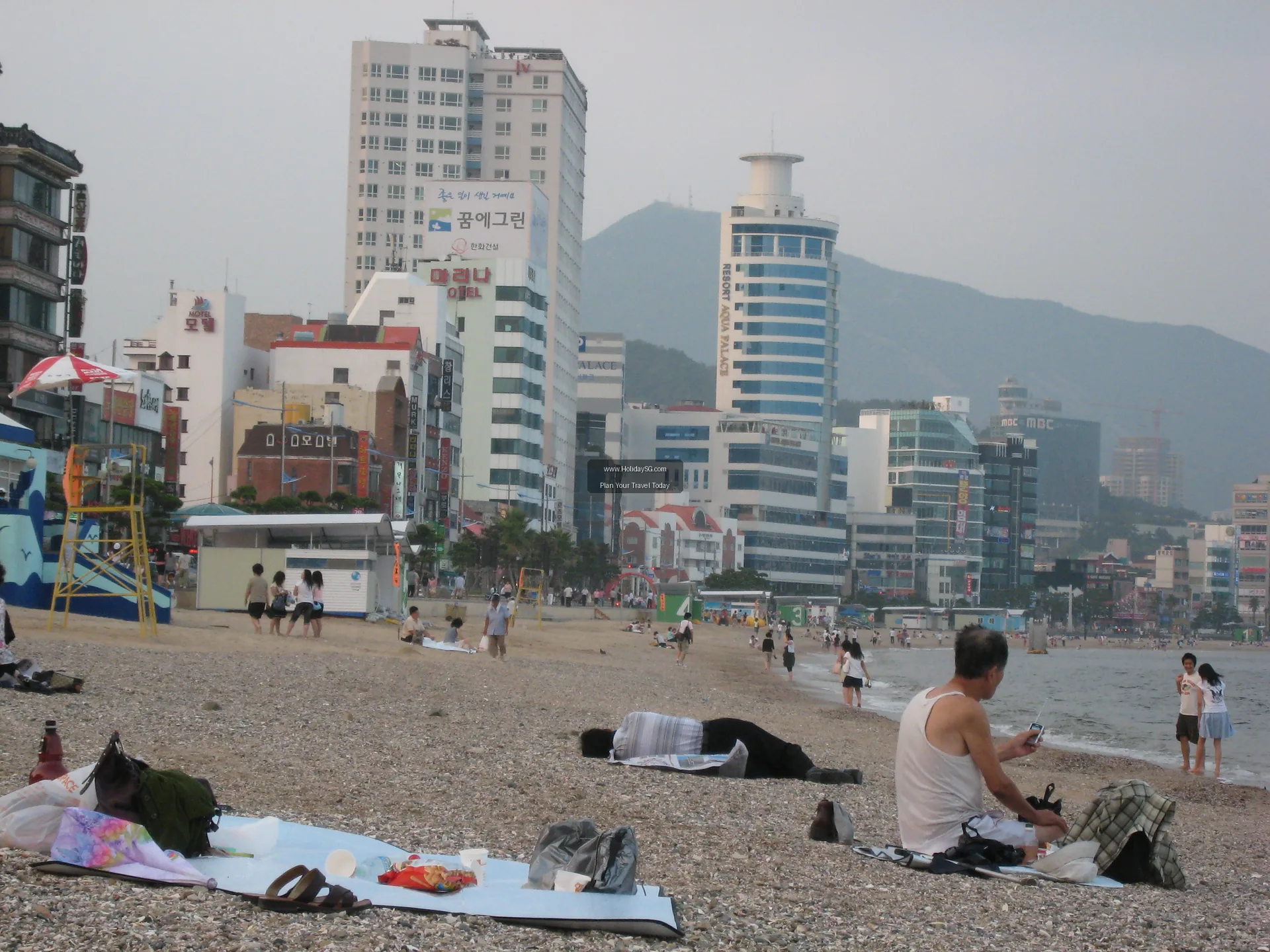

Picture two fish markets. In the first, it is early morning by the harbour, gulls are circling, and a woman in rubber boots is lifting a live octopus out of a plastic tub while fishing boats unload behind her. In the second, you are inside a vast, brightly lit hall in the middle of a capital city of nearly ten million people, and a vendor is scooping king crab onto a scale while office workers queue for the upstairs restaurants. The first is Jagalchi in Busan. The second is Noryangjin in Seoul. Both are brilliant, and the difference between them tells you a lot about the difference between South Korea's two great cities.
Seoul is the capital: palaces, pop culture, design districts, late nights and a pace that can feel exhilarating or exhausting depending on your mood. Busan, about 325 kilometres south-east, is the port city: beaches, hillside villages, seafood, temples on sea cliffs and a noticeably more relaxed rhythm. If you are planning a trip to South Korea, you have probably wondered which one to choose, or whether you can do both.
This guide is a genuine side-by-side comparison. We cover seafood and food culture, history and sights, neighbourhoods, nightlife, costs, weather, getting around and how to split a trip between them. Prices mentioned are HolidaySG "from" prices at the time of writing (September 2026). Opening hours and market schedules change, so check anything time-sensitive before you go.
The short answer: Busan or Seoul?
| Busan | Seoul | |
|---|---|---|
| Personality | Coastal, relaxed, direct and friendly | Fast, stylish, endlessly varied |
| Seafood | Outstanding; fresher, cheaper and more central to daily life | Very good, especially at Noryangjin, but less of a theme |
| History and culture | Temples, war-era history, a strong local identity | Royal palaces, museums and centuries as the capital |
| Beaches and nature | City beaches, coastal walks, sea views everywhere | Mountain hikes and the Han River parks |
| Shopping and K-culture | Good, but a smaller scene | The capital of it all |
| Nightlife | Beachfront bars, seafood tents, calmer | Huge variety and very late nights |
| Getting around | Good metro, but hilly and spread along the coast | One of the most extensive metro systems in the world |
| Best for | Seafood lovers, beach lovers, second-time visitors, slower travel | First-timers, culture and shopping lovers, city people |
Our honest view: if it is your first time in South Korea and you have less than a week, start in Seoul. If you love seafood, the sea or a slower pace, make sure Busan is on the plan. And if you have seven days or more, do both. The KTX high-speed train makes it easy.
Seafood: Jagalchi versus Noryangjin
Let us start with the question most seafood lovers ask first. Both cities have world-class fish markets. They just feel completely different.
Jagalchi Market, Busan
Jagalchi sits on the waterfront in Nampo-dong, near the old port, and is Korea's best-known seafood market. There is a modern market building by the water and a maze of older stalls and street vendors spreading along the harbour. Tanks and tubs hold live fish, crabs, abalone, sea squirts, octopus and shellfish in bewildering variety.
The classic Jagalchi experience works like this: you choose your seafood at a stall downstairs, pay for it, and it is taken upstairs (or to a nearby restaurant) where it is prepared as raw fish, grilled, or turned into a spicy stew. You then pay the restaurant a separate charge for preparation, side dishes, and drinks. Agree prices before anything is cut. Weight-based prices are normal, and it is fine to ask how much a plate for two will come to.
Part of Jagalchi's charm is the people. The market is famous for its ajummas, the women vendors who have run stalls here for decades. Their calls, banter and bargaining are as much a part of the atmosphere as the fish.
Noryangjin Fisheries Wholesale Market, Seoul
Noryangjin is Seoul's major seafood market, south of the Han River near Noryangjin Station. The market moved into a large modern building in the 2010s, and inside it is organised, bright and huge. You browse, choose, pay and then take your seafood to a restaurant in the building to be prepared, just like at Jagalchi. The wholesale auctions happen in the very early morning; the retail floors and restaurants keep long hours, which makes Noryangjin a popular late-night destination too.
Noryangjin is excellent, and for many visitors it is the best seafood meal they have in Seoul. What it lacks is the setting: you are inside a building in the city, rather than beside the sea with boats unloading outside.
So which is better?
- For atmosphere and setting: Jagalchi, by a distance.
- For convenience and long hours: Noryangjin.
- For value: Busan generally has the edge on seafood prices, although both markets vary by season and species.
- For variety: it is close. Both have more species than most visitors can name.
How Korean raw fish differs from sashimi
If you know Japanese sashimi, Korean hoe (raw fish, pronounced roughly "hweh") will feel familiar and different at the same time. The fish is often firmer and freshly killed, sliced and eaten with chogochujang (a sweet, sour and spicy chilli sauce), soy sauce with wasabi, or ssamjang. Lettuce and perilla leaves are used to wrap slices with garlic, green chilli and sauce. Meals often end with maeuntang, a spicy fish stew made from the bones and leftovers. If there is one Korean seafood ritual to try, it is this.
Other seafood to try in each city
- Busan: eomuk (fish cake; Busan is famous for it and you will see stalls and shops everywhere), grilled eel and shellfish in the tent restaurants along the coast, and seafood pancakes.
- Seoul: ganjang gejang (raw crab marinated in soy sauce), seafood kalguksu (knife-cut noodle soup) and the seafood pancakes of the traditional markets.
Seafood by season: what to order and when
Korean seafood follows the calendar closely, and both markets change noticeably through the year. Knowing roughly what is in season helps you order well in either city, and it gives you something to talk about with the vendor, who will usually be delighted that you asked.
- Winter: widely considered the best season for raw fish, when many species are firmer and fattier. Oysters from the south coast are at their peak, and yellowtail and flatfish are popular choices for a hoe platter. A hot bowl of spicy fish stew afterwards feels essential.
- Spring: a good time for shellfish and for lighter, sweeter white fish. Look for small seasonal specialities that vendors display proudly at the front of their tanks.
- Summer: squid and octopus are common, and grilled eel is a favourite way to keep up your energy in the heat. Some Koreans are more cautious about raw fish in the hottest months, so you may see more cooked dishes on the menu.
- Autumn: crabs and prawns come into their own, and grilled fish is especially popular. It is a lovely season to eat by the sea in Busan, with warm days and cool evenings.
A practical tip that works in both cities: instead of choosing individual fish yourself, tell the vendor how many people you are and roughly what you want to spend, and ask them to make up a mixed platter of whatever is best that day. You will usually eat better than if you had pointed at the biggest thing in the tank. If you have allergies or do not eat certain things, such as live octopus, which is served still moving, say so clearly before anything is prepared. And do not be shy about asking for the stew at the end; in many restaurants it is the part regular customers look forward to most.
Beyond seafood: food culture in each city
Seafood is Busan's calling card, but both cities have deep food cultures, and each has dishes it considers its own.
Eating in Busan
- Dwaeji gukbap: pork and rice soup, the quintessential Busan comfort food. Many Busan residents have a favourite restaurant and will defend it fiercely.
- Milmyeon: a wheat-noodle version of cold naengmyeon, said to have originated among refugees during the Korean War when buckwheat was scarce. Perfect in summer.
- Ssiat hotteok: a sweet pancake stuffed with seeds and nuts, sold around BIFF Square in Nampo-dong.
- Gukje Market and Bupyeong Kkangtong Market: traditional markets near Nampo-dong, the latter with a night market in the evenings (check days of operation).
Eating in Seoul
- Gwangjang Market: one of Seoul's oldest traditional markets, famous for bindaetteok (crispy mung bean pancakes), mayak gimbap (small, addictive gimbap rolls) and raw beef. Sit at a counter and point.
- Korean barbecue: Seoul has every level of barbecue restaurant, from smoky neighbourhood places to premium beef specialists.
- Jokbal (braised pig's trotters), naengmyeon (cold buckwheat noodles) and tteokbokki (spicy rice cakes) are Seoul staples.
- Cafés: Seoul's café culture is extraordinary. Neighbourhoods like Seongsu, Yeonnam-dong and Ikseon-dong are full of creative, design-led cafés.
A useful way to think about it: Busan eats like a port town (hearty, direct, sea-focused), while Seoul eats like a capital (everything, from everywhere, at every price).
History and culture
Seoul: six centuries as a capital
Seoul has been the capital of Korea since the Joseon dynasty established it at the end of the fourteenth century, and that history is visible everywhere.
- The five grand palaces: Gyeongbokgung is the largest and most famous, with a changing of the guard ceremony at its main gate. Changdeokgung is UNESCO-listed and has the Secret Garden (Huwon), usually visited on a guided tour with limited places. Deoksugung, Changgyeonggung and Gyeonghuigung complete the set.
- Bukchon Hanok Village: a hillside neighbourhood of traditional hanok houses between Gyeongbokgung and Changdeokgung. People still live here, so keep your voice down; parts of the area now have visiting-hour restrictions.
- Insadong: a street of tea houses, galleries and traditional craft shops.
- Museums: the National Museum of Korea and the War Memorial of Korea are both world-class and free or low-cost.
- The DMZ: tours to the demilitarised zone on the border with North Korea leave from Seoul. They are a sobering, fascinating experience; bring your passport and check the current tour conditions, as access can change at short notice.
Wearing a rented hanok, the traditional Korean dress, around the palaces is hugely popular, and in many cases gives you free entry to the palaces. If you want a structured introduction, HolidaySG's half-day tour of Gyeongbokgung Palace, Bukchon Hanok Village, Bugak Palgakjeong and Gwangjang Market is from around S$50 (at the time of writing, September 2026) and neatly combines history with a market meal.
Busan: temples, refuge and resilience
Busan's history is less about royalty and more about the sea and survival. During the Korean War, Busan was one of the few areas not overrun, and it served as the temporary capital. Refugees flooded in and built homes on the steep hillsides, which is why so many of Busan's neighbourhoods climb up the slopes in stacked, colourful layers.
- Gamcheon Culture Village: a hillside neighbourhood of pastel houses, murals and art installations, with views over the port. It is Busan's most famous sight, and it gets busy.
- Huinnyeoul Culture Village: a clifftop village on Yeongdo island with sea views, often compared to Santorini. It is smaller and calmer than Gamcheon.
- Haedong Yonggungsa: a temple built on rocks at the edge of the sea. Most Korean temples are in mountains; this one faces the waves.
- Beomeosa: a large, historic mountain temple in the north of the city.
- UN Memorial Cemetery: the only UN cemetery in the world, honouring soldiers from many countries who died in the Korean War. Quiet and moving.
- Busan International Film Festival: held every autumn, one of Asia's biggest film festivals, centred on the Busan Cinema Center in Centum City.
Seoul wins on grand history. But Busan's history is closer to the surface and in some ways more personal: the story of a city built by people who arrived with nothing.
Neighbourhoods: where the life is
Busan's key areas
- Haeundae: the famous beach, with high-rise hotels, seafood restaurants and the coastal walk along Dongbaek Island. Busy in summer, pleasant all year.
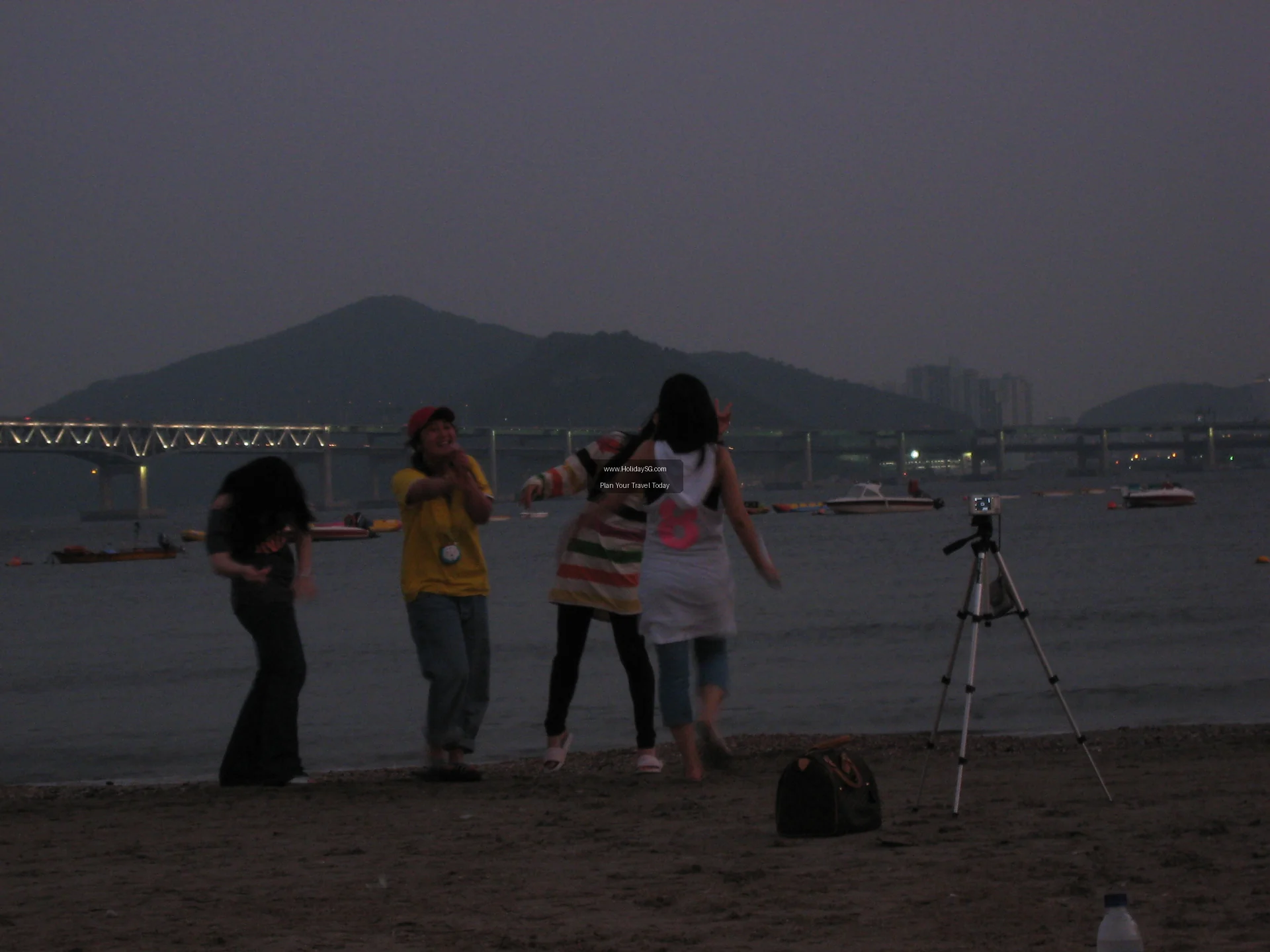
- Gwangalli: a beach facing the Gwangan Bridge, which is lit up at night. The waterfront is lined with cafés and bars; this is where Busan goes out for the evening.
- Nampo-dong and Jungang-dong: the old centre near the port, with Jagalchi, Gukje Market, BIFF Square and Busan Tower in Yongdusan Park.
- Seomyeon: the downtown shopping and nightlife hub, and a metro interchange.
- Yeongdo: an island district with Taejongdae cliffs and Huinnyeoul Culture Village, plus a growing café scene.
Seoul's key areas
- Jongno and Gwanghwamun: the historic core, with the palaces, Bukchon and Insadong.
- Myeongdong: shopping, cosmetics and street food; busy, bright and central.
- Hongdae and Yeonnam-dong: the university area, with live music, street performance, cafés and a young, creative energy.
- Seongsu: former warehouses turned into cafés, pop-up stores and design studios. Often described as Seoul's Brooklyn.
- Gangnam and Jamsil: south of the river, with glass towers, luxury shopping, Lotte World and the Lotte World Tower.
- Itaewon: an international district with a wide range of restaurants.
Beaches, views and the outdoors
If you want sea, Busan wins without argument. Haeundae and Gwangalli are city beaches you can reach by metro; Songjeong is quieter and popular with surfers; Dadaepo in the west has wide sand flats and lovely sunsets. Coastal walks around Igidae, Taejongdae and the Oryukdo Skywalk give you cliffs, waves and big views.
Busan also does views extremely well. Busan Tower in Yongdusan Park looks over the port, the Songdo Marine Cable Car swings over the sea, and on the east coast Blueline Park's little sky capsules run along the coast between Mipo and Songjeong. For a very high view, BUSAN X the SKY, the observatory at the top of a tower near Haeundae, is from around S$19.93 on HolidaySG (at the time of writing, September 2026).
Seoul's outdoors is about mountains and the river. The city is ringed by hills; Bukhansan National Park offers serious hikes within the city limits, and Namsan in the centre is an easy climb to N Seoul Tower, from around S$16 on HolidaySG (at the time of writing, September 2026). The Han River parks are where Seoul relaxes: picnics, bike rides and, on summer evenings, fried chicken delivered to your mat.
Nightlife and evenings
Seoul has one of the most energetic nightlife scenes in Asia: clubs and live music in Hongdae, cocktail bars in Seongsu and Itaewon, late-night barbecue and soju everywhere, and a city that keeps going very late. If you enjoy big nights out, Seoul is hard to beat.
Busan's evenings are more about setting. Sitting at a café on Gwangalli Beach watching the bridge lights, eating grilled shellfish in a tent near the water, or wandering the Haeundae beachfront is what most people remember. There are clubs and bars too, especially around Seomyeon and Haeundae, but the mood is more laid-back.
Shopping and K-culture
For shopping and pop culture, Seoul is the clear winner. Myeongdong for beauty products, Hongdae for independent fashion, Seongsu for concept stores, Dongdaemun for late-night fashion markets, Gangnam for luxury, and entertainment-agency shops and themed cafés for K-pop fans. If K-culture is a big reason for your trip, spend most of your time in Seoul.
Busan holds its own for department stores (Centum City has one of the largest department stores in the world) and traditional markets, and it has a growing café and design scene, but it is not a shopping destination in the same way.
Costs: which is cheaper?
Neither city is expensive by Singapore standards, but there are differences.
- Accommodation: Busan is generally cheaper, except for beachfront hotels in Haeundae during summer peak.
- Seafood: Busan usually offers better value, especially at Jagalchi and the coastal restaurants.
- Everyday food: both cities are good value; set meals, noodle shops and markets are inexpensive in either.
- Transport: both have cheap, efficient metro and bus systems; a rechargeable transport card works in both cities.
- Attractions: Seoul's palaces and museums are generally cheap or free. In Busan, many attractions are free (beaches, villages, temples); others are paid.
If you plan to see many paid attractions in Busan, the Visit Busan Pass, from around S$43 on HolidaySG (at the time of writing, September 2026), bundles entry to many of them and often pays for itself over a busy couple of days.
Weather: when to visit each city
| Season | Busan | Seoul |
|---|---|---|
| Spring (roughly March–May) | Mild, cherry blossoms; lovely for walking | Mild, cherry blossoms; peak visiting season |
| Summer (roughly June–August) | Hot and humid, beach season, monsoon rains, occasional typhoons | Hot and humid, monsoon rains |
| Autumn (roughly September–November) | Warm, clear; film festival; excellent overall | Crisp, clear, autumn colours; arguably the best time |
| Winter (roughly December–February) | Milder than Seoul, often sunny | Cold and dry, sometimes well below freezing |
Busan's winters are noticeably milder than Seoul's because of its southern, coastal location, which makes it a good winter base if you do not enjoy the cold. For seafood, the cooler months are often considered the best season for many types of fish and shellfish.
Getting between Busan and Seoul
KTX high-speed train
The KTX is the easy answer. Trains run frequently between Seoul Station and Busan Station, typically taking around two and a half to three hours depending on the service and stops. There is also the SRT, a separate high-speed service from Suseo Station in south-east Seoul, which suits you if you are staying in Gangnam. Busan Station is conveniently central, near Nampo-dong and the old port.
If you are also taking day trips from Busan or Seoul by train, the Korea KTX / KORAIL rail pass, from around S$69.33 on HolidaySG (at the time of writing, September 2026), may work out cheaper than individual tickets. Do the maths for your own plan, and check the pass conditions for seat reservations and which trains are covered.
Flights
Domestic flights connect Seoul's Gimpo Airport with Busan's Gimhae Airport in about an hour in the air. Once you add airport transfers and security, the train is usually just as quick, and far more pleasant.
Arriving from Singapore
Most flights from Singapore arrive at Incheon International Airport near Seoul. Some carriers also fly to Busan, depending on the season. An "open-jaw" trip, flying into one city and out of the other, saves you from backtracking and is worth checking when you book.
How to split your trip
Here is how we would divide time between the two cities based on trip length.
| Trip length | Suggested split | Notes |
|---|---|---|
| 4–5 days | All Seoul, or 3 Seoul + 2 Busan | A split is possible but rushed; first-timers may prefer one city |
| 7 days | 4 Seoul + 3 Busan | The classic combination |
| 10 days | 5 Seoul + 3 Busan + 2 for Gyeongju or a Seoul day trip | Gyeongju is an easy stop between the two cities |
| 14 days | 5 Seoul + 4 Busan + Gyeongju + Jeju by air | A thorough first look at South Korea |
A sample seven-day plan
- Day 1 (Seoul): Gyeongbokgung Palace, Bukchon and Insadong; dinner at Gwangjang Market.
- Day 2 (Seoul): Changdeokgung and the Secret Garden in the morning, Seongsu in the afternoon, the Han River at sunset.
- Day 3 (Seoul): A DMZ tour or the National Museum; Hongdae in the evening.
- Day 4 (Seoul): Namsan and N Seoul Tower, Myeongdong; a late seafood dinner at Noryangjin.
- Day 5 (Busan): Morning KTX to Busan. Jagalchi for lunch, Gamcheon Culture Village in the afternoon, Busan Tower at dusk.
- Day 6 (Busan): East coast: Haedong Yonggungsa, Blueline Park, Haeundae. Evening at Gwangalli watching the bridge lights.
- Day 7 (Busan): Yeongdo and Huinnyeoul in the morning; dwaeji gukbap for lunch before you leave.
If you would like someone else to handle Busan's spread-out sights, HolidaySG's Busan one-day city tour with Blueline Park, Haedong Yonggungsa, Songdo Skywalk and Gamcheon is from around S$50.32 (at the time of writing, September 2026) and covers days five and six in a single, easy outing.
Getting around inside each city
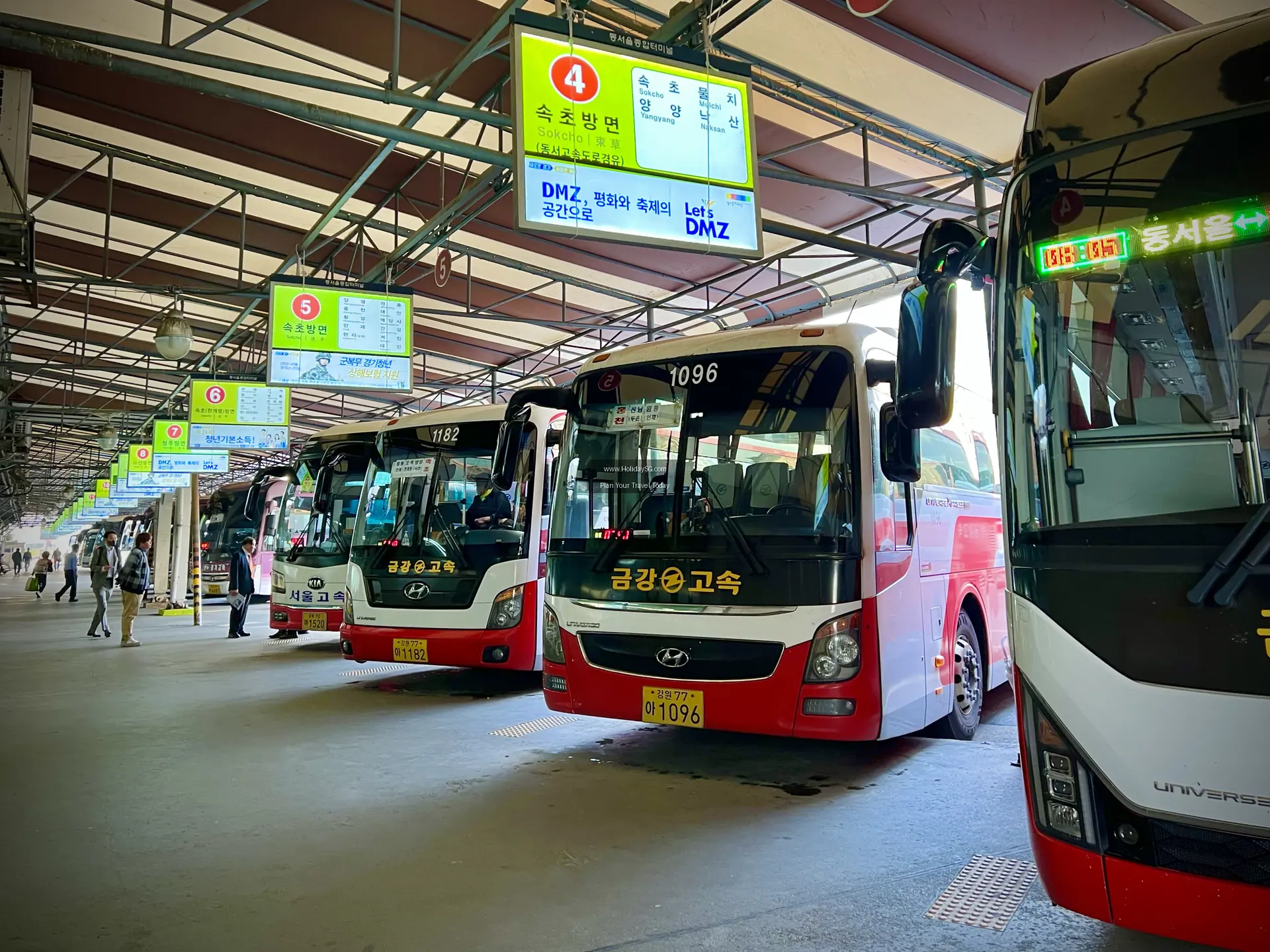
Seoul's metro is vast, clean, well signposted in English and connects almost everything a visitor wants to see. The main challenge is scale: journeys across the city can take 45 minutes or more, and interchanges involve long walks underground. Choosing a base near the sights you care about most (Jongno for history, Hongdae for nightlife, Myeongdong for shopping and convenience) saves a lot of time.
Busan's metro is smaller but covers the key areas: Line 1 runs through Nampo-dong, Busan Station and Seomyeon, and Line 2 reaches Gwangalli and Haeundae. What surprises visitors is the terrain. Busan is squeezed between mountains and the sea, so many sights (Gamcheon, Huinnyeoul, Haedong Yonggungsa, Taejongdae) involve a bus, a taxi or a steep walk after the metro. Taxis are reasonably priced and worth using on hot days. Staying in Haeundae suits beach lovers; staying near Nampo-dong or Seomyeon is more central for sightseeing.
Practical tips for both cities
- Transport card: one rechargeable card works on metros and buses in both cities, and in many convenience stores.
- Payments: cards are accepted almost everywhere, but carry some cash for traditional markets, street food and small seafood stalls.
- Market etiquette: ask before photographing vendors up close, do not touch live seafood unless invited, and settle prices first.
- Spice levels: many dishes, especially stews and chilli sauces, are hotter than they look. It is fine to ask for less spicy.
- Data: a local SIM or eSIM makes navigation, translation and booking trains far easier.
- Tipping: not expected in South Korea.
Who should choose which?
- Choose Seoul if it is your first time in Korea, you love history, museums, shopping or K-culture, or you want the widest range of food and nightlife.
- Choose Busan if you love seafood and the sea, want a slower pace, are travelling in winter and want milder weather, or have already been to Seoul.
- Do both if you have a week or more. They complement each other perfectly, and the train between them is part of the fun.
Common mistakes we see
- Not agreeing prices at fish markets. Confirm the price of the seafood and the restaurant's preparation charge before anything is cut.
- Trying to see Busan in a day. The city is long and hilly, and the best sights are spread along the coast. Give it at least two nights.
- Booking Seoul hotels far from the metro. Seoul is big; being near a metro station on a useful line saves hours.
- Arriving at Gamcheon or Gyeongbokgung at midday on a weekend. Go early to enjoy them without the crowds.
- Taking a domestic flight when the KTX is just as fast. Door to door, the train usually wins.
- Underestimating winter in Seoul. It can be bitterly cold; pack properly.
- Relying on an international map app alone. Korean map apps generally give much better walking and transit directions.
- Forgetting the Korean holiday calendar. Around Seollal and Chuseok, trains sell out fast and some shops and restaurants close.
Frequently asked questions
Is Busan or Seoul better for seafood?
Busan. Seoul's Noryangjin market is excellent, but Busan's seafood is central to the city's life, generally better value, and eaten beside the sea. Jagalchi Market, the coastal tent restaurants and Busan's fish cakes are a highlight of any trip to South Korea.
Which city is better for a first trip to South Korea?
Seoul, for most people. It has the palaces, museums, shopping and nightlife, and most international flights arrive there. Add Busan if you have more than five days.
How long does the KTX take from Seoul to Busan?
Typically around two and a half to three hours, depending on the train and the number of stops. SRT trains from Suseo Station take a similar time.
How many days do I need in each city?
At least three or four days in Seoul and two or three in Busan. A week split four and three is a very satisfying first visit.
Is Busan cheaper than Seoul?
Generally a little, especially for accommodation and seafood. Everyday food and transport are good value in both cities.
Which city has better beaches?
Busan, easily. Haeundae, Gwangalli and Songjeong are all reachable by public transport, while Seoul is inland on the Han River.
Can I visit Gyeongju between Seoul and Busan?
Yes. Gyeongju, the ancient Silla capital, is on the KTX line near Busan and makes an excellent stop or day trip from Busan. See our guide to day trips from Busan for how to plan it.
What is the best time to visit Busan and Seoul?
Spring and autumn are the most comfortable in both cities. Autumn is a particularly good time to combine them, with clear skies, autumn colours in Seoul and the film festival in Busan.
Our take
If you forced us to choose one city for a first visit, we would choose Seoul, and we would spend our last night there eating at Noryangjin. But we would feel the loss of Busan: the smell of the sea at Jagalchi in the morning, a bowl of dwaeji gukbap after a long walk, the lights of Gwangan Bridge from the beach. The real answer, if you have a week, is to take the KTX and let each city show you what the other one cannot.
To start planning, the Gyeongbokgung, Bukchon and Gwangjang Market tour is a great first morning in Seoul, the Visit Busan Pass makes the most of your time on the coast, and the KORAIL pass links it all together. For more ideas, see our South Korea destination page.