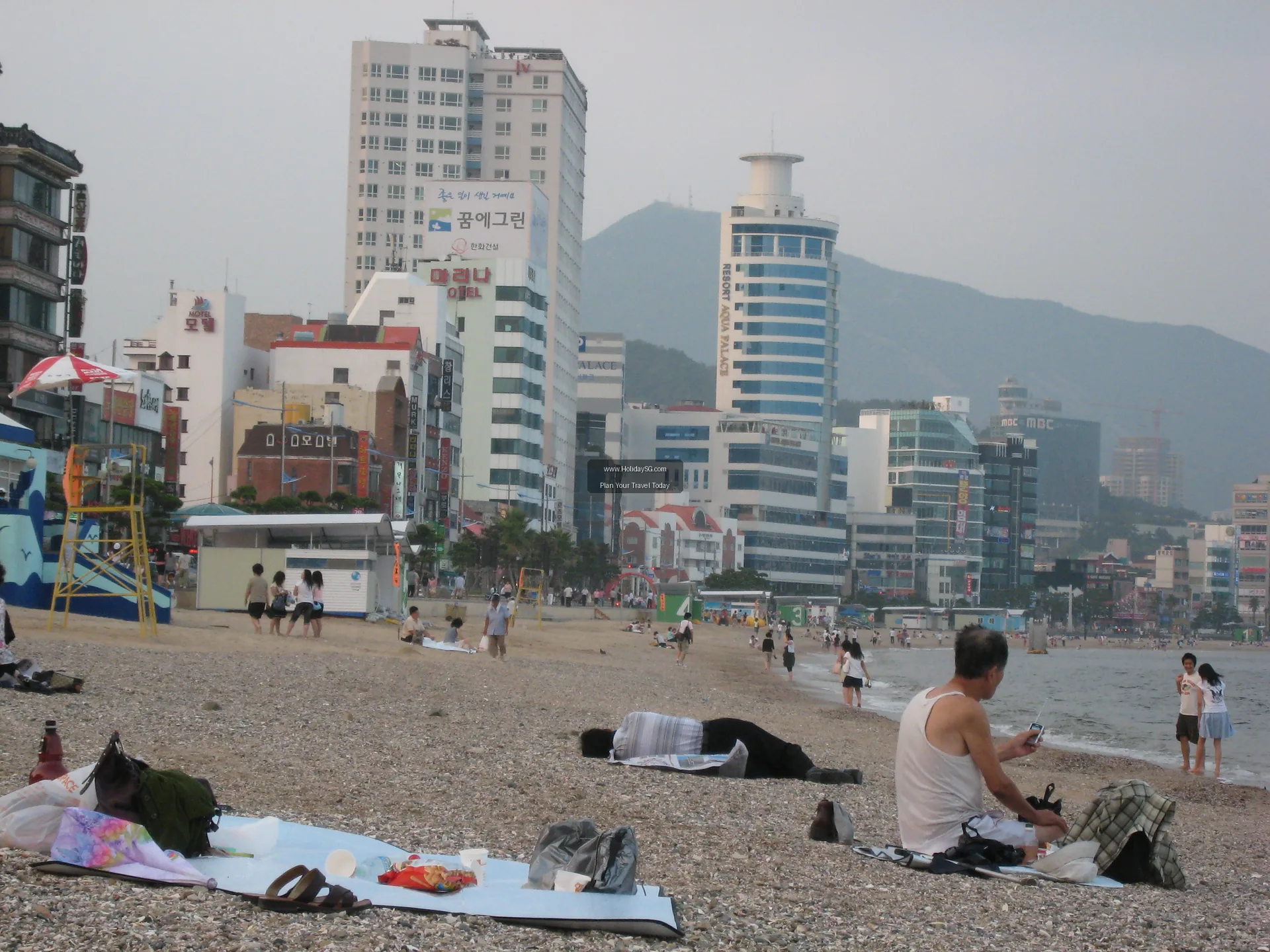
I need to start with a correction, because the first version of this guide got something wrong and I would rather say so than let it stand. Jamsil is not a beach. It is a lakeside sports-and-shopping district in southeast Seoul with a giant tower and a baseball stadium, and nobody swims there. Jirisan is a mountain range hundreds of kilometres to the south. If you landed here hoping to sunbathe on either, I am sorry for the confusion. What follows is the honest version: where people from Seoul actually go when they want sand, salt air and a bit of quiet, how to get there without a car, what it costs, and when the whole thing falls apart (hello, August).
Seoul is not a beach city. It sits inland on the Han River, and the sea is about an hour away in two directions. West, the Yellow Sea gives you tidal flats, pine-backed shores and islands you can reach by bus. East, a few hours away, the East Sea gives you clear water, white sand and the kind of coastline people photograph for postcards. In between there are small, patchy, wonderfully unfashionable stretches of coast where Seoulites go on a Tuesday because they can. Those are the "hidden" beaches, and they are the point of this guide.
Be realistic about what "hidden" means in Korea
Let me save you some disappointment. Korea is a small, densely travelled country with excellent roads and a great train network. There is almost no beach that is truly secret. What you do find is beaches that are quiet at certain times, beaches that foreign visitors skip because the signage is Korean-only, and beaches that the tour buses ignore because there is no giant souvenir mall next door. That is the sort of hidden I mean, and honestly it is the better sort.
The calendar matters more than the map. Korean beaches have an official summer season, usually running through July and August, when lifeguards are posted, shower blocks are open and the sand is shoulder to shoulder with umbrellas and tubes. Before and after that window, many of the same beaches are close to empty, the sea is cold, and the only people on the sand are photographers, dog walkers and couples eating instant ramyeon out of paper cups. If you want solitude, travel in late May, June or September. If you want the full beach party and do not mind queues, go in the first weeks of August and accept the crowd as part of the experience.
The quick comparison before the detail
Here is how the main options stack up for someone based in Seoul. Journey times are rough and depend heavily on traffic and on how well you time your transfers, so treat them as a planning guide rather than a promise.
| Area | Sea | Rough time from Seoul | Best for |
|---|---|---|---|
| Yeongjongdo (Incheon) | Yellow Sea | About 1 to 1.5 hours | Layover day, sunsets, tidal flats |
| Ganghwa Island | Yellow Sea | About 1.5 to 2 hours | Day trip, history plus coast |
| Daebudo and Ansan area | Yellow Sea | About 1.5 to 2 hours | Cycling, mudflats, local seafood |
| Boryeong | Yellow Sea | About 2 to 3 hours | Big sandy beach, summer festivals |
| Gangneung | East Sea | About 2 hours by fast train | Clear water, cafes, pine walks |
| Sokcho and Yangyang | East Sea | About 2.5 to 3 hours | Mountains plus sea, seafood markets |
Yeongjongdo: the beach next to the airport
If you only have a few hours, this is where I would start, and the reason is simple: Incheon International Airport sits on this island. That means the AREX airport railway runs right to it, which makes Yeongjongdo the only beach area near Seoul that you can reach on the same train that brings you into the city. Several people I know have used a long layover to swim here, shower, eat grilled shellfish and still make a late flight, which tells you everything about how close it is.
The coast here is the Yellow Sea, so the first thing to understand is the tide. The water retreats a very long way at low tide, leaving a flat, shining expanse of sand and mud that locals walk out onto to dig for clams. At high tide the sea comes back and you get something closer to a conventional beach. The difference is dramatic enough that checking a tide table before you go is worth the thirty seconds it takes. Wangsan Beach and Eurwangni Beach are the two names you will see most often. Both have a pine-lined edge, a row of seafood restaurants and, on a weekday, plenty of room.
The practical route is AREX to Incheon Airport, then a local bus or short taxi to the beach you chose. Buses change their numbers and stops from time to time, so check a current maps app on the day rather than relying on a number I give you here. If you are arriving in Korea and want to go straight to the sea, you can buy the express train as a ticket before you land.
What I like most about Yeongjongdo is the evening. Sunsets over the Yellow Sea are long and orange, the tidal flats turn to copper, and the planes lift off low over the water in the distance. It is not a postcard of tropical sand, and I would be lying if I said otherwise, but it is quiet and it is cheap and it is real.
Ganghwa Island: sea air with a history lesson
Ganghwa is a big island, and it is more about forts, temples, dolmens and rice fields than about swimming. Still, its coast is lovely, and it is the easiest place to combine a day at the sea with something to see when the weather turns. Beaches on the island tend to be small and low-key, often with a campsite or pension nearby. The sea here is also tidal, so expect the same dramatic retreat of the water.
A good Ganghwa day looks like this. Morning bus from Seoul, a wander around one of the old fortification sites or a temple, a long lunch of seafood or the island's famous sweet potato snacks, and an afternoon on the shoreline with nothing planned. The island is connected to the mainland by bridge, so you do not need a ferry. If you prefer not to work out the buses, an organised outing handles the transport and gives you a camping-style barbecue, which is a very Korean way to spend an evening by the sea.
The island also has a seaside resort option for those who want to stay overnight instead of rushing back. If you can, stay. The best light on this coast is early morning and just before dusk, and a day trip tends to miss both.
Take the camping and barbecue version of the day seriously if the idea appeals. Korean campsite culture is a distinct thing: everything is prepared in advance, grills and tables are ready, and the evening is long and unhurried. For a first-timer it is far easier than organising a pension, a taxi and a supermarket run in a language you may not read.
Daebudo, Ansan and the west-coast mudflats
Further south along the same coast is Daebudo, a flat island connected by a causeway, popular with cyclists, anglers and families. The mudflats are the real draw. At low tide you can walk out on the exposed sea floor with a bucket, and in the right season locals line up to collect shellfish. It is more of a coastal landscape than a swimming beach, and you should know that before you pack towels.
I would not call it essential for a short trip, but it is useful as a counterpoint. After a few days of metro platforms and crowds, an afternoon cycling along a causeway with the tide out and almost nobody in sight is a surprisingly good reset. Bring a hat. There is little shade.
Boryeong: the big beach with the muddy reputation
Boryeong is known for its mud festival in summer, which draws a large international crowd. Outside festival season, Daecheon Beach, the main beach, is long, wide and genuinely pleasant, with a gentle slope into the water and plenty of cafes and guesthouses. It is not hidden, and in July and August it is anything but quiet. In June or September, though, it behaves like a different place.
It is a reasonable pick if you want a proper beach weekend without leaving the Yellow Sea, and it is a slightly longer trip than the Incheon options, so it suits an overnight stay better than a rushed day return. Food is the highlight: grilled clams, raw fish and seafood stews are everywhere, and prices outside peak days are very fair.
The East Sea: where the water changes colour
Everyone who has seen both coasts will tell you the same thing: the East Sea is the prettier one. The water is clearer and deeper, the sand is paler and firmer, and the tide hardly moves, so a beach looks the same at noon and at five. It takes longer to reach, but the high-speed rail line has cut the trip to Gangneung to around two hours, which makes it a very realistic long day trip.
Gangneung and its pine-backed beaches
Gangneung is the coastal city that Seoulites treat as their weekend escape. Gyeongpo Beach is the famous one, with a lake behind it and a long promenade. If you want something quieter, walk or drive a little further along the coast to Anmok, famous for a row of coffee shops facing the water, and to smaller, cleaner stretches where you can usually find a space to spread out a towel even on a warm Saturday.
I will be straight about the cafes: they are charming, a bit expensive and heavily photographed. Order one drink, stay for the view, and then walk away from the strip. The beaches a few minutes down the shoreline are almost always emptier and just as lovely.
A small tip I wish someone had given me: sit on the right side of the train when travelling towards the coast, and keep your phone ready once the tracks approach the sea. For a few minutes the line runs within sight of the water and the view is worth the effort.
Sokcho, Yangyang and the mountain-and-sea combination
Further north, Sokcho places a beach and a national park within the same day. The Seoraksan mountains rise directly behind the town, and the combination of granite peaks and a blue sea is hard to beat. Yangyang, a short way south, has a long surfing beach with a small, friendly scene, and in the shoulder months you can learn to surf with only a handful of other people around.
If you want one outing that gives you both the mountains and the water, an organised day tour from Seoul is far less stressful than the transit gymnastics of doing it yourself, especially if you are not confident reading Korean timetables.
When you cannot get to the sea: the Han River
Some days you simply will not make it to a coast, and that is fine, because Seoul has its own water. The Han River parks along both banks are the city's living room. In summer the riverside swimming pools at several parks open, picnics spread across the grass, and delivery drivers on scooters bring fried chicken and ramyeon straight to your picnic mat. It is a deeply Korean scene, and I would put it on any itinerary.
If you want to be on the water rather than beside it, there are a few good options. A river cruise from Yeouido runs in the evening and in the afternoon, a yacht outing gives you a closer, more private view of the skyline lights, and the floating Tubester boat from the Sebitseom islands offers a more playful way to spend an hour. None of them replaces a real beach, but each gives you the feeling of water, wind and light that you came looking for.
A rough budget
South Korea is not the cheapest destination in Asia, but a beach day is one of the cheaper days you will spend. The country's own travel data suggests a daily budget somewhere between 80,000 and 250,000 won per person depending on your style. Public transport and street food pull you to the low end, while private transfers, organised tours and beachfront dinners push you towards the high end. The table below shows how a typical day might break down for one person. Treat the figures as ballpark estimates, not quotes.
| Item | Budget day | Comfortable day |
|---|---|---|
| Transport to and from the coast | Metro and local bus | High-speed train or tour bus |
| Lunch | Kimbap and noodles | Grilled seafood set |
| Beach extras | Towel, snacks from a convenience store | Sunbed or tube rental, shower |
| Evening | Street food market | River cruise or night tour |
For the getting-around part, two products are worth knowing about. A prepaid card that also works as a transit card saves you from fumbling with change at every bus, and it is accepted in many shops. If you plan to cover longer distances, a rail pass for foreign visitors can pay for itself quickly on multiple intercity trips.
The foreigner-only rail pass is here: KR Pass regular ticket, from S$123.00. Whether it saves money depends on how many long trips you plan, so count them before you buy. If you are making just one coast run and a few metro rides, you probably do not need it.
Getting around: trains, buses and when to hire a car
Public transport in Korea is superb, with one big caveat for beach hunting: the last leg is the hardest. Trains and express buses drop you in a coastal town, but the beaches themselves are often a few kilometres out, served by local buses that run infrequently, especially in the off-season. This is where many visitors lose an hour or two standing at a stop.
There are three ways around it. You can plan your day carefully, checking the last bus back before you leave the stop. You can use a taxi for the last stretch, which is normally cheap enough to be reasonable. Or you can join an organised round trip, which removes the question altogether. For groups of three or four, a private driver for the day, either by charter car or a short taxi route, often ends up close to the price of everybody taking trains individually and gives you complete freedom over where you stop.
Foreign visitors can also drive, but I would think twice. Navigation apps differ from those you may be used to, many road signs are Korean-only, and expressway tolls are paid with a prepaid transponder or card. Unless you are comfortable with all that, a driver is calmer.
When to go, and what the weather will do
The best months for a mix of mild weather and open sand are spring and autumn, roughly April to June and September to November. The sea is cold in those months, so you will mostly be walking, photographing and eating rather than swimming, but the light is soft and the crowds are thin. If you actually want to swim, the realistic window is July to mid-August, and that coincides with the rainy season at its start and the peak holiday rush at its end.
The monsoon period usually arrives around late June and runs through July, and some years it stretches into August. It tends to come in heavy bursts rather than all-day drizzle, so you can often catch a dry window, but plan a rain-proof alternative. A short ride on the metro to a museum, an aquarium or a spa gets you out of the weather without wasting the day.
| Season | Sea and sand | Crowds |
|---|---|---|
| Spring (April to June) | Cold water, mild air, good for walking | Low |
| Early summer (July) | Swimming begins, heavy rain possible | Medium |
| Peak summer (August) | Warmest water, full facilities | Very high |
| Autumn (September to November) | Clear skies, quiet shores | Low |
If it rains: three indoor fallbacks
I always keep a wet-weather plan. In Seoul, the easiest is a big aquarium, where the whole family can see sea creatures when the real sea is out of reach. A large one at a major shopping and convention complex is a popular pick, and it takes a couple of hours. See COEX Aquarium admission, from S$27.12.
The second fallback is a bathhouse. A jjimjilbang, the Korean sauna and spa, is a proper cultural experience: hot rooms, cold plunges, snacks and a sleeping floor. It is also the single best way to recover after a day of salt and sun. One central option is Sparex Dongmyo sauna admission, from S$13.38. A first-timer note: most baths are separated by gender and nudity is expected in the wet areas, so go in with an open mind.
The third is the city pass route. If your plan is flexible and you will visit several museums and palaces, a visitor pass bundles many admissions with transit use.
Practical details people forget
A few small things make the difference between a good day and a frustrating one.
Data. You will use your phone constantly for maps, bus times and translation. A local data plan beats hunting for Wi-Fi. Here is a popular, inexpensive route: 14-day Korea traveller eSIM, from S$18.00, which you can set up before you fly.
Cash and cards. Cards work almost everywhere in Seoul, but tiny seaside stalls, local buses in smaller towns and some beach vendors still prefer cash. Carry a modest amount of won.
Safety in the water. Swim only in the marked zones while lifeguards are on duty, and respect the flags. Korean beaches close their swimming areas outside the official season and in rough conditions, and rip currents and shifting tides on the west coast are real. Mudflats can trap you if the tide comes in faster than you expect, so never wander far from the shore without checking tide times.
Sun. Korean sun on a sea-facing beach is stronger than most people expect, especially with sea breeze hiding the heat. Bring sunscreen and a hat.
Rubbish. Korea takes recycling seriously. Take your litter with you or use the marked bins, and be ready to separate it.
Language. A translation app with camera mode makes menus and bus signs readable. Staff at seafood restaurants are friendly and patient, and pointing works.
Entry rules, visas and flights
Before any of this, you need to get into the country. Rules for entry depend on your passport, and they have been changing. The K-ETA, Korea's electronic travel authorisation, costs about 10,000 won, is normally valid for three years of multiple entries and is usually approved within about 72 hours. Singapore passport holders have, as of our latest verified information, enjoyed a temporary exemption from it, running until 31 December 2026. That is a temporary measure, and policies like this can be extended, changed or ended. Do not rely on a blog post, including this one, on the day. Check your own nationality on our visa requirements page, which shows what applies to you and links to the official application channels.
If you do need a short-stay visa instead of the electronic authorisation, a typical tourist visa has a government fee of around 40 US dollars and processing of about ten working days, so apply well ahead of your trip. If your visa application asks for proof of travel plans, many applicants find it useful to have a flight reservation on hand without buying a ticket they may not use. Our flight reservation service provides a reservation for visa applications. It is a reservation, not an issued ticket, and it does not guarantee that an embassy will approve anything, so read the details on the page before relying on it.
A sample three-day plan
To make this concrete, here is how I would stitch it together for a first trip with three days to spare for the coast.
| Day | Plan | Why |
|---|---|---|
| Day 1 | Arrive, AREX to the city, evening Han River cruise | Easy first day, first look at the water |
| Day 2 | Yeongjongdo or Ganghwa Island by bus, seafood lunch, sunset | Closest sea, easy to adapt to the weather |
| Day 3 | Fast train to Gangneung, beach, coffee, return in the evening | The prettiest sea for the end of the trip |
If you have only one coast day, choose by your mood. For a short, easy and cheap outing, Yeongjongdo wins. For the best scenery, go east. For a day that mixes beach with history, take Ganghwa.
What to eat by the sea
Food is half the reason Koreans go to the coast, and it is where a day trip stops feeling like a tourist errand. On the west coast the headline order is shellfish: clams grilled over charcoal in a pile, often with a little cheese melted on top, and a hot noodle soup stuffed with clams to finish. It sounds like a lot of food, and it is, so share. A group of three can comfortably split one large grilled set and a soup.
On the east coast, the star is raw fish and its spicy, cold-noodle cousin, along with squid in nearly every form. Sokcho in particular is known for its fish markets, where you pick from tanks and a nearby restaurant prepares it for you. The system can look intimidating if you cannot read the signs, so point, smile, and ask for the price before you commit. A fair restaurant will write the number down.
If you do not eat seafood, do not panic. Every coastal town has bakeries, convenience stores with excellent triangle rice rolls, fried chicken shops and noodle bars. Korean convenience-store food is a genuine pleasure and a reliable beach picnic. Pack a bag of instant noodles, hot water is free at most stores, and eat them on the sand exactly like everyone else.
Which beach suits which traveller
After a few trips here I have stopped giving one-size-fits-all recommendations. The best beach depends on who is with you.
| Traveller | Try | Reason |
|---|---|---|
| Families with small children | Ganghwa or Yeongjongdo | Short journeys, shallow tidal play, easy food |
| Couples | Gangneung, or a Han River yacht | Cafes, sunrise, a romantic evening |
| Solo travellers | Yeongjongdo | Simple to reach, safe, easy to turn back |
| Active travellers | Yangyang or Sokcho | Surf lessons and mountain hikes |
| Older travellers | A private driver to Ganghwa | Door to door, no bus changes |
A private driver deserves a sentence of its own, because it changes the shape of a day. With a charter you set the stops, you can linger at a view, and you avoid carrying wet towels onto a crowded bus. For several people it can be good value. Two common versions are a short, fixed-route taxi, such as the Chuncheon route sightseeing taxi, from S$39.00, and a full-day charter with a driver for a longer, customised loop.
Mistakes I see visitors make
I have watched a lot of people arrive at these beaches, and the same handful of errors come up.
Going on the peak weekend. The first weekends of the school holidays pack the roads, and a two-hour trip can easily become four. Go on a weekday if you can, or leave before dawn.
Ignoring the last bus. Buses to smaller coastal stops can end early in the evening. Photograph the timetable on arrival, and treat it as your deadline.
Expecting tropical water. It is a temperate sea. It is beautiful, but it is not a Thai island. Set your expectations accordingly and you will enjoy it more.
Skipping the tide table. On the west coast, arriving at the wrong hour can mean a beach that is simply mud for a kilometre. Look it up first.
Packing too much. You will be on trains and buses. A small backpack, a quick-dry towel and a change of clothes is plenty.
Booking nothing, then finding a sell-out. Popular day tours and cruises can fill on holiday weekends. If a particular outing matters to you, book ahead.
A packing list that actually works
Keep it short, because you will carry it all day. A quick-dry towel packs smaller and dries faster than a beach towel. Water shoes are worth bringing for rocky, shelly or muddy shores, since a cut foot ruins a trip. Sunscreen, sunglasses and a hat are non-negotiable on open coast. A light waterproof jacket covers sudden showers in early summer. Add a dry bag or even a zip bag for your phone and cards, a refillable bottle, wet wipes, a small power bank, and a few rubbish bags so you can leave nothing behind. If you plan to swim in the cooler months, a thin wetsuit top is optional, but most people are happier simply walking.
Finally, leave a little room in the plan. The trips I remember best are not the ones where everything went to schedule, but the ones where a bus ran late, we found an unlisted stretch of sand, and an elderly woman on a plastic stool sold us a bowl of noodles that was better than anything on the menu we had planned to try.
Frequently asked questions
Are there beaches inside Seoul?
No sea beaches, since Seoul is inland. The Han River parks have grassy banks and summer swimming pools, which many locals use instead.
Is Jamsil a beach?
No. Jamsil is a district with a lake, a tower and a sports complex. A previous version of this article listed it as a beach by mistake.
What is the closest real beach to Seoul?
Yeongjongdo, in Incheon, is the nearest option reachable by the airport railway followed by a short bus or taxi ride.
When can I actually swim?
Mainly July and August, when beaches officially open and lifeguards are present. Outside those weeks the water is cold and swimming areas are often closed.
Can I do a beach trip as a day trip from Seoul?
Yes. Yeongjongdo and Ganghwa are easy day trips, and Gangneung is realistic by fast train if you start early.
Do I need a car?
No. Trains, express buses and organised round trips cover most routes. A driver for the day is a good option for groups.
Do I need a visa or K-ETA?
It depends on your passport and the rules in force at the time you travel. Check the visa requirements page before you book.
What should I bring?
Sunscreen, a hat, a quick-dry towel, water shoes for rocky or muddy shores, some cash in won and a charged phone with data.
Featured experiences in this guide
Ready to plan your Seoul coast escape?
Browse day tours, river cruises and transport for South Korea on HolidaySG, then sort out your entry paperwork on our visa requirements page. Tickets are emailed after our team confirms your booking.