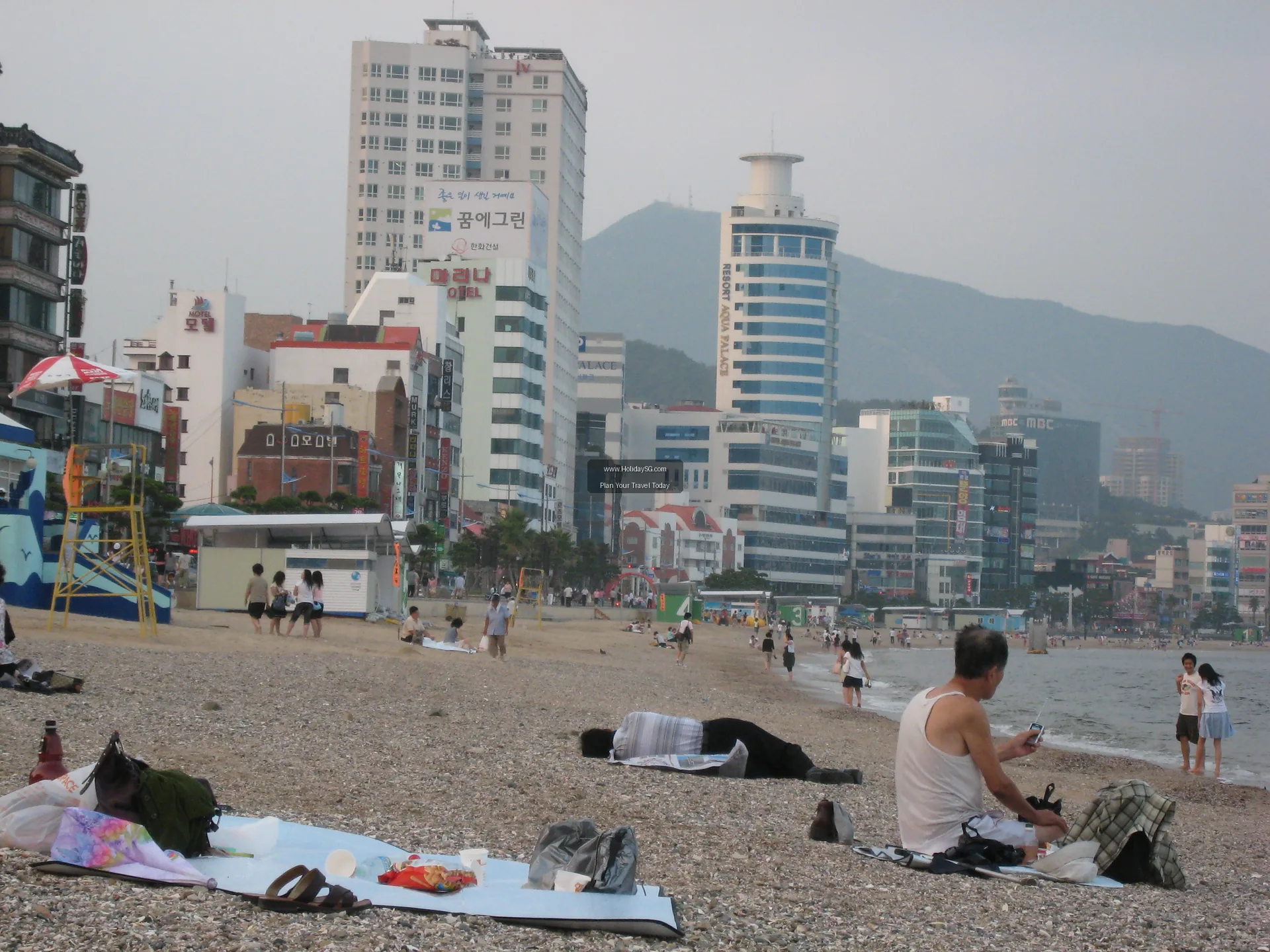
The first time I went to Busan I budgeted like a person who assumed South Korea meant Seoul prices. I packed a spreadsheet, a power bank and a lot of anxiety about the won. Three days in, I was eating a bowl of pork-and-rice soup for the price of a Singapore kopi, riding a subway that cost less than a bus hop at home, and sleeping in a guesthouse a ten-minute walk from the sea. Busan is, quite honestly, one of the easiest big cities in Asia to do cheaply, and this guide is everything I wish someone had told me before that first trip: how to get there from Singapore without overpaying, how to move around once you land, where the money really goes, and which paid experiences are worth it.
A quick note on how I write these. Prices in won move around, ferries change timetables, and some of the figures below are rough ranges from my own trips and from conversations with locals, so treat them as planning numbers rather than promises. Where we sell something on HolidaySG, I link it so you can check the live price for your own dates. Everything else, verify close to your travel date.
Why Busan is cheaper than the rest of Korea
Busan is Korea's second city, with a population north of three million, yet it feels like a coastal town that happens to have skyscrapers. Rents are lower than in Seoul, so guesthouses, cafes and restaurants charge less. The city is also built around its waterfront and its markets, which means the things people actually want to do here, such as walking beaches, wandering fish markets, climbing hillside villages and riding the coastal rail line, are either free or very cheap.
The other reason is time of year. Seoul gets crowded and expensive around cherry blossom season and autumn foliage. Busan has the same seasons but a smaller tourist footprint, and outside the beach months of July and August you will often find rooms at a fraction of the Seoul rate. The national budget range for South Korea sits around ₩80,000 to ₩250,000 per person per day depending on style. In Busan, a careful traveller can sit at the lower end of that, and I have done a few days under ₩70,000 without feeling deprived.
The cheapest way to reach Busan from Singapore
There are really three routes, and the cheapest depends on when you book and how much hassle you can tolerate.
Direct to Busan (Gimhae Airport). Low-cost and full-service carriers have served Singapore to Busan at various times, and when a direct flight is running on your dates it is usually the winner. You skip the domestic leg, you arrive at an airport that is close to the city, and you do not need to worry about a missed connection. Direct schedules change by season, so check the airline sites rather than trusting a blog, including this one.
Into Seoul, then south. Incheon is better served from Singapore, with more airlines, more departure times and more fare competition. If a Seoul fare is much lower than a Busan fare, flying to Incheon and taking the KTX south can come out ahead, especially if you also want to spend a few nights in Seoul. The catch is the extra half day and the train ticket.
Open-jaw. Fly into Seoul, travel overland to Busan, then fly home from Busan. This avoids backtracking and often costs only a little more than a return into one airport. For trips of seven days or more, it is what I would do.
| Route from Singapore | Rough extra cost | Rough extra time | Best for |
|---|---|---|---|
| Direct to Busan | None | None | Short trips, Busan-only plans |
| Seoul, then KTX to Busan | Train fare, often a few tens of Singapore dollars | About three hours on the train | Seoul plus Busan itineraries |
| Seoul, then express bus | Lower than the train | Roughly four to five hours | Tight budgets, flexible schedules |
| Open-jaw (in Seoul, out Busan) | Similar to a return fare | Saves a day of backtracking | Trips of a week or longer |
One practical tip on booking: if you are applying for any visa or entry document that asks for proof of onward travel, a full ticket is not always needed. We offer a manual itinerary service at /flight-reservation for exactly those situations. It is a reservation for documentation purposes, not an issued ticket, so do not treat it as a boarding pass. Read the terms on that page before you rely on it.
Do you need a visa or K-ETA?
This is the part people get wrong, and a wrong answer costs a lot more than any flight deal. South Korea normally asks visa-exempt visitors to apply for a K-ETA online before flying. The K-ETA fee is listed at ₩10,000, it is valid for three years with multiple entries, and the stay allowed is up to 90 days. Processing is usually within about 72 hours.
For Singapore passport holders there has been a temporary exemption from the K-ETA requirement, which our records show running until 31 December 2026, with the allowed stay at 90 days. That is the position we last verified in late September 2026, but exemption periods can be extended, shortened or lapse, so check the official K-ETA site before you buy flights. If you travel on an Indian passport or another document that is not visa-exempt, you are looking at the C-3 short-term visit visa instead, which carries a fee in the region of USD 40 and takes around ten working days.
For the full breakdown by passport, our visa requirements checker is the place to start. It pulls from embassy and government sources and shows when each fact was last verified. If you want help with the paperwork, we can assist with applications, but always confirm the final rules with the official channel.
| Document | Who it is for | Fee | Stay |
|---|---|---|---|
| Temporary K-ETA exemption | Singapore passport holders, until 31 Dec 2026 | Free | Up to 90 days |
| K-ETA | Visa-waiver nationalities not exempt | ₩10,000 | Up to 90 days, valid 3 years |
| C-3 short-term visa | Non-waiver nationalities such as Indian passport holders | About USD 40 | Up to 90 days |
From the airport to your bed without a taxi
Gimhae International Airport is on the western edge of the city. The cheapest way into town is the Busan-Gimhae Light Rail, which runs from the airport to Sasang station, where you change to subway Line 2. From there you can reach Seomyeon, the central hub, in a handful of stops. Total cost is a few thousand won and, on a good run, under an hour to most central guesthouses.
Airport limousine buses also run to the main hotel districts and are a sensible choice if you are hauling a large bag, because stairs at interchange stations can be tiring. Taxis are metered and reasonable by Singapore standards, but a night arrival with a big group is the only time I would choose one over the rail.
Whichever way you go, buy a T-money card at the airport convenience store or a station machine. It works on the subway, buses and most taxis, and you can top it up and refund the remaining balance at certain shops before you leave. If you would rather pay by a foreigner-friendly prepaid card, the WOWPASS card bundles payment and transport in one card, and is listed from S$7.00. Compare the fees against simply withdrawing a modest amount of cash.
Getting around Busan on almost nothing
The subway has four main lines plus a few lighter connectors, and it reaches nearly every area a visitor cares about. Fares are distance-based but low, and tapping a T-money card is cheaper than buying single tickets. Buses cover the places the subway does not, like the temple at the far end of the coast, and the same card works on them. Use a transit app that supports Korean maps, because Google Maps walking directions work fine but its bus routing is patchy in Korea.
Hills are the real obstacle. Busan was built on steep slopes, and a two-kilometre stroll on the map can be a fifteen-minute climb. Pack comfortable shoes and plan hillside neighbourhoods like Gamcheon for the morning when it is cooler.
If you are planning several attractions, the Visit Busan Pass is worth a look. It is a cashless pass that gives access to a list of sights and includes transport benefits. At S$43.00 for the entry level, it pays for itself only if you will use several of the included venues, so list what you actually plan to do and add up the individual admissions before buying. If your plan is mostly beaches and street food, skip it.
Where to sleep when money is tight
Choose your base by what you value most. Seomyeon is the transport hub, sitting where subway lines 1 and 2 cross, and has the widest range of cheap hotels, hostels and late-night food. Nampo-dong and Jung-gu put you next to the markets, Busan Tower and the old harbour. Haeundae is the beach district with the highest prices in summer but a quiet, bargain-friendly winter. Gwangalli faces the bridge and has a young cafe-and-bar crowd. If you want to spend as little as possible, Seomyeon and the streets around Busan Station are the sweet spot.
| Area | Vibe | Budget level | Good for |
|---|---|---|---|
| Seomyeon | Busy, central, lots of food | Cheapest overall | First-timers, transport links |
| Nampo / Jung-gu | Markets, old port | Low to moderate | Street food, walking |
| Gwangalli | Cafes, bridge views | Moderate | Evenings by the water |
| Haeundae | Resort beach | High in summer, fair in winter | Beach time, families |
Two things that save money without costing comfort. First, look at guesthouses with a kitchenette. Convenience stores and markets sell cheap ingredients and Korean breakfast sets, and having a small fridge means you can buy fruit and drinks at supermarket prices rather than at tourist cafes. Second, read the check-in rules carefully. Many small places have strict late-arrival hours, and a missed message can cost you a night.
What to eat, and where the bargains are
Food is where Busan quietly beats most of Korea on value. The signature dish is dwaeji gukbap, a pork-bone soup served with rice, and a bowl in a neighbourhood restaurant is one of the cheapest filling meals you can find. Add milmyeon, cold wheat noodles that the city claims as its own, ssiat hotteok, the seed-filled sweet pancake you find near BIFF Square, and fish cake from the old harbour stalls, and you can eat three real meals for a very modest sum.
Jagalchi Fish Market is a spectacle even if you buy nothing. If you want to eat what you see, the usual system is to choose seafood downstairs, pay by weight and have it prepared upstairs. Agree on the price before you sit, and ask for a written total, because this is the one place where tourists sometimes overpay. For a cheaper seafood fix, grilled mackerel set lunches in nearby streets cost far less than the market's raw-fish platters.
Korean barbecue is the place to be careful. Most restaurants require a minimum of two portions and charge extra for side dishes you did not ask for, so a solo traveller can end up paying more per head. If you are on your own, look for places that advertise one-person portions, or save barbecue for a night when you have a friend along.
A realistic daily food budget
| Meal | Cheap option | Rough cost |
|---|---|---|
| Breakfast | Convenience store sandwich or gimbap plus coffee | ₩3,000 to ₩5,000 |
| Lunch | Dwaeji gukbap or a set meal | ₩8,000 to ₩11,000 |
| Snack | Hotteok, fish cake, tteokbokki | ₩2,000 to ₩5,000 |
| Dinner | Market stall or a stew restaurant | ₩10,000 to ₩15,000 |
These are rough figures from my own spending, rounded up. Prices rise a little each year, and drinks add up quickly, so budget a bit more if you like cafes.
Free and nearly free things to do
You can fill a full week in Busan without paying for a single attraction ticket. Here is how I would do it.
Gamcheon Culture Village. A hillside neighbourhood of pastel houses and stair-stepped lanes, turned into an arts district. Entry to the village is free, with small fees for a stamp-trail map and for the museums and cafes if you choose them. If you like the idea of dressing the part, the retro outfit rental in Gamcheon starts from S$29.80 and makes for a different kind of photo day.
Beaches. Haeundae is the famous one and crowded in summer, but Gwangalli and Songjeong offer calmer sand. Swimming season is short, so in other months simply walk the promenade. Evenings at Gwangalli, when the Gwangan Bridge lights up, are the best free show in the city.
Haedong Yonggungsa. A Buddhist temple set on rocks above the sea, rare in Korea because most are in the mountains. Admission is free, and sunrise visits feel almost private. Get there early and expect a bus ride from the nearest subway station.
Taejongdae and Oryukdo. Cliffs, lighthouse and walking paths at the southern tip. The park charges for its sightseeing train, but walking the trails costs nothing.
Markets and alleys. Jagalchi, Gukje Market, Bupyeong Kkangtong Market and the book alley near Bosu-dong cost nothing to browse, and you will spend a whole afternoon.
The paid experiences that are worth the money
Cheap does not mean never paying. I look for the handful of paid things that give the most return per won and skip the rest. These are the ones I would actually recommend.
Coastal rail and sky capsules. The old Haeundae Blueline Park line along the coast, with small themed capsules and a beach train, is a good way to see the east shore without a car. Several tours combine it with temple and village stops. The Busan one-day city tour with the Blueline Park beach train starts from S$63.68 and is a sensible choice if you want a guided route without arranging transport yourself. The sunset sky capsule coastal tour, from S$71.83, is for those who care more about the evening light.
A single day tour. If you only have one day and want to cover the highlights without planning bus connections, a guided tour like the Haedong Yonggungsa, Cheongsapo Skywalk and Blue Line combo (from S$85.00) saves hours of working out transfers. Compare with doing it yourself: the individual stops are cheap, but connecting them takes time and local-bus confidence.
Spa Land. A Korean jjimjilbang is one of the best bargains in the country: you pay once and spend an afternoon moving between saunas, pools and rest rooms. The Shinsegae Spa Land in Centum City is the grand version, and you can browse Spa Land entry from S$23.77. Go on a rainy day, bring a towel allowance in your head, and be ready for the bathing etiquette, which includes washing before you enter the pools and no swimwear in the traditional areas.
Busan Tower and the harbour views. The tower stands in Yongdusan Park, and tickets from S$13.20 buy you a 360-degree view across the harbour. It is not essential, but it is a handy orientation stop on your first day, and the surrounding park is free.
Museum of Movies and aquarium. Busan hosts one of Asia's best-known film festivals, and the Busan Museum of Movies (from S$13.00) is a low-cost indoor stop. For families, Sea Life Busan at Haeundae starts from S$25.68 and is easy to combine with the beach.
Hot springs and water play. If you want a different indoor option in Haeundae, Club D Oasis combines pools and thermal baths, with tickets from S$28.71.
A three-day budget plan
This is the route I give friends who ask for a short, cheap Busan weekend. It keeps travel time low, mixes free sights with a couple of paid highlights, and puts hills in the cooler parts of the day.
Day one: harbour and old town
Drop your bags and head to Nampo-dong. Walk through BIFF Square, try a seed-filled hotteok, and cut through Gukje Market. After lunch, climb to Yongdusan Park and Busan Tower for orientation. Finish at Jagalchi for an early dinner, then walk the harbour front as the lights come on. Total transport cost: next to nothing, because it is all within walking distance of a single subway stop.
Day two: Gamcheon and the coast
Take an early bus to Gamcheon Culture Village, before the tour groups arrive. Spend the morning in the lanes, then eat nearby and take the subway to Haeundae for an afternoon on the sand or at the aquarium. In the evening, move to Gwangalli for the bridge lights. If you prefer a guided day, the combined city tours listed above handle the logistics for you.
Day three: temple and spa
Go to Haedong Yonggungsa at opening time, then spend the rest of the day on a slower plan: a long jjimjilbang session, or a visit to Taejongdae if the weather is dry. Pick up souvenirs at the underground shops near Seomyeon before heading to the airport.
| Item per day | Shoestring | Comfortable |
|---|---|---|
| Bed (shared or small guesthouse) | ₩25,000 to ₩35,000 | ₩60,000 to ₩100,000 |
| Food | ₩20,000 to ₩30,000 | ₩40,000 to ₩60,000 |
| Local transport | ₩3,000 to ₩6,000 | ₩6,000 to ₩15,000 |
| Activities | ₩0 to ₩10,000 | ₩15,000 to ₩50,000 |
Those figures are rounded planning numbers from my own trips, not quotes. Hotel rates in particular swing sharply with season and weekday.
Day trips that stay cheap
Gyeongju is the obvious one. The old Silla capital, an hour or so from Busan, is packed with royal tombs, temple grounds and a lit-up pond at night, and it has been a UNESCO World Heritage destination for years. You can go independently by train or bus, though a guided option such as the Gyeongju UNESCO day tour from Busan, from S$110.00, makes sense if you want commentary and fewer transfers.
Beyond Gyeongju, think about Ulsan, Tongyeong or the island of Geoje, all of which are reachable by intercity bus. Check the last bus back before you commit, because services thin out in the evening. If you only want an easy overview with minimal planning, the nine-highlights city tour from S$51.05 is the simple choice for a first full day.
Staying connected without a roaming bill
Roaming from Singapore is the sneakiest cost on a trip. An eSIM or a local SIM is cheaper and easier. Korea has strong mobile coverage, including on the subway, so a data plan is enough for maps, translation and transport apps. Browse the South Korea eSIM options, which start from S$4.00. Install it before you fly, switch it on when you land and turn roaming off on your home line so you are not billed by accident.
If you also plan time in Seoul, the Discover Seoul Pass bundles admission to dozens of sights with transport, from S$78.31, and a Nami Island day out, like the Nami Island ticket from S$13.43, is the kind of add-on that makes an open-jaw trip worthwhile.
Money mistakes to avoid
Over several visits I have made most of the common mistakes, so here is the short list.
Changing money at the airport. The rate is usually worse than in town. Change a small amount for the first day and use an ATM or a city exchange for the rest.
Paying in Singapore dollars on card terminals. If a terminal asks whether to charge in SGD or KRW, choose won. Dynamic currency conversion tends to hide a poor rate.
Ordering without looking at the price. Seafood restaurants and some tourist-facing cafes list prices by weight or by set, and the total can surprise you. Ask first.
Booking attractions in a rush. Compare a pass or combo ticket against individual admissions. A bundle only saves money if you use most of it.
Forgetting the hills. Taxis cost more than you think, and a steep short ride is often worth the few thousand won if you are tired.
When to go for the lowest prices
The seasons that suit most travellers are spring, from about March to May, and autumn, from September to November, when the weather is mild and the city is comfortable for walking. The wet months are July and August, which also overlap with peak beach season, so hotel prices rise in Haeundae even though the weather is hot and rainy. Winter is cold but cheap, and the tradeoff is closed beach facilities. If your priority is the lowest total cost, shoulder months such as late October, early November or April outside holiday weeks are the sweet spot. Korean public holidays like Chuseok and Seollal push domestic travel up, so avoid them unless you enjoy crowds.
Seoul to Busan: train, bus or a flight home
If you do go overland, the KTX is the comfortable choice. It is fast, the seats are generous, and the journey between the two cities takes roughly two and a half to three hours depending on the service. Book ahead on weekends and holidays, because popular departures sell out. The Korean rail site works in English, but foreign cards occasionally fail on it, so keep a plan B such as buying at the station counter on the day.
The express bus is slower and cheaper, and the premium seats are wide enough to nap in. I took the night bus once to save a hotel bill and regretted it the next morning, so only do that if you sleep well sitting up. A last option is a cheap domestic flight, which takes under an hour in the air but adds airport time on both ends; it makes sense mainly if you are already flying out of Gimpo or Incheon and your dates are tight.
Travelling as a family, a couple or alone
The same city feels different depending on who is with you. Families get the most out of the aquarium, the beach and the water-play venues, and a day tour removes the stress of juggling strollers on buses. Couples tend to favour the bridge-lit evenings at Gwangalli, a sunset capsule ride and long dinners in Nampo. Solo travellers do best in Seomyeon, where late-night food is plentiful and the subway is a few minutes away, but should watch the one-portion problem at barbecue restaurants mentioned earlier.
Whichever group you are in, keep one flexible half-day. Busan weather turns quickly, especially near the coast, and a gust of wind can cancel a cable car ride or a boat trip. Having a spa, a museum or a market on standby turns a ruined plan into a good afternoon.
Packing and small habits that save money
Pack layers regardless of season. Mornings can be cool by the water even in warm months, and indoor air conditioning is strong. A compact umbrella is worth more than a raincoat in the humid season. Bring a refillable bottle, because tap water is generally safe and water refill points are common in stations and some attractions, though ask locally if you are unsure.
Bring a power bank. Maps, translation and payment apps drain a phone fast, and cafes with chargers are not as common as in Seoul. Carry a small amount of cash for market stalls and some buses that are slow to accept foreign cards, and keep your passport with you rather than in your bag if you plan to claim any tax refund on bigger purchases.
On manners: remove your shoes when entering a guesthouse room, keep your voice low on the subway, give seats to older passengers, and use both hands when giving or receiving money or a card. Tipping is not expected. Waiters in small restaurants may not come to your table, so press the call button if there is one, or simply say the word for excuse me.
How I would spend a flexible budget
Suppose you have the equivalent of about S$450 for four days on the ground, not counting flights. A sensible split is roughly a third on a bed, a third on food and local transport, and the last third on two or three paid highlights. That could mean a mid-priced city tour on day one for orientation, a spa session on the rainy day, and a Gyeongju trip for the history. Everything else, the beaches, markets, temples and bridge walks, stays free.
If you only have S$250, drop the day trip and the tour, keep the spa, and use the free list as your core. If you have more, upgrade the bed first. A comfortable room with a window, quiet at night, changes how the trip feels more than any ticket does.
Frequently asked questions
Is Busan cheaper than Seoul?
Generally yes, especially for accommodation and restaurant meals. Attractions and transport fares are similar, but a week in Busan usually costs less overall.
How many days do I need in Busan?
Three days covers the highlights. Four or five lets you add Gyeongju, a spa day and a slower pace.
Do Singapore passport holders need a K-ETA?
There is a temporary exemption which our records show running until 31 December 2026, with a 90-day stay. Confirm on the official K-ETA site before you travel, and see our visa requirements page for the latest verified information.
What is the cheapest way to get around?
A T-money card on the subway and buses. Top it up in small amounts and refund the balance before you leave.
Can I do Busan without speaking Korean?
Yes. Subway signs are in English, and most tourist-facing places have English menus or photos. A translation app helps in local restaurants.
Do I need an onward ticket or a flight reservation for my visa?
Some applications ask for proof of travel. Our flight reservation service provides a reservation for documentation purposes. It is not an issued ticket.
Is a pass worth it?
Only if you will use enough of what it covers. Add up the individual admissions for the places you plan to visit first.
When is the cheapest time to visit?
Winter and the shoulder months of April and late October to November, outside public holidays.
Featured experiences in this guide
Ready to plan your Busan trip?
Check the rules for your passport on our visa requirements page, line up your documents with a flight reservation if an application needs one, and browse tours, passes and eSIMs for Busan on HolidaySG. E-tickets are emailed after our team confirms your booking.