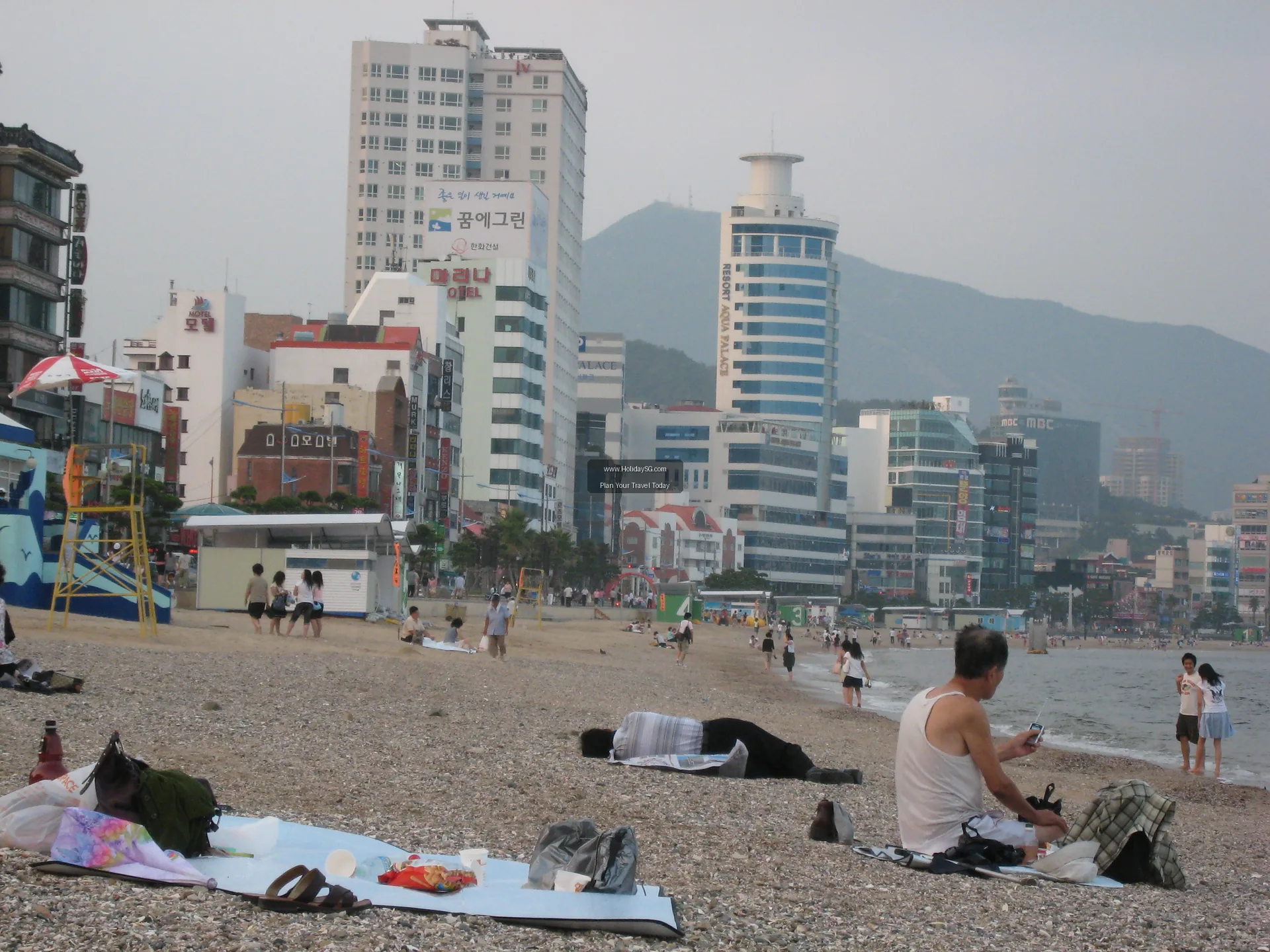
The first time we took kids to Busan, I made the classic mistake of picturing one resort with a private beach, a lazy river and a breakfast buffet that would keep everyone happy for five days. Busan does not work like that. It is a big working port city of three and a half million people, and its beaches are public, free and wrapped around the edges of the city like a necklace. The "resort" is really a neighbourhood. Once I stopped looking for a gated compound and started treating Haeundae, Gwangalli, Songdo and Songjeong as four different playgrounds, the trip clicked. This guide is what I wish I had read before we went: where to base yourself with children, which beach suits which age, what to do when it rains, how the money works for a Singapore family, and how to avoid the small mistakes that eat an afternoon.
A quick note on what you will not find here. I have not invented a "best resort" ranking with star ratings, because a hotel's room rate and facilities change from season to season and you should check the booking page on the day you travel. What I can do honestly is tell you how the city is laid out, what each stretch of coast is like for small children and teenagers, and which attractions we have found worth the ticket. Where HolidaySG sells a ticket I have linked it so you can see the current price, and where it does not I have said so plainly.
First, understand what "beach resort" means in Busan
If you are coming from Singapore, your mental picture of a beach holiday probably involves Sentosa, Bintan or Phuket: a hotel, a beach it controls, and a pool. Busan is different in three ways. First, every beach is public. Hotels sit across the road, not on the sand, and you walk out of the lobby, cross a promenade and you are on the beach with everybody else. Second, the beach season is short and official. Beaches are staffed with lifeguards and the swimming zones are marked mostly in July and August, and outside that window you can still paddle and build sandcastles but the sea is cold and the signage tells you swimming is not supervised. Third, the city around the beach is the main event. Within five minutes of the sand you will have convenience stores that sell hot snacks, a pharmacy, a subway station and a hundred places to eat.
For a family this is mostly good news. You never have to worry about being stranded at a resort with nothing to do on a wet day, and you can feed a fussy eight-year-old at a convenience store at 9pm without drama. The downside is that you cannot just stay put. A good Busan family trip is a loose rotation between a beachfront base, a few indoor attractions for hot or rainy hours, and one or two day trips. We will go through each.
| Beach area | Character | Best for |
|---|---|---|
| Haeundae | Long, busy, big hotels, lots of food and shopping close by | First-timers, mixed ages, rainy-day options nearby |
| Gwangalli | Calmer arc of sand facing the lit-up Gwangan Bridge, cafes along the road | Couples, teens, evening strolls |
| Songdo | Old, smaller beach on the western side with a sea cable car and a coastal walkway | Families who want views and less crowd |
| Songjeong | Quieter, east of Haeundae, popular with beginner surfers, near the Blueline Park train | Slow days, older kids who want to try a board |
| Dadaepo | Wide, shallow stretch in the far southwest with a sunset fountain show in season | Toddlers and paddlers who need very gentle water |
Haeundae: the obvious base, and why it earns it
Haeundae is where most visiting families end up, and for a first trip I would not talk you out of it. The beach is long, the sand is fine and pale, and the strip behind it is dense with hotels in every price band, restaurants that serve everything from grilled mackerel to pasta, and a subway station on Line 2 that gets you to the rest of the city without a car. In the evening the lights of the towers behind the beach reflect on wet sand and the whole thing looks a bit like a smaller Hong Kong. That is the good part.
The honest part is that Haeundae is busy. On a summer weekend the sand disappears under rented parasols, and getting a toddler to the water means threading through families. Go in the early morning, before nine, and the beach belongs to joggers and dog walkers and your kids can run without being steered. The rental parasols and tubes are cheap and paid in cash or card at the hut; agree the price before you sit down. Bring your own sunscreen and a hat, because the sea breeze fools you into thinking the sun is mild.
What makes Haeundae a good family base is what is within a short walk or one subway stop of it. SEA LIFE Busan, the aquarium, sits right on the beachfront, which is why it saves so many rainy afternoons. A large spa and bathhouse complex lives in the department store at Centum City. A water park and spa complex with an infinity pool sits on the same coast. The Busan Museum of Movies is a short ride away in the Centum City film district. In other words, Haeundae solves the weather problem as well as any place in the country.
We spent a full morning in the aquarium and it was easy to see why it works for a wide age range. The walk-through tunnel with sharks and rays overhead holds the attention of a three-year-old and a thirteen-year-old equally, and the whole circuit takes around two hours if you are not rushing. You can see the current ticket on the product page: SEA LIFE Busan is listed from S$25.68. Go on a weekday morning if you can, because queues at the entrance build after lunch on weekends and school holidays.
Gwangalli: the one for evenings
Take the subway or a short taxi west of Haeundae and you reach Gwangalli, a curved beach looking straight at the Gwangan Bridge. By day the beach is smaller and calmer than Haeundae. After dark the bridge lights up with a programme of colours and the road behind the sand turns into a long row of cafes and restaurants with sea-facing terraces. If you have teenagers who care about nice-looking food and photographs, this is where they will want to sit.
With younger children Gwangalli works as an evening outing rather than a base. We would stay in Haeundae, take a taxi over for dinner, let the kids dig in the sand while the bridge lights come on, and be back at the hotel by bedtime. A tour that includes Gwangalli at night, such as the Taejongdae, Songdo Sea Cable Car, Gamcheon and Gwangalli day tour, bundles the beach into a longer day, from S$72.55.
Songdo: the cable car beach
Songdo is the oldest public beach in Korea and has had a facelift. A coastal walkway stretches out over the water, the sea cable car carries you across the bay in glass cabins, and the beach itself is smaller and less hectic than Haeundae. It is my pick for a family with children aged four to ten who want a beach day that has a "thing" attached to it. You swim or dig in the morning, ride the cabin in the afternoon, and finish with a walk on the Skywalk.
The practical catch is distance. Songdo is on the far western side of the city and the subway does not go all the way, so budget a taxi or a bus from the nearest station. A guided day tour solves this neatly. The 9 Highlights Busan City one-day tour (from S$51.05) is the one I would look at if you do not want to work out buses with a stroller.
Songjeong and the Blueline Park train
East of Haeundae the coast gets quieter. Songjeong is a long beach beloved of beginner surfers, and the old railway line that used to run along this stretch of coast has been turned into the Haeundae Blueline Park, with small beach trains and sky capsules running between the small stops. Children love these. The little trains are slow, the windows are big, and the rails run so close to the water that you feel you are riding along the sea.
If you want to try it without planning the logistics, the Busan One Day City Tour with Blueline Park Songjeong Beach Train combines Haedong Yonggungsa Temple, the beach train, the Songdo Skywalk and Gamcheon Culture Village, from S$63.68. It is a long day of roughly eight to nine hours, so it suits children who handle a full programme. For smaller ones, I would pick just the train and the beach and skip the rest.
Dadaepo for little ones
Far southwest, Dadaepo is the beach you choose when your youngest is under four. The water is shallow for a long way out, so a toddler can splash for a long time without being anywhere near deep water. In summer there is a sunset fountain show on the boardwalk that kids find magical, and the sand is wide enough that you do not feel on top of other families. It is a long taxi ride from Haeundae, so treat it as an outing rather than a base, and check the fountain schedule before you go because it runs only in warm months.
What to do when it is too hot, too cold or raining
The honest truth about family travel to any coastal city is that you will lose some beach hours to weather. Busan has a rainy season in early summer and a hot, humid peak in late July and August. Having three or four indoor options saved is the difference between a good day and a miserable one. Here are the ones we would pick, all within a short ride of Haeundae.
The bathhouse
The Spa Land complex inside the Shinsegae department store at Centum City is the Busan version of the Korean bathhouse day, and it is a surprisingly easy family outing as long as you know the rules. The wet areas are gender-separated and clothes-free, which is a cultural surprise for some visitors, but there are shared zones where everyone wears the provided shorts and tops, including hot rooms, ice rooms and relaxation areas. Younger children are welcome in the shared areas, and the four-hour ticket gives enough time without exhausting anyone. Check the age rules before you go, because they differ between the bath area and the shared zones. You can see the ticket here: Spa Land at Centum City, from S$23.77.
The water park and spa
For a day when you want the kids wet but out of the sun, Club D Oasis is the closest thing to a resort experience on the Haeundae coast. It combines water rides and a crescent-shaped infinity pool facing the beach with hot spring areas and saunas, so the parents can soak while the children slide. Plan a full day if you want to use everything, and bring a change of clothes because the walk back to the hotel in a wet swimsuit gets cold in autumn. Club D Oasis is listed from S$28.71.
The trampoline park
Energetic seven-to-twelve-year-olds get restless when a plan is just "look at things", and the trampoline park is the antidote. The two-hour pass includes non-slip socks and a locker, which is the kind of detail that matters when you are trying to keep a family moving. Note the opening days, because it closes on Mondays. Details here: Vaunce Bounce Trampoline Park, from S$24.00.
The film museum
Busan hosts one of Asia's best-known film festivals every October, and the Busan Museum of Movies celebrates that heritage with exhibits on film equipment, posters and a small screening and experience area. It is not a huge museum, so plan about an hour and a half to two hours. It suits families with older children who like cameras and costumes. It is closed on Mondays. Take a look at Busan Museum of Movies, from S$13.00.
The tower
Busan Tower stands in Yongdusan Park in the old downtown, and its observation deck gives a 360-degree view over the harbour and the hillside houses. It is a good evening stop when the weather is clear, ideally around sunset, and it pairs naturally with the old markets nearby. It is open late, which helps with jet-lagged families. See the ticket here: Busan Tower, from S$13.20.
| Attraction | Time to allow | Good for | Listed from |
|---|---|---|---|
| SEA LIFE Busan | About 2 hours | All ages, rainy mornings | S$25.68 |
| Spa Land (Centum City) | 4-hour ticket | Parents, kids who tolerate bathhouse rules | S$23.77 |
| Club D Oasis | Half to full day | Hot days, swimmers | S$28.71 |
| Vaunce Bounce | 2-hour pass | Active 6 to 12 year olds | S$24.00 |
| Busan Museum of Movies | 1.5 to 2 hours | Older kids, film fans | S$13.00 |
| Busan Tower | 1 to 2 hours | Sunset views | S$13.20 |
Day trips that work with children
Busan is a great base for day trips, but be realistic with kids. A long day with three hours of travel in a van is fine for a teenager and a trial for a five-year-old. We have found that one big day trip in a week is the sweet spot, and everything else should be within thirty minutes of the hotel.
Gyeongju, the old capital
Gyeongju was the capital of the Silla kingdom and is often described as a museum without walls: royal burial mounds, a famous temple and a pond lit up at night. A tour from Busan with a guide is the easy way to see it without dealing with trains and local buses. The Gyeongju UNESCO World Heritage and Sky Capsule day tour from Busan runs from S$110.00. It is a full day with intercity driving, so it suits older children who can handle walking on uneven historic grounds. Wear sturdy shoes and bring water.
The east coast in a single loop
If you only want to do one guided day and you have mixed ages, pick a coastal loop rather than a long-distance one. The itinerary that connects Haedong Yonggungsa, the Cheongsapo skywalk and sky capsule, and the culture village is one of the better combinations, because the legs are short and the scenery does the work. The Haedong Yonggungsa, Cheongsapo Skywalk and Blue Line Park Sky Capsule day tour is listed from S$85.00, and a longer version with a yacht ride, Max Out Busan: 9 Highlight Top Attractions, is listed from S$136.00. The coastal temple, Haedong Yonggungsa, sits right on the water, which is unusual for a Korean temple, and it is a striking sight even for a child who is bored by temples in general.
Gamcheon Culture Village
The pastel hillside village of Gamcheon is one of the most photographed spots in the city. The lanes are steep and narrow, so strollers are miserable here and a baby carrier is much better. For older children, there is an activity that makes it more fun: you can rent a retro outfit and wander the streets in costume. We saw several families do it and the kids loved it. Look at the retro outfit rental in Gamcheon Culture Village, from S$29.80.
A pass for the culture-and-attractions days
If your plan is to visit several paid sights in a short space of time, a city pass can make sense. The Visit Busan Pass is a cash-free pass that gives entry to a set of major attractions and discounts on tours, shopping and experiences around the city. The honest advice is to do the sums first: add up the sights you will actually do, compare them with the pass price, and only buy it if you will clearly come out ahead. For a family that spends most days on the beach and one or two on attractions, the pass often will not pay off. For a three-day sightseeing sprint it often will. The ticket is listed here: Visit Busan Pass, from S$43.00.
When to go
For a Singapore family the instinct is to travel in the school holidays, which in June and November to December means very different Busan weather. June brings the start of the rainy season with warm, humid days and the beach just opening for the year. Late July and August are the proper swimming months, with warm water but hot, humid air and big crowds. The Korea Travel season of September to November is lovely: crisp air, clear skies and good light, though the sea is too cold for most children by October. December is cold, with a chilly wind off the water, and the beach is for walking and hot drinks, not swimming.
If swimming is the main goal, the sweet spot is July and early August. If you would rather walk, eat and sightsee in comfortable weather, aim for late April to early June or late September to October. In late summer, ask your hotel or the beach staff about jellyfish before you let the kids in the water, because they sometimes appear around then and lifeguards will tell you where it is safe.
| Months | What it is like | Family verdict |
|---|---|---|
| April to early June | Mild, blossoms, sea still cool | Great for sightseeing, not for swimming |
| Late June to mid July | Rainy season, humid | Pack for rain, plan indoor days |
| Late July to August | Hot, crowded, lifeguards on duty | Best for swimming, book early |
| September to November | Clear and crisp, autumn colour | Best all-round comfort |
| December to March | Cold and windy | Bathhouse and indoor trip |
Getting there from Singapore, and the paperwork
Flights from Singapore to Busan take roughly six hours, and the schedule depends on the season, so check what is running for your dates rather than assuming a daily direct service. Many families also fly into Seoul and take the fast train south, which takes a few hours and gives you the option of a Seoul stay at the front or back of the trip. If you are leaving the booking until you have a visa sorted, our flight reservation service can provide a reservation to include with an application. That is a reservation to show an itinerary, not an issued ticket, so do not treat it as a purchased seat.
Entry rules change, so always check before you book. Our fact sheet for South Korea, last verified on 29 September 2026, lists a temporary K-ETA exemption for Singapore passport holders, running until 31 December 2026, for stays up to 90 days. After that date the K-ETA, an online travel authorisation with a fee of KRW 10,000 that is valid for three years, may apply again. Other nationalities, including many Indian passport holders, may need a short-term visa instead. The best way to see what applies to your passport is to use our visa requirements checker, and then confirm with the official Korean government sites before you travel. Check every family member's passport validity, because children's passports are the ones people forget.
What it costs a Singapore family
Korea has become more expensive for Singaporeans in recent years, but Busan is still kinder on the wallet than Seoul or Tokyo, particularly for food. Our country notes put typical daily spending at roughly KRW 80,000 to 250,000 per person, which is a big range because it depends on where you sleep and how you eat. Here is how I think about it for a family of four on a five-night trip.
| Item | What to expect | How to save |
|---|---|---|
| Hotel | Beachfront Haeundae costs the most in July and August | Stay one street back, or travel in shoulder season |
| Meals | Local restaurants and markets are good value | Eat the set lunch, snack at the convenience store |
| Transport | Subway and buses are cheap with a T-money card; taxis add up | Use the subway for long hops, taxi for the last mile |
| Attractions | Most single sights sit between S$13 and S$30 per person | Pick two or three, not ten |
| Connectivity | An eSIM covers maps and translation apps | One shared hotspot is usually enough |
For staying connected, an eSIM saves the airport queue at Gimhae, and you can pick one before you leave. There are several options, including a 14-day 15GB unlimited eSIM from S$18.00, or a cheaper data plan like the Airalo South Korea eSIM from S$4.00. Check that your phone supports eSIM before you buy.
Practical tips we learned the hard way
Get a transport card. A rechargeable T-money card works on the subway, buses and in many taxis and convenience stores. Children travel at reduced fares on many routes, and the card spares you fumbling for coins.
Bring a lightweight carrier, not just a stroller. Busan is hilly, and the best viewpoints, villages and temples involve steps. A stroller is fine for Haeundae's promenade and a nightmare in Gamcheon.
Respect the sea. Swim between the flags when lifeguards are on duty, keep children within arm's reach, and do not assume a calm surface means calm water. Currents can change quickly near rocky headlands.
Mind the opening days. Several attractions we have mentioned close on Mondays, including the film museum and the trampoline park. Check before you build a Monday plan around either.
Eat early. Many restaurants stop taking orders for dinner by nine in the evening, and families with small children are better off sitting down around six.
Learn three Korean phrases. "Annyeonghaseyo", "kamsahamnida" and "mul juseyo" (water, please) go a long way, and shopkeepers appreciate the effort.
Respect local customs. Take your shoes off when entering homes and some traditional restaurants, use both hands when giving or receiving something from an elder, and keep your voice down on public transport.
Know the emergency numbers. Police is 112, ambulance and fire are 119, and the Korea Travel Hotline is 1330, which offers help in several languages. Save them in your phone before you land, and buy travel insurance that covers medical care.
A five-day plan that does not exhaust the kids
Here is how I would lay out five nights in Haeundae with children between five and twelve, assuming a summer or early autumn trip. Treat it as a shape rather than a script, and move the days around to follow the forecast.
Day 1, arrive and settle. Land, take the airport train or a taxi to Haeundae, drop the bags, and walk the promenade. Dinner nearby, early night. Do not plan anything else.
Day 2, beach morning and aquarium. Go to the sand early, swim or dig until the sun gets high, lunch nearby, then SEA LIFE in the afternoon when the heat is at its worst.
Day 3, the coast loop. Take the guided coastal tour, with the temple, the skywalk and the beach train. Bring snacks and a change of shirt. Dinner at Gwangalli to watch the bridge lights.
Day 4, slow day. Either the water park or the bathhouse, depending on the weather and on how tired everyone is. This is the day you protect, because it keeps the trip from becoming a march.
Day 5, old Busan. Busan Tower and the downtown markets in the late afternoon, with fish cake and street snacks for dinner. If your children are older, swap this for Gyeongju.
Day 6, go home. A last beach walk, then the airport. Leave plenty of buffer, as the city's traffic can slow the trip.
What to eat with children
Korean food can be easy or hard for children depending on the child. Our notes name three dishes that tend to work: Korean barbecue, where you cook the meat at the table and the kids find the grill fun; bibimbap, a rice bowl with vegetables and egg that you can order without the chilli paste; and tteokbokki, the chewy rice cakes in a sweet and spicy sauce that you will see at every street stall. Ask for the sauce on the side or the mild version if your children are sensitive to heat. Busan is also famous for seafood, fish cake and a pork and rice soup that locals swear by, so a child who eats plain rice and grilled fish will not go hungry. In the evenings, convenience stores are your friend. They sell instant noodle cups with a hot water station, triangle rice balls and fruit, and they are clean, cheap and open late.
Packing and small-kid logistics
Pack for the season you are in, not the one you left. Singapore families tend to underpack warm layers, and the wind off the water in October or November can make a seaside evening feel colder than the thermometer says. A light jacket for every child is cheap insurance. In summer, bring rash guards, hats and water shoes, because some of the sand near rocks is rough and children's feet are tender after a week in sandals. A small dry bag helps on the beach train and on any boat ride, and a spare set of clothes in your day bag has saved us more than once.
Think about naps and meals when you plan each day. A four-year-old who misses a nap will make the afternoon hard for everyone, so we put the long, calm activities, such as the aquarium or the bathhouse, at the time the youngest would normally be flagging. Keep a stash of familiar snacks in the bag too. Korean convenience stores are wonderful, but a child who has been walking for three hours wants a biscuit he recognises.
Finally, leave slack. The best moments of our Busan trips were never on the schedule: an old lady at a market stall handing the kids a free piece of fruit, a spontaneous half hour on the sand at dusk, a ride on a bus that happened to go past the harbour. Book the anchor activities, keep everything else loose, and let the city do what it does best.
Frequently asked questions
Is Busan a good beach destination for toddlers?
Yes, if you pick the right beach and the right month. Dadaepo has very shallow water, and Haeundae is easy because everything you need is a few steps away. The sea is cold outside summer, so a toddler will be paddling rather than swimming for most of the year.
Do the hotels have private beaches?
No. The beaches are public, and hotels sit across the road. Some have pools, so if a pool matters to you, check the hotel's page before booking, since pool opening dates and hours change by season.
What is the best beach for older kids and teens?
Songjeong is the one for surf lessons, and Gwangalli suits teenagers who want cafes and an evening view. Haeundae has the most to do within walking distance.
Do I need a visa for Busan as a Singapore passport holder?
At the time of our last check on 29 September 2026, Singapore passport holders were covered by a temporary exemption from the K-ETA until 31 December 2026, for stays up to 90 days. Rules can change, so confirm with the official Korean government sites and use our visa requirements page to see what applies to your passport.
Can I get a flight reservation for a visa application?
Our flight reservation service provides a reservation for visa paperwork. It is a reservation to show an itinerary and is not an issued ticket, so you still need to buy your actual flight separately.
How do I get around without a car?
The subway and buses are efficient, a T-money card covers them, and taxis fill the gaps. For the far-flung sights, a guided day tour takes the work out of it.
Is the Visit Busan Pass worth it for a family?
Only if you will visit several paid attractions in a short window. Add up the tickets you plan to use and compare the total with the pass price before you buy.
How many days do we need?
Four to five nights is comfortable for a beach-focused family trip, with one day trip and a couple of indoor attractions. If you add Seoul, allow a week or more.
Featured experiences in this guide
Plan your Busan family trip
Browse tickets, tours and passes for Busan on HolidaySG, check the entry rules for your passport on our visa requirements page, and if your visa paperwork needs an itinerary, look at our flight reservation service. Book online with HolidaySG, and e-tickets are emailed after our team confirms your booking.