The first time I went to Busan I budgeted for the usual tourist trap pile-up: a tower, an aquarium, a cable car, a few overpriced lunches. What actually happened is that I spent most of three days walking along water, climbing painted stairways and eating standing up at market stalls, and my wallet barely noticed. Korea's second city is one of the rare places where the best things to do cost nothing at all. This guide is the plan I wish someone had handed me: the free attractions that are genuinely worth your time, how to string them together without wasting a day on buses, where it is smarter to pay a little, and the practical stuff Singapore travellers keep asking us about, from entry rules to weather.
A quick note on how this article came about. An older version of this page listed a handful of "free" places, and a few of them were not free or not even in the right part of town. I have rewritten it from scratch, corrected those mistakes, and kept only things I would send my own family to see. Where something costs money, I say so plainly. Prices for tickets that we sell are shown live from our catalogue, so they stay current, but always treat opening hours as a starting point and check before you set out, because Korean attractions shift their schedules with the seasons and public holidays.
Why Busan suits a free-first trip
Seoul is a city of things you go into: palaces, museums, shopping malls, cafes with queues. Busan is a city of things you walk past, and that changes the economics of a holiday. The city is squeezed between mountains and the sea, so almost every neighbourhood has a view, and the views are free. The beaches are public, the temples either charge a token amount or nothing, the hillside villages are open streets, and the markets are worth visiting even if you buy only a cup of fish cake broth.
There is also a practical reason. Busan is long and thin. The old port district, the downtown markets, the southern coastline and the Haeundae resort strip are all separate pockets connected by a good metro, buses and a few coastal trains. If you plan by area instead of by famous name, you can do four or five free things in a day and spend almost nothing on transport. The itineraries further down are built on that idea.
The free list: what is genuinely worth your time
I have grouped these by neighbourhood rather than ranking them, because the best order depends on where your hotel is.
Haeundae Beach and the Dongbaek Island path
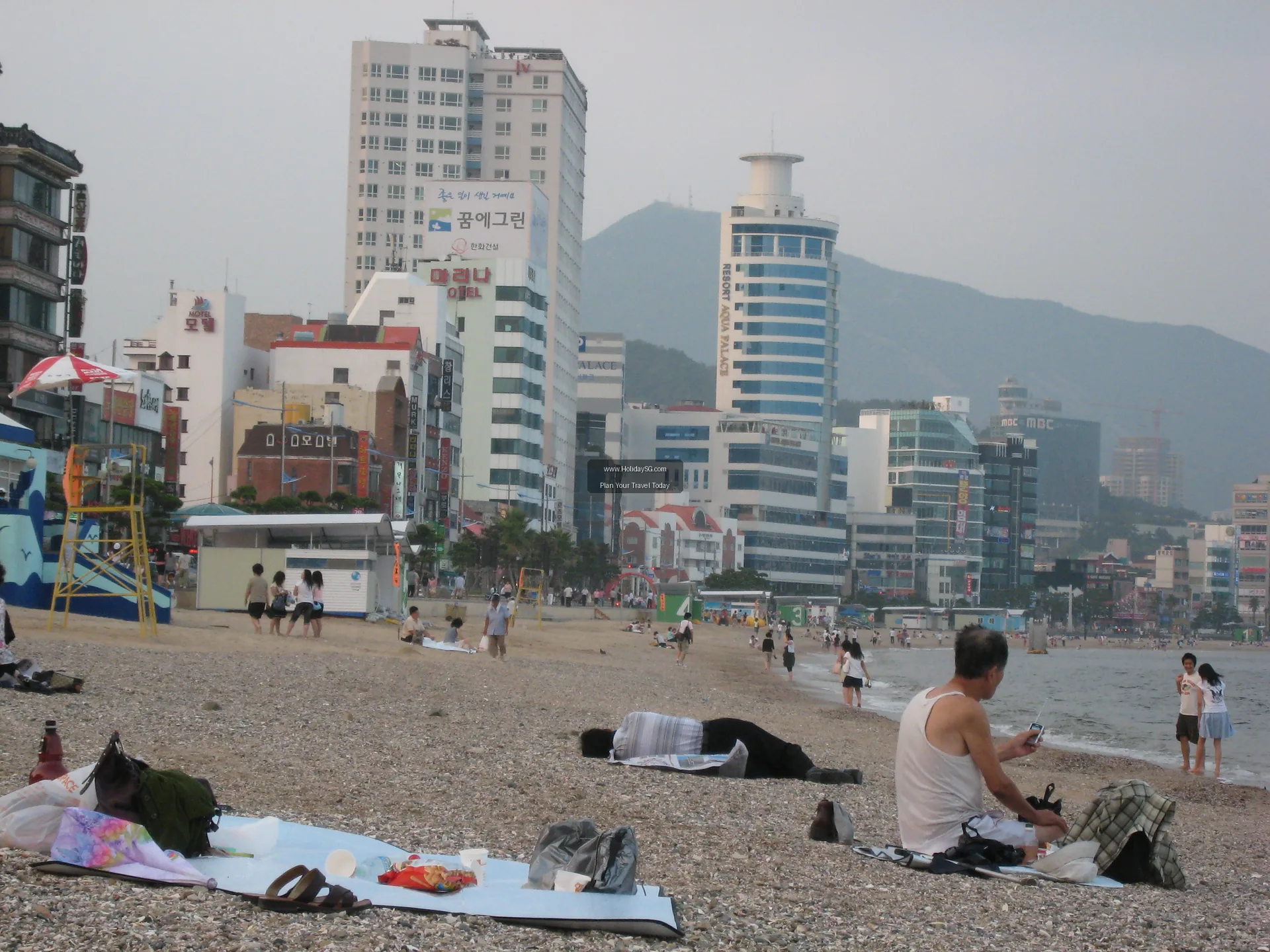
Haeundae is the postcard beach, a long curve of pale sand backed by high-rises, and it is busiest in July and August when umbrellas cover the sand like a field of mushrooms. I actually prefer it in the shoulder months. In late September or early May you can walk the length of the beach in the morning with a coffee, and the water is quiet enough to hear. Entry is free, the sand is free, and the lifeguard hours in summer are posted at the main steps.
From the western end of the beach, a footpath leads onto Dongbaek Island, which is no longer really an island. It is a forested headland with a paved walking trail around the edge, a lighthouse-style pavilion at the tip and sea views on three sides. It takes roughly an hour at a stroll. It is flat enough for most people, and it is free. On a clear day you can see ships queuing in the open sea waiting for their turn into the container port, which gives you a sense of how big Busan's working harbour is.
Gwangalli Beach and the bridge at night
Gwangalli is the one I keep coming back to. It is smaller than Haeundae and more relaxed, lined with cafes and raw fish restaurants, and it faces the Gwangan Bridge, which is lit up in changing colours after dark. Sit on the sand with a cheap drink from a convenience store and watch the bridge. Do not feel pressured to buy a seat at a restaurant terrace; locals picnic here constantly. On weekends there are often small street performers along the promenade, and there are periodic drone and light shows during festivals, though the schedule moves around, so check locally.
One correction to older guides: you will sometimes see Busan Tower described as sitting near Gwangalli. It does not. The tower is in Yongdusan Park downtown, which we come to below, and it is a ticketed attraction. Gwangalli is purely about the beach, the bridge and the evening.
Gamcheon Culture Village
This is the hillside neighbourhood that gets compared to a Mediterranean town, with pastel houses stacked up the slope, murals on the stairways and tiny galleries tucked between homes. Walking in is free. A small paper map is sold at the information point for a nominal fee and it is worth buying, because it comes with stamp stations that give the climb a bit of structure. People actually live here, so keep your voice down, stay on the marked lanes and do not photograph through windows.
Arrive early. By ten in the morning the main lanes can be busy, and the light on the colourful roofs is better before the sun gets high. If you enjoy dressing up for photos, there are rental shops in the village; the retro outfit experience we list is S$29.80 and includes a small locker, which is genuinely useful when you want to climb stairs without a heavy bag. Entry to the village stays free; the outfit rental is the only cost.
Haedong Yonggungsa Temple
Most Korean temples sit in the mountains. This one sits on the rocks at the edge of the sea, with the waves breaking just below the prayer halls. It is one of the most photographed places in the country, and it deserves it. Entry has traditionally been free, though rules at major temples can change, so confirm before you go. Dress modestly, keep to the paths and be quiet near the halls where people are praying.
It is out on the northeast coast, further than most visitors expect, so it is the one stop on this list that really benefits from planning. You can get there by public transport, but it involves a metro ride and then a bus, and the last stretch on a hot day is slow. Go as early as you can manage. The first hour after opening is the only time I have had the main terrace almost to myself.
Taejongdae and the southern coast
Taejongdae is a rugged park at the southern tip of Yeongdo island with cliffs, a lighthouse, forest paths and a small pebble beach. Entering the park is free. The loop road is long, around a few kilometres, and there is a tourist train that circles it for a fee if you do not feel like walking. I walked the full loop once in spring and the cliff views were worth the tired legs, but on a humid day the train is a perfectly sensible choice. Bring water, because the shops inside the park are limited.
Jagalchi Fish Market and Gukje Market
Jagalchi is the biggest seafood market in the country. You do not have to buy anything to enjoy it. Walk the ground-floor aisles to see buckets of live eels, octopus, sea squirts and fish I could not name. Upstairs, restaurants will cook what you choose below. That is where the bill can climb quickly, so ask the price before you sit. For something cheap, eat at the stalls outside, where grilled mackerel and fish cake come in small portions.
Gukje Market and the neighbouring Bupyeong Kkangtong night market are a short walk away. Prices at the stalls are low, hot food is everywhere, and the grid of alleys is good for wandering. If you like cheap souvenirs and snacks, this is the single densest place for them. Try the sweet filled pancake called hotteok and the seed hotteok variety that is a Busan speciality.
BIFF Square, Nampo and Yongdusan Park
The film festival district around Nampo is a lively pedestrian zone with hand prints of film stars in the pavement, street food stalls and a good cluster of snack shops. It costs nothing to walk. Nearby, Yongdusan Park is a green hill in the city centre and the home of Busan Tower. The park is free. The tower observatory charges admission; the listing we carry is S$13.20 for an adult ticket, and it is open until late in the evening, which makes it a good sunset or night view. If you do not want to pay, the park itself still has pleasant city views, and the escalators up make it easy on the legs.
The Blue Line Park coast near Cheongsapo
Between Haeundae and Songjeong, an old railway line has been turned into a seaside corridor. The sky capsule and the beach train are paid rides, but the walking path beside the tracks is open to everyone, and the stretch around Cheongsapo, a tiny fishing port with a small lighthouse, is one of the loveliest free walks in the city. Think of it as the quiet answer to Haeundae's crowds. You can walk a section, sit on the rocks, and decide whether the rides are worth it on the day.
Songdo Beach and the walkways
Songdo is the oldest official beach in Korea and has a long wooden skywalk stretching over the water. The walkway is free and especially pretty late in the afternoon. A cable car also crosses the bay for a fee, but you can see plenty from the shore. A short flat promenade makes it easy with children or older relatives.
Free museums and cultural sites
The old guide I replaced claimed several museums are free, but the situation varies and I would rather you check than be disappointed at the door. Some municipal museums and the UN Memorial Cemetery area are free or very cheap, while others charge a small fee. The UN Memorial Cemetery in Nam-gu is a quiet, tidy place that honours foreign soldiers of the Korean War and is a meaningful visit if you have an hour. Check each museum's own site for the current fee and closing day; many are shut on Mondays.
A realistic comparison: free, cheap and worth paying for
Free does not always mean best, and paying is not always wasteful. This table shows how I would sort the major options.
| Place | Cost | Best time | Time needed |
|---|---|---|---|
| Haeundae Beach and Dongbaek path | Free | Early morning, shoulder season | 2 to 3 hours |
| Gwangalli Beach and bridge lights | Free | Sunset to evening | 1 to 2 hours |
| Gamcheon Culture Village | Free (map optional) | Before 10 am | 2 to 3 hours |
| Haedong Yonggungsa Temple | Free to low (check) | Opening hour | 1.5 hours plus travel |
| Taejongdae Park | Free entry | Spring or autumn | 2 to 3 hours |
| Jagalchi and Gukje markets | Free to walk; food extra | Morning to lunch | 2 to 3 hours |
| Busan Tower observatory | Ticketed (S$13.20) | Sunset | 1 to 2 hours |
| Busan Museum of Movies | Ticketed (S$13.00) | Rainy day | 1.5 to 2 hours |
When it is worth paying a little
I am a fan of free travel, but I have also wasted hours trying to save a few dollars. A handful of paid options are worth it because they save time, shelter you from weather or open up places that are awkward to reach.
The Visit Busan Pass
If you plan to visit several ticketed places and take the metro often, a pass can simplify things. The Visit Busan Pass is S$43.00 on our site, and it works as a cashless way of entering a set of attractions and getting discounts across the city. According to the product details, one-day passes start from around 22,000 KRW at source, with longer passes available. Whether it saves you money depends on how many attractions you actually enter, so count before you buy. If your plan is mostly beaches, markets and walks, you will not need it. If you want towers, museums and a couple of paid rides, it might.
Busan Museum of Movies
If it rains, and in Busan it does, this is a pleasant place to spend a couple of hours. It is a cinema-themed museum in Jung-gu about Korean film and the Busan International Film Festival, with exhibits and film equipment. Listed hours are Tuesday to Sunday 10 am to 6 pm, closed Mondays. Tickets are S$13.00. It will not change your life, but it is a comfortable, dry, inexpensive break.
Sea Life Busan
The aquarium sits right at Haeundae Beach, so it combines neatly with a beach morning. The listing is S$25.68. It works well with children, and on a hot day it doubles as air conditioning. If you only have a few days, I would skip it in favour of the sea itself, but families with younger kids tend to love it.
A spa day at Spa Land
Korean bathhouse culture is a real part of the country, and Spa Land inside the Shinsegae department store in Centum City is the big-name one in Busan. The listing for the four-hour ticket is S$23.77. Expect separate gendered bathing areas, where nudity is the norm, plus shared themed rooms in provided clothing. It is a lovely way to recover after a long walking day, and if you have never tried a jjimjilbang, this is a gentle introduction. Extras such as food or special rooms can cost more.
Day tours for the hard-to-reach spots
The temple on the northeast coast, the Blue Line Park rides and the Songdo skywalk are all on the edge of town, and putting them together by public transport takes planning. A guided day trip is sometimes the sensible option. The Busan one-day city tour with Blue Line Park, Songjeong, Haedong Yonggungsa and Gamcheon is S$63.68, with transport and a guide, and the listing mentions entrance fees for the listed attractions and the beach train ticket. It runs around 8 to 9 hours. If you want a gentler budget option, the nine highlights city tour is S$51.05.
For a bigger day out, the Max Out Busan nine-highlight tour is S$136.00, and it includes the sky capsule, the Oryukdo skywalk and a yacht tour. If history is your thing, the Gyeongju day trip from Busan is S$110.00 and heads to the UNESCO-listed sites of the old Silla capital, including Bulguksa Temple. That is a long day, so wear sturdy shoes. Another option is the Taejongdae, Songdo cable car and Gamcheon combination at S$72.55, which bundles the southern sights.
Three sample itineraries
Here are plans that mix free sights with sensible rest. I have kept the pacing human, because the biggest mistake I see is stuffing six places into a day and enjoying none of them.
Two days, almost entirely free
| Day | Morning | Afternoon | Evening |
|---|---|---|---|
| 1 | Haeundae Beach, Dongbaek path | Cheongsapo and Blue Line Park walk | Gwangalli Beach, bridge lights |
| 2 | Gamcheon Culture Village | Jagalchi and Gukje markets | BIFF Square snack walk |
Three days with a few paid extras
Take the two days above, then add a third built around the south: Taejongdae in the morning, lunch in Nampo, Busan Tower at sunset, and a soak at Spa Land the next day if your feet need it. Swap the Gamcheon morning for the retro outfit experience if photos matter to you.
Rainy-day fallback
Busan's wet days are mostly in the summer monsoon, usually around July and August. Plan indoor swaps: the Museum of Movies, the aquarium, a jjimjilbang session, covered markets and a long cafe lunch. The Nampo and Gukje market areas have a lot of covered passages. Keep a compact umbrella in your bag from June onward.
What it actually costs per day
Our country notes put a typical daily budget in Korea at roughly 80,000 to 250,000 won per person, which is a wide range because hotels and dining styles vary so much. A free-first Busan day sits at the lower end if you stay in a guesthouse or modest hotel, eat at markets and take the metro. This sample splits it up.
| Item | Lean day | Comfortable day |
|---|---|---|
| Attractions | Free sights only | One or two paid entries |
| Food | Market stalls, convenience store breakfast | One sit-down meal a day |
| Transport | Metro and bus with a T-money card | Occasional taxi |
| Extras | Coffee, snacks | Spa or guided tour |
I will not give exact won amounts for items I could not confirm for the current season. Treat any figure you read, including ours, as a guide and verify on the day.
Getting around Busan cheaply
The metro is clean, signposted in English and covers most of what you need. Buy a rechargeable transport card at a convenience store, top it up with cash and tap in and out of metro gates and buses. It also works in many shops. Our country notes mention the T-money card for metro use, and it is the simplest way to avoid fumbling for coins.
Buses fill the gaps where the metro does not reach, such as Haedong Yonggungsa and parts of the coast. Use a map app with offline maps downloaded, because bus numbers can be confusing at first. Taxis are reasonably priced for short hops, and for a group of three or four, a cab to the hard-to-reach temple can work out similar to public transport.
If you are arriving from Seoul, the fast train is the easy option, and it drops you at the main station, close to the downtown area. Many visitors from Singapore also fly directly. Since you will want to stay connected, a data plan helps with maps and translation; we list several Korea eSIM and SIM options, and it is worth sorting that before you board.
Entry rules for Singapore travellers
Korea has a pre-arrival travel authorisation called K-ETA for visa-exempt nationalities. According to the facts we hold, there is a temporary exemption for Singapore passport holders, valid until 31 December 2026 for tourism or business, with a maximum stay of 90 days. That was last verified on 29 September 2026, and rules like this can change, so confirm on the official K-ETA site before you travel. If your passport is not exempt, the K-ETA fee we have on record is KRW 10,000 with a validity of three years, and processing is usually within about 72 hours.
If you or someone in your group holds a passport that needs a short-term visit visa instead, our records show the C-3 category at about USD 40 with roughly ten working days of processing. For the requirements by nationality, see our visa requirements pages, where you can check your passport and destination. The same page explains when HolidaySG can help with the application.
Some travellers also ask about proof of onward travel. Immigration and visa applications sometimes want to see an itinerary showing you will leave. If that applies to you, our flight reservation service provides a manual reservation for visa paperwork. It is a reservation, not an issued ticket, and it does not guarantee approval of anything, so use it only where a reservation is accepted and always read the conditions.
When to go
Our notes list April to June and September to November as the best windows, and I agree. Spring brings cherry blossoms and mild days. Autumn is clear and crisp, ideal for coastal walks. Summer is hot, humid and crowded on the beaches, with monsoon rain around July and August. Winter is cold but bright, and the beaches empty out, though the wind off the sea can bite. Temperatures swing from roughly -5 to 30 degrees through the year.
For free-first travel, my favourite window is the last week of September through October. The heat has eased, the water views are crisp and hotel rates tend to be softer than in peak summer.
What to eat without spending much
Busan has a distinct food scene, and you can eat well on a small budget. Look for these.
- Dwaeji gukbap, a pork and rice soup that is the city's comfort food.
- Eomuk, skewered fish cake in broth, sold at street stalls and perfect on a cold day.
- Milmyeon, cold wheat noodles in a tangy broth.
- Ssiat hotteok, a sweet pancake stuffed with seeds and nuts, found in the Nampo area.
- Fresh raw fish at Jagalchi or at Gwangalli, where prices vary, so confirm before ordering.
Our general notes also mention Korean barbecue, bibimbap and tteokbokki as everyday staples, all easy to find at modest prices. Dining etiquette is simple: use both hands when passing or receiving items, and pour for others before yourself.
Mistakes I would help you avoid
- Trying to see everything. Busan is spread out. Pick two areas a day.
- Visiting Gamcheon at midday. The lanes get crowded and the heat bounces off the walls.
- Assuming everything is free. Towers, rides and many museums charge. Check first.
- Underestimating the temple trip. Haedong Yonggungsa takes time to reach. Do not tack it onto an already full afternoon.
- Not asking prices at seafood restaurants. Ask before sitting down to eat raw fish.
- Skipping travel insurance. Medical costs abroad can be steep, and insurance is a sensible baseline.
Safety, etiquette and practical notes
Busan feels very safe, but common sense still applies. Keep valuables close in crowded markets, carry copies of your documents rather than originals, and save the local emergency numbers: police 112, ambulance and fire 119. The Korea Travel Hotline is 1330 and has English support. Note that these are the figures in our country notes; confirm them if you need them urgently.
At temples, dress modestly, remove hats inside halls and lower your voice. In villages like Gamcheon, respect residents' privacy. On beaches, check for lifeguard flags and swimming season dates, because most beaches only allow swimming in summer. Take rubbish with you or use the sorted bins, as Korea is strict about waste separation.
What to pack? Comfortable walking shoes matter more than anything else, since the hills are steep and the stair lanes are long. Add a light jacket for evening sea breezes, sunscreen, a reusable water bottle and a power bank for all that map checking.
Travelling with children or older relatives
Busan is hillier than it looks on a map, and that matters if you are travelling with grandparents or a pushchair. Gamcheon is the hardest: the lanes are steep, the stairs are many and there are few benches. If anyone in your group struggles with slopes, take a taxi to the top of the village and walk down, or spend a shorter time in the lower lanes and skip the highest viewpoints. Haeundae, Gwangalli and Songdo, by contrast, are flat promenades with plenty of places to sit, which makes them ideal for a slower pace.
With children, build in a reward after each longer walk. Sand and water do most of the work, but a market snack or an air-conditioned hour at the aquarium keeps spirits up. Keep an eye on young ones around the sea edge at Taejongdae and Haedong Yonggungsa, where the rocks are uneven and the waves can be powerful. Public toilets are common at the main sights, and convenience stores are everywhere if you need water or a plaster.
Slow mornings, cafes and sunsets
Some of my happiest hours in Busan involved nothing at all. The coastline is dotted with cafes that face the water, and a single coffee buys you a window seat for as long as you like, with the understanding that you are not meant to camp there all day. Gwangalli has the greatest concentration, and the stretch near Haeundae's eastern end has quieter options. In the old downtown, tiny cafes inside converted buildings reward anyone who wanders off the main street.
For sunsets, I would pick between three. Gwangalli gives you the bridge lights coming on. Songdo gives you low light over the water along the skywalk. Busan Tower gives you the whole city turning gold, with the harbour below, though that one has an entry fee. If I had to choose only one free option, I would sit at Gwangalli with a snack and let the evening unfold.
How to keep the whole trip flexible
Weather in Busan can change the day's plan, so avoid locking in too many prepaid items. A good approach is to book only the one or two paid things that matter most, such as a guided day trip, and leave the rest open. Free sights are by their nature flexible, so swap them around depending on the sky. If rain is forecast for the coast, move your market and museum time forward and save the beaches for the clear window.
Download a translation app and an offline map before you leave, and take a screenshot of your hotel's address in Korean to show a taxi driver. Most people you meet will be helpful even with limited English, and a smile and a pointed finger go a long way. If you want more help planning, our team at HolidaySG can answer questions about tickets and tours in the chat on the site.
Frequently asked questions
Is Busan worth visiting if I only have a short trip to Korea?
Yes, if you like the sea and a slower pace. Two full days is enough to cover the highlights, and the fast train from Seoul makes it a straightforward add-on.
Are Busan's beaches really free?
Yes, the public beaches such as Haeundae, Gwangalli and Songdo are free to enter. Costs only appear if you rent umbrellas, loungers or equipment in the summer season.
Is Busan Tower free?
No. Yongdusan Park is free, but the tower observatory needs a ticket. The older version of this article suggested otherwise, which was wrong.
Do I need a visa or K-ETA as a Singapore passport holder?
Our records show a temporary K-ETA exemption for Singapore passport holders until 31 December 2026, with up to 90 days of stay. Check the official site before you travel, and see our visa requirements page for updates.
How many days should I spend in Busan?
Three days is ideal. Two is workable if you stay in the Haeundae or Nampo area and plan by neighbourhood.
Can I do Haedong Yonggungsa on my own?
Yes, by metro and bus, but expect a long trip. Many people find a guided day tour easier, and you can compare options in the day tours section above.
Is the Visit Busan Pass worth buying?
Only if you plan several paid attractions. For beach, market and walking days it is not necessary.
What is the best time to avoid crowds?
Weekday mornings in spring and autumn. The beaches and Gamcheon are both far calmer before ten.
Featured experiences in this guide
Ready to plan your Busan trip?
Browse tickets, passes and day tours for Busan on HolidaySG, check what you need to enter Korea on our visa requirements page, and if your application needs onward travel paperwork, look at our flight reservation service. E-tickets are emailed after our team confirms your booking.